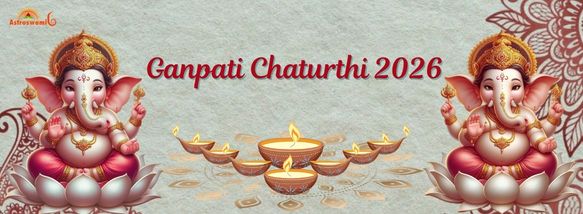
Festival Date: Monday, September 14, 2026 Visarjan (Anant Chaturdashi): Thursday, September 24, 2026 Duration: 10 Days (Ganeshotsav)
Ganesh Chaturthi - also known as Vinayaka Chaturthi or Ganeshotsav — is one of the most joyous and widely celebrated Hindu festivals in India and around the world. It marks the birth anniversary of Lord Ganesha, the elephant-headed son of Lord Shiva and Goddess Parvati, who is revered as the deity of wisdom, prosperity, new beginnings, and the remover of all obstacles.
The festival falls on the Shukla Chaturthi Tithi (fourth day of the waxing moon) of the Bhadrapada month according to the Hindu lunar calendar - typically in August or September as per the Gregorian calendar. Celebrations last for 10 days, culminating in the grand immersion of Ganesha idols, known as Ganesh Visarjan, on Anant Chaturdashi.
|
Detail |
Date / Time |
|
Monday, September 14, 2026 |
|
|
Chaturthi Tithi Begins |
September 13, 2026 (evening) |
|
Chaturthi Tithi Ends |
September 14, 2026 (afternoon) |
|
Madhyahna Puja Muhurat |
Approx. 11:00 AM – 1:30 PM |
|
Ganesh Visarjan (10th Day) |
September 24, 2026 |
Astrologer's Note from AstroSwamig: The festival beginning on a Monday in 2026 is considered especially auspicious, as Monday (Somvar) is the sacred day of Lord Shiva — making it a doubly blessed occasion for worshipping Lord Ganesha, the divine son of Shiva.
The Madhyahna Muhurat (midday period) is considered the most auspicious time for Ganesh Chaturthi Puja. According to Vedic astrology and the Panchang, Ganesha Sthapana (idol installation) and the main puja should ideally be performed during this window. Performing the puja during this time ensures maximum blessings and divine grace.
|
Day |
Date |
Significance |
|
Day 1 – Prarambh |
September 14 |
Ganesha Sthapana (Installation) |
|
Day 2 |
September 15 |
Ganesh Puja & bhajans begin |
|
Day 3 |
September 16 |
Cultural events & community gatherings |
|
Day 4 |
September 17 |
Continued devotion & offerings |
|
Day 5 |
September 18 |
Panchami Visarjan (5-day immersion option) |
|
Day 6 |
September 19 |
Devotional programs & prasad distribution |
|
Day 7 |
September 20 |
Saptami Puja |
|
Day 8 |
September 21 |
Ashtami celebrations |
|
Day 9 |
September 22 |
Navami – intensified worship |
|
Day 10 – Visarjan |
September 24 |
Anant Chaturdashi – Grand Immersion |
According to Hindu scriptures and Puranas, Goddess Parvati created Lord Ganesha from the sandalwood paste applied to her body, breathing life into him and appointing him as the guardian of her chamber. When Lord Shiva returned and was denied entry by Ganesha (who did not know his father), a fierce battle ensued, resulting in Ganesha's head being severed. To pacify the grieving Parvati, Lord Shiva had his attendants (Ganas) bring the head of the first living being they encountered facing north — which was an elephant. Ganesha was thus restored to life with the head of an elephant, and Shiva declared him the leader of all Ganas, giving him the name Ganapati.
Lord Ganesha is also celebrated as the scribe of the Mahabharata — it is said that the sage Vyasa dictated the great epic to Ganesha, who wrote it down without pause.
In Hindu tradition, Lord Ganesha is invoked before the commencement of any auspicious event, ritual, journey, or new venture. This custom stems from a divine boon granted by Lord Shiva and all the gods: that Ganesha shall be the first to be worshipped, for without his blessings, no endeavour can succeed.
While Ganesh Chaturthi has ancient Vedic roots, it was transformed into a large-scale public festival in the 19th century by the great freedom fighter and social reformer Lokmanya Bal Gangadhar Tilak. In 1893, during the British colonial era, Tilak envisioned a community-based celebration that would unite people across caste and class — using the festivity to spread nationalist ideas and foster unity in the independence movement.
His vision turned Ganesh Chaturthi from a quiet household observance into a vibrant 10-day public festival, a tradition that lives on most magnificently in Maharashtra, particularly in Mumbai and Pune.
Devotees bring home — or communities install in public pandals — clay idols of Lord Ganesha. The idol is placed on a raised platform, decorated with flowers, and the divine spirit is invoked through the Pranapratishtha ritual (infusing life into the idol through sacred mantras).
The main puja on Ganesh Chaturthi involves offering 16 traditional items to Lord Ganesha, including:
Modak — a sweet dumpling made from rice or wheat flour and filled with jaggery and coconut — is Lord Ganesha's most beloved offering. It is said that offering modaks pleases Ganesha immensely and invites his choicest blessings into the home.
Throughout the 10 days, devotees chant sacred Ganesha mantras such as:
The famous Sukhkarta Dukhaharta aarti by Sant Samarth Ramdas is sung with great devotion, especially in Maharashtra.
On the final day (Anant Chaturdashi — September 24, 2026), the idol is carried in a grand procession with music, dancing, and chanting to a nearby water body, where it is immersed. This act symbolises Lord Ganesha's return to his heavenly abode on Mount Kailash with his parents, taking with him the sorrows and obstacles of his devotees. It also represents the cosmic cycle of creation and dissolution — that all life ultimately merges back into the divine.
One of the most well-known customs associated with this festival is the prohibition against sighting the moon on Ganesh Chaturthi night. According to Puranic legend, Lord Ganesha was once insulted by the moon god (Chandra), who laughed at him after Ganesha fell from his vehicle. As a result, Lord Ganesha cursed the moon, declaring that anyone who sees the moon on Chaturthi night shall be falsely accused of a crime or theft.
This is associated with the story of Lord Krishna being falsely accused of stealing the precious Syamantaka jewel because he had seen the moon on Chaturthi. Devotees therefore carefully avoid seeing the moon on Ganesh Chaturthi.
From an Vedic astrology perspective, Ganesh Chaturthi holds deep planetary significance:
Consult an AstroSwamig expert to find out how Ganesh Chaturthi 2026 aligns with your personal Kundli and what specific puja, mantra, or donation will maximise blessings for your unique situation.
The grandest celebrations in India take place in Mumbai and Pune, with iconic public pandals drawing millions. The Lalbaugcha Raja and Kasba Ganpati are among the most famous idols visited by devotees and even Bollywood celebrities and political figures.
Known locally as Vinayaka Chavithi, this is a major state festival celebrated with great zeal, large pandals, and cultural performances.
Public and private celebrations are widespread, with Goa blending its unique cultural flavour into the festivities.
Observed as Vinayagar Chaturthi, with special temple pujas and home rituals.
Indian diaspora communities in the USA, UK, Australia, Singapore, Malaysia, and beyond celebrate Ganesh Chaturthi with equal devotion, organising community events and cultural programmes.
In recent years, there has been a growing and heartwarming movement toward eco-friendly celebrations, driven by concerns about water and chemical pollution during idol immersion. Here's how you can celebrate responsibly in 2026:
An eco-friendly celebration is not just better for the environment — it is also more aligned with the spirit of Ganesha, who, as the lord of nature's intelligence, would surely rejoice in a celebration that honours the Earth.
For Obstacle Removal:
Om Gam Ganapataye Namah
Vakratunda Mantra:
Vakratunda Mahakaya Suryakoti Samaprabha | Nirvighnam Kuru Me Deva Sarva-Kaaryeshu Sarvada ||
Ganesh Gayatri Mantra:
Om Ekadantaya Vidmahe, Vakratundaya Dhimahi | Tanno Danti Prachodayat ||
Chanting these mantras 108 times during the Madhyahna Muhurat on September 14, 2026 is considered especially powerful for removing obstacles from your life, career, relationships, and health.
|
Offering |
Significance |
|
Modak |
Ganesha's favourite sweet — invites wisdom and happiness |
|
Durva Grass |
Removes sins and bestows longevity |
|
Red Hibiscus (Japa) |
Pleases Ganesha and brings success |
|
Coconut |
Symbol of ego surrender |
|
Ladoo |
Sweet offering for prosperity |
|
Banana |
Nourishment and fulfillment |
Q: When is Ganesh Chaturthi 2026? A: Ganesh Chaturthi 2026 falls on Monday, September 14, 2026.
Q: When is Ganesh Visarjan 2026? A: Ganesh Visarjan (Anant Chaturdashi) falls on Thursday, September 24, 2026 — 10 days after the festival begins.
Q: What is the best time to perform Ganesh Puja in 2026? A: The most auspicious time is the Madhyahna Muhurat, approximately between 11:00 AM and 1:30 PM on September 14, 2026.
Q: Why should we not look at the moon on Ganesh Chaturthi? A: It is believed that sighting the moon on this night brings false accusations upon the viewer, based on the Puranic story of Ganesha's curse on the moon.
Q: Is Ganesh Chaturthi a public holiday in 2026? A: Yes, it is a public holiday in Maharashtra, Karnataka, Goa, Andhra Pradesh, and Telangana.
Q: Which sweet is offered to Lord Ganesha? A: Modak is Lord Ganesha's most beloved offering.
Ganesh Chaturthi 2026 is a magnificent opportunity to seek the divine blessings of Vighnaharta — the remover of all obstacles. Whether you're embarking on a new business, seeking success in your career, praying for family harmony, or simply wishing to deepen your spiritual practice, there is no more powerful time than the ten auspicious days of Ganeshotsav.
Begin with a pure heart, perform the puja with devotion, chant his sacred mantras, and surrender your obstacles at his divine feet. Ganpati Bappa Morya!
Download Now





 99587 87570
If you have face any problem at our Website related to payments Or any other issues then take screenshot and send it on our WhatsApp number mentioned above.
Monday To Sunday | 24/7Submit details and our representative will get back to you shortly.
 0124-3659395
 99587 87570
 En





.png)
.png)