Vikata Mahaganapati Chaturthi – Krishna Paksha, Chaitra

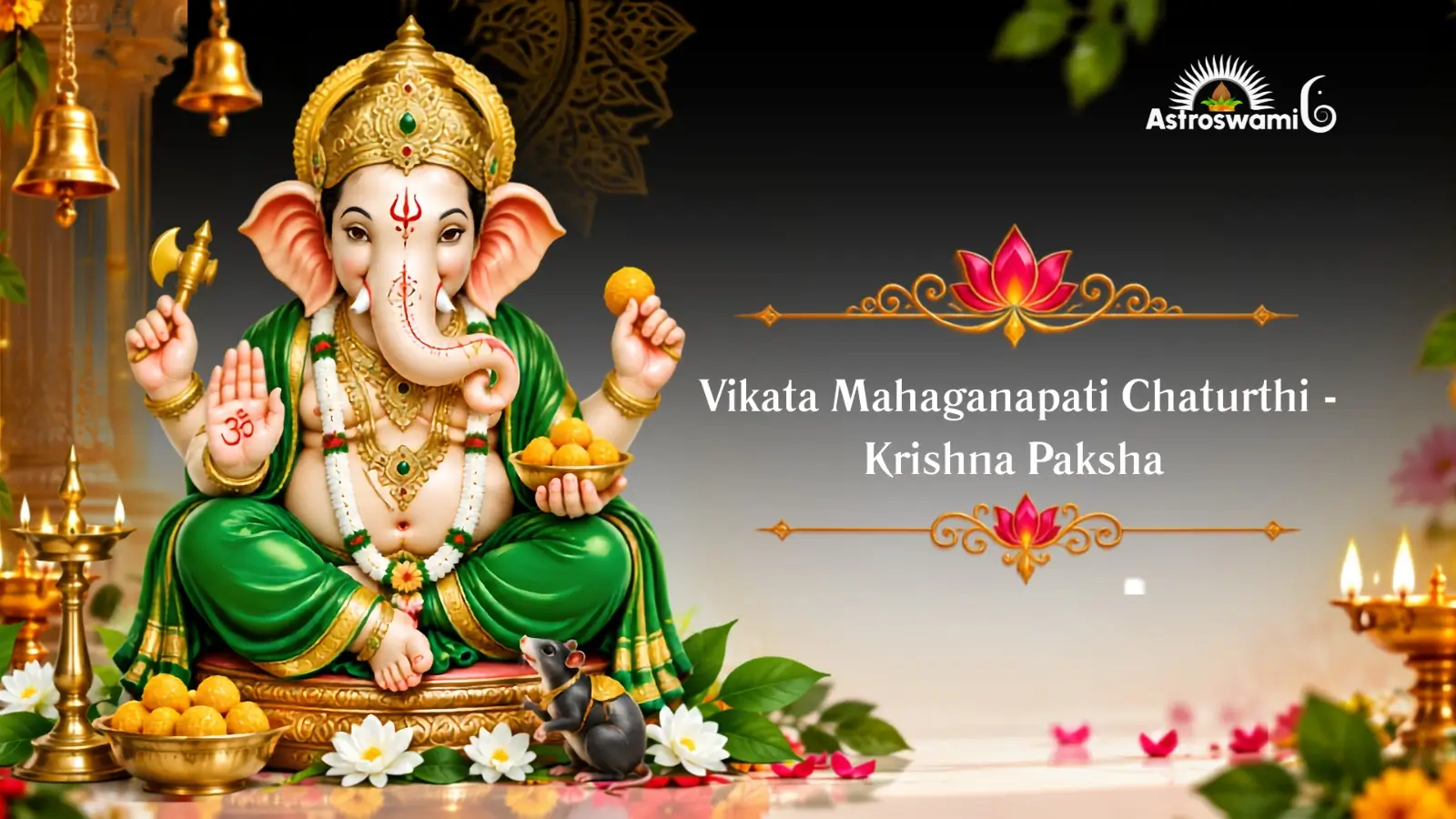
Vikata Mahaganapati Chaturthi is a sacred observance dedicated to Lord Ganesha in his powerful form as “Vikata Mahaganapati,” celebrated during the Krishna Paksha (waning phase of the moon) in the month of Chaitra. The term “Vikata” means “unconventional” or “one who takes a fierce and unusual form,” while “Mahaganapati” denotes the great and supreme form of Lord Ganesha. This particular Sankashti Chaturthi holds special significance as it falls in Chaitra, the first month of the Hindu lunar calendar, marking a time of renewal, new beginnings, and spiritual rejuvenation.

Devotees observe this day with fasting, prayer, and rituals dedicated to Lord Ganesha, seeking his blessings for the removal of obstacles and the fulfillment of new endeavors undertaken during this auspicious month.

Importance of Vikata Mahaganapati Chaturthi

The Meaning Behind “Vikata”

In this form, Lord Ganesha is depicted as fierce and formidable, representing his power to destroy negativity, ego, and adversities that hinder a devotee’s growth. Unlike his more gentle depictions, the Vikata form emphasizes strength, courage, and the ability to confront and overcome difficult circumstances head-on.

Importance of the Chaitra Month

Chaitra is considered a highly auspicious month in the Hindu calendar, symbolizing new beginnings and the start of the traditional new year in many regions of India. Observing Sankashti Chaturthi during this month is believed to amplify the benefits of the vrat, helping devotees set a positive and obstacle-free tone for the months ahead.

Spiritual Importance

Worshipping Lord Ganesha as Vikata Mahaganapati is believed to instill courage, resilience, and inner strength in devotees. This observance is particularly significant for those facing persistent challenges or seeking the confidence to embark on new ventures, as it is associated with the destruction of deep-rooted obstacles.

Rituals and Observance

Fasting Guidelines

Devotees observing Vikata Mahaganapati Chaturthi typically follow these practices:

  • Waking up early and taking a purifying bath before sunrise
  • Wearing clean, traditional attire, preferably in red or yellow
  • Observing a complete or partial fast, consuming only fruits, milk, or sabudana-based foods
  • Breaking the fast in the evening after sighting the moon

Puja Vidhi (Worship Method)

The worship ritual generally follows these steps:

  • Setting up a clean and decorated altar with an idol or image of Lord Ganesha
  • Offering fresh flowers, durva grass, and red sandalwood paste
  • Lighting a diya and incense sticks to purify the surroundings
  • Offering modak, laddoo, or other sweets as bhog
  • Reciting the Ganesha Chalisa, Sankashti Chaturthi Vrat Katha, and other devotional hymns
  • Performing the evening aarti after the moon rises

Mantras and Chants

Devotees often recite the following mantras during their worship:

  • “Om Gan Ganapataye Namah”
  • “Vakratunda Mahakaya Suryakoti Samaprabha, Nirvighnam Kuru Me Deva Sarva-Karyeshu Sarvada”

Chanting these mantras with devotion is believed to invoke Lord Ganesha’s protective and transformative energy.

Benefits of Observing Vikata Mahaganapati Chaturthi

Devotees who observe this vrat with sincerity are believed to experience:

  • Removal of deep-rooted or long-standing obstacles
  • Increased courage and confidence to pursue new goals
  • Success in ventures initiated during the Chaitra month
  • Protection from negative influences and adversities
  • Strengthened willpower and mental resilience

The Legend Behind Vikata Mahaganapati

According to Hindu mythology, Lord Ganesha assumed the Vikata form to combat and overcome powerful negative forces that threatened cosmic balance. His fierce yet righteous nature in this form symbolizes the triumph of good over evil and the courage required to face life’s greatest challenges. Devotees who worship him in this form seek to imbibe similar strength and determination in their own lives.

Conclusion

Vikata Mahaganapati Chaturthi, observed during the Krishna Paksha of Chaitra, is a powerful occasion for devotees to seek Lord Ganesha’s blessings for strength, courage, and the removal of significant obstacles. As this observance coincides with the auspicious beginning of the Hindu new year, it offers a meaningful opportunity to start fresh with renewed faith and determination. This sacred day continues to inspire devotees to face life’s challenges with resilience and unwavering devotion.

Frequently Asked Questions (FAQs)

Q1. What does “Vikata” mean in the context of Lord Ganesha?
Vikata refers to a fierce and formidable form of Lord Ganesha, symbolizing his power to destroy negativity, ego, and significant obstacles that hinder a devotee’s spiritual and material progress.

Q2. Why is this Chaturthi considered especially significant?
This Chaturthi falls in the Chaitra month, which marks the beginning of the Hindu new year in many traditions, making it an auspicious time to seek blessings for new beginnings and fresh starts.

Q3. What is the ideal way to observe this fast?
Devotees typically fast from sunrise to moonrise, consuming only fruits, milk, or light sabudana-based foods, and conclude the day with puja and aarti after sighting the moon.

Q4. Who should observe Vikata Mahaganapati Chaturthi?
Anyone seeking courage, strength, and the removal of persistent obstacles can observe this vrat. It is especially meaningful for those starting new projects, businesses, or life chapters.

Q5. How does worshipping this fierce form of Ganesha benefit devotees?
This worship is believed to instill inner strength, resilience, and confidence, helping devotees confront and overcome major challenges while inviting success in new endeavors.

Shardiya Navratri 2026 Date

The story behind Shardiya Navratri

In the Lanka war, Brahmaji asked Shri Ram to worship Chandi Devi for slaughtering Ravana and to make the Goddess happy, and according to tradition, there was also a provision of 108 rare lotus flowers for Chandi Poojan and Havan. On the other hand, Ravan started his own Chandi worship to achieve immortality. Indra Dev conveyed this to Shri Ram through Pawan Dev and advised that the Chandi worship should be completed as thoroughly as possible. This divine worship during Sharad Navratri became a symbolic moment of devotion and power.

During the puja, a rare blue lotus (Nilkamal) from the place of worship mysteriously vanished due to Ravan’s elusive power, threatening to disrupt Shri Ram’s worship. Shri Ram’s resolve was shaken, and there was a fear that the mother goddess would become angry.

Since arranging another Nilkamal was impossible, Shri Ram remembered that he was also known as Kamal-Nayan – the lotus-eyed one. So he decided to offer one of his own eyes to the mother’s worship instead. Just as Lord Rama was about to remove his eye with an arrow, the Goddess appeared, held his hand, and blessed him with victory – “I am delighted, and you shall be granted Vijayashree.”

Meanwhile, during Ravana’s own worship, Hanuman Ji took the form of a Brahmin child and joined the ritual. A verse recited by the Brahmins – “Jaya Devi, Bharati Harinani, Harini” – carries the meaning that the devotee’s suffering and pain (Karani) would be removed. With this, Durga grew angry with Ravana’s deceit and cursed him, leading to his eventual destruction.

The second story behind Navratri

According to another legend, Goddess Durga was destined to slay the buffalo demon, Mahishasura. Pleased by Mahishasura’s penance, the gods had granted him a boon of invincibility. Misusing this power, he wreaked havoc across the heavens – seizing the domains of the Sun, Moon, Indra, Fire, Air, Yama, Varuna, and other deities, and declaring himself ruler of the heavens. The gods, tormented by his tyranny, combined their divine energies to create Goddess Durga. Each god offered her their most powerful weapon, strengthening her for the battle ahead. For nine days and nights, she fought Mahishasura, ultimately slaying him and earning the name Mahishasurmardini. This victory of Goddess Durga is celebrated with devotion during Shardiya Navratri 2026, when devotees remember her as Mahishasurmardini and honour the triumph of good over evil.

How to do Shardiya Navratri Puja 2026

Correct timing is extremely important for planning rituals and fasting schedules. This year, the festival will be celebrated with great devotion across the country. For nine days, different avatars of Maa Durga will be worshipped. The transition between the seasons – spring and autumn – along with the shifting effects of the sun, is considered a sacred confluence, and these periods are seen as ideal opportunities for the worship of Goddess Durga. The nine days are divided into three sets of three, each dedicated to worshipping a different attribute of the Goddess. People across India eagerly search for Shardiya Navratri 2026 date and time so they can align their puja, vrat, and cultural celebrations with the most auspicious timings.

Make this Shardiya Navratri more auspicious by seeking the blessings of Goddess Durga and finding your perfect life partner. Ensure harmony, compatibility, and lifelong happiness through accurate Kundli Matching online at AstroSwamiG.

Shardiya Navratri 2026 Day 1 to 3

The first three days of Navratri are devoted to worshipping Goddess Durga for her energy and strength. Each day honours a different form of Durga – the first day represents a young girl, the second a woman, and the third a woman who has reached maturity. The Goddess is worshipped as Durga or Kali, depicted as a warrior goddess dressed in red and riding a lion.

Shardiya Navratri 2026 Day 4 to 6

Devotees worship Goddess Lakshmi during these days to seek material comfort, spiritual wealth, and prosperity. She is depicted dressed in gold as the goddess of wealth and peace. The fourth, fifth, and sixth days of Navratri are devoted to her worship.

Shardiya Navratri 2026 Day 7 to 9

In the final three days, the seventh day is devoted to the worship of Goddess Saraswati, the goddess of art and wisdom, with a special Yagya performed.

9th Day of Shardiya Navratri 2026

The ninth day, Maha Navami, is the concluding day of the Navratri festival. On this day, young girls (Kanya Pujan) are worshipped as forms of the Goddess.

Shardiya Navratri 2026 Pooja Method and Kalash Establishment Shubh Muhurat

Shardiya Navratri 2026 begins on 11th October 2026 (Sunday) and concludes with Vijayadashami on 20th October 2026 (Tuesday). Nine days are dedicated to the worship of Goddess Durga, and performing her puja during Navratri is believed to remove every difficulty from a devotee’s life.

The auspicious Ghatasthapana (Kalash Sthapana) muhurat for Delhi falls on 11th October 2026, from approximately 06:19 AM to 10:12 AM. Those who miss this window can perform the Kalash Sthapana during the Abhijit Muhurat, from 11:44 AM to 12:31 PM. Many devotees search for the exact Shardiya Navratri 2026 date to align their puja and fasting rituals with the most auspicious timings.

Before any worship in Hindu scriptures, the tradition of worshipping Lord Ganesha first is prescribed. According to belief, the Kalash used in the mother’s worship represents Lord Shiva himself, and so it is worshipped first. Before setting up the Kalash, the place of worship should be purified with Ganga water, and all the gods are invited to be part of the ritual.

The Kalash is decorated using turmeric, betel nut, paddy, and five types of leaves, and is placed on a bed prepared with sand where barley seeds are sown for Annapurna Devi’s worship. The idol of Mother Durga is adorned with roli, rice, vermillion, garlands, flowers, chunari, sari, jewellery, and suhag items.

Devotees offer fruits and sweets to the mother in the morning, milk at night, and halwa-puri on the ninth day. From this day onward, recitation of ‘Durga Saptashati’ or ‘Durga Chalisa’ begins, and an unbroken (akhand) lamp is lit, which should remain burning throughout the fasting period.

After the Kalash Sthapana, the Aarti of Ganesh Ji and Mother Durga is performed, marking the start of the nine-day fast. On the day of Kalash establishment, the first form of Navratri – Goddess Shailputri – is worshipped. Devotees fast on this day and, in the evening, break their vow by reciting devotional prayers to the mother.

Since the entire Navratri period is considered auspicious from the outset, a devotee who is unable to perform Kalash Sthapana during an inauspicious window can still do so at any point during the day without concern – Navratri Puja is believed to bring happiness and prosperity to every household.

2026 Shardiya Navratri dates in India

DayDateGoddess Avatar
Navratri Day 1 – Pratipada11th October 2026 (Sunday)Shailputri Pooja
Navratri Day 2 – Dwitiya12th October 2026 (Monday)Brahmacharini Pooja
Navratri Day 3 – Tritiya13th October 2026 (Tuesday)Chandraghanta
Navratri Day 4 – Chaturthi14th October 2026 (Wednesday)Kushmanda
Navratri Day 5 – Panchami15th October 2026 (Thursday)Skandamata
Navratri Day 6 – Shashthi16th October 2026 (Friday)Katyayani
Navratri Day 7 – Saptami17th October 2026 (Saturday)Kalratri
Navratri Day 8 – Ashtami18th October 2026 (Sunday)Mahagauri
Navratri Day 9 – Navami19th October 2026 (Monday)Siddhidatri
Vijay Dashami (Dussehra)20th October 2026 (Tuesday)Durga Visarjan

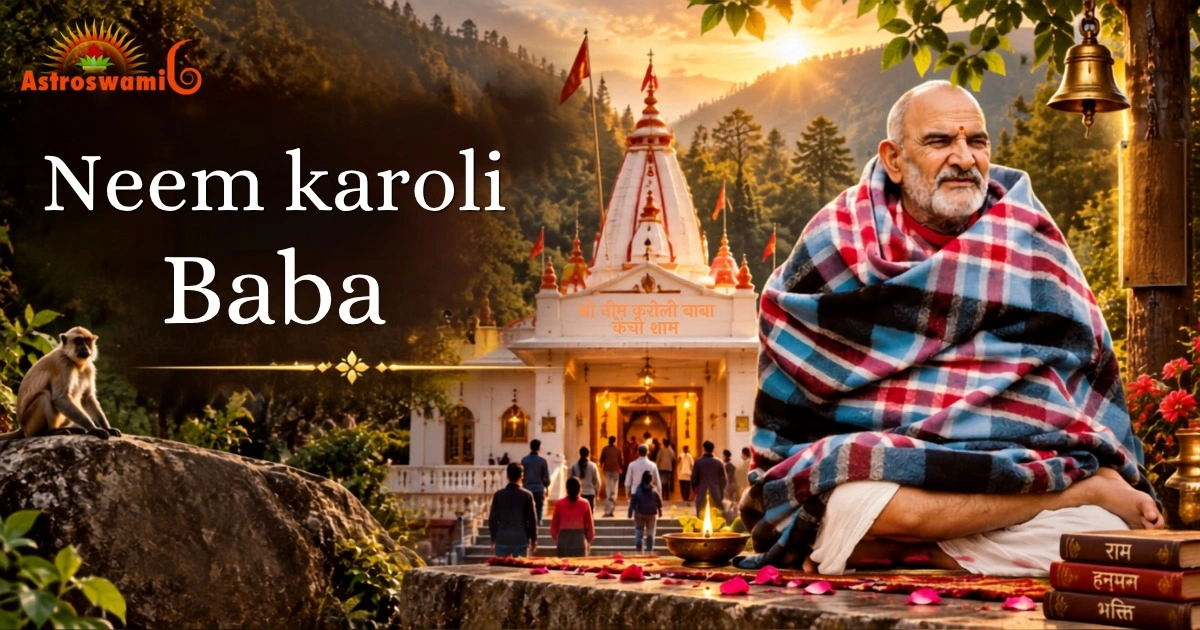
Neem Karoli Baba

Neem Karoli Baba—or Neeb Karori Baba as many call him—is a spiritual legend whose name still inspires millions today. What’s remarkable? Not just in India, but celebrities across the world consider him their spiritual guide. Steve Jobs, Mark Zuckerberg, Virat Kohli, Anushka Sharma, Julia Roberts—all have acknowledged his profound influence on their spiritual journeys.

But who really was Neem Karoli Baba? What made a simple, homeless sadhu become immortal in people’s hearts? And how can his teachings transform your life in 2026?

This guide reveals everything: his incredible life story, the famous train miracle that shocked railways, his actual spiritual teachings, and six practical ways to receive his blessings today.

Who Was Neem Karoli Baba? Birth to Spiritual Awakening

Real Name: Lakshmi Narayan Sharma
Birth: 1900, Akbarpur village (Ambedkar Nagar, Uttar Pradesh)
Also Known As: Maharajji, Handi Valla Baba, Chamatkari (Miraculous) Baba

His childhood was unusual. Around age seven, he would skip school to meditate in forests. His parents thought marriage would settle him. At eleven, they arranged it. Within months, he renounced family life and became a wandering ascetic.

For sixty years, Baba traveled North India—Himalayas, villages, forests. He owned almost nothing: a worn dhoti and a broken earthen pot worn like a cap. Locals called him “Handi Valla Baba” because of this.

Different places gave him different names based on his practices:

  • Tikonia Valla Baba (meditating near a triangular water reservoir in Aligarh)
  • Tallaya Baba (intense spiritual austerities in Gujarat)
  • Chamatkari Baba (constant miracles witnessed in Vrindavan)

But the name that made him legendary came from an extraordinary miracle.

The Train Miracle: How Neem Karoli Baba Got His Famous Name

This is the story that changed everything.

After decades of wandering with nothing, hunger forced Neem Karoli Baba to board a train at Farrukhadab station. Problem: he had no ticket and no money. He simply sat in the first-class compartment.

When the conductor discovered him, anger flared. The conductor pulled the emergency brake. The train screeched to a halt in the middle of nowhere—at Neem Karori village.

Baba was removed from the train. He simply sat beneath a Neem tree, completely peaceful.

The conductor tried starting the engine again. Nothing. The train wouldn’t move an inch.

Engineers tried multiple times. Still nothing. They called another locomotive to push it. The train remained completely stuck—as if an invisible force held it in place.

Passengers panicked. Officials were baffled. A local judge who knew Maharajji approached Baba respectfully. “Sir, perhaps if you board the train, everything will return to normal.”

Neem Karoli Baba set one condition: the railway officials must promise to build a permanent railway station for Neem Karori village (residents had to walk miles to the nearest station) and treat sadhus with respect.

The officials, desperate after hours of failed attempts, agreed.

Baba boarded the train. The engine started smoothly. The train moved perfectly.

Word spread like wildfire. The Western world called him “The saint who stopped the train.” And the village? It got its railway station, exactly as promised.

From that day forward, he was known as Neem Karoli Baba—named after the place where this impossible miracle occurred. His main ashram became Kainchi Dham in Uttarakhand, a pilgrimage site where millions still visit seeking his blessings.

Neem Karoli Baba’s Core Philosophy & Teachings

Maharajji never gave formal lectures. He taught through stories, actions, and love. His fundamental principle: “Sub Ek”—All is One. The same divine consciousness existed in every being. He saw no difference between rich and poor, Hindu and Muslim, human and animal.

His Core Teachings:

  1. All religions lead to God — He respected every faith equally. “Ram Ram” with Hindus, “Bismillah” with Muslims.
  2. See God in everyone — Every person carried the divine. Not philosophy, but lived reality.
  3. Seva (unconditional service) is highest practice — Serve without expecting recognition. “Serve as Hanuman served God.”
  4. Keep God in your thoughts constantly — Every moment, not just meditation time. Make God your constant companion.
  5. Surrender results to the divine — “Do your work perfectly, forget outcomes. Everything is God’s will.”
  6. Love and compassion dissolve all barriers — Hatred, anger, judgment—these come from forgetting God’s presence in all beings.
  7. Spiritual practice should be joyful — Not austere. Spirituality meant freedom and happiness, not seriousness.
  8. All action is prayer — Whether eating or working, if done with awareness of God, it becomes meditation.
  9. Bhakti (devotion) is the best path — Heartfelt love matters more than intellectual understanding.
  10. Everything is divine grace — Every challenge is an opportunity to trust God more deeply.

Annapurna Siddhi: Divine Abundance Power

Among Neem Karoli Baba’s supernatural abilities, one stood out: the Annapurna Siddhi—power of infinite food supply. Annapurna is the goddess of nourishment. Those with this siddhi can feed countless people from limited resources.

A documented incident: A devotee brought eight oranges in a basket to Maharajji. He distributed them to everyone present—people in the room, in the temple, to passing devotees. Somehow, he distributed forty-eight oranges.

During the 1966 Kumbh Mela, Maharajji sat on the Ganges banks with two sadhus. He told them to bring large quantities of river water. Then instructed them to distribute it. What they distributed wasn’t water—it was milk.

Yet Baba remained humble about these powers. He deflected credit, keeping focus on the divine, not on himself.

Why Neem Karoli Baba Matters in 2026

In a world of anxiety, uncertainty, and endless materialism, his teachings offer something profound: a way to live that’s rooted in peace, trust, and meaning.

Modern anxiety: His teaching “Trust in Hanuman; everything is taken care of” sounds simple, but it works. Not because problems disappear, but because your relationship with problems transforms. When you truly believe the divine is handling everything, anxiety naturally decreases.

Relationship conflicts: Couples struggling with misunderstanding often find healing through his principle: “See God in your partner.” Instead of focusing on faults, recognize the divine presence in that person. Relationships transform when partners are treated as sacred.

Career pressure: “Do your work with full attention, then leave results to God” contradicts modern hustle culture. But it works. When you focus on effort rather than outcomes, paradoxically, better results come. And you’re not destroyed by failure.

Spiritual emptiness: Many people discover that money, success, and possessions don’t fulfill them. Neem Karoli Baba showed that real satisfaction comes from spiritual connection—from feeling part of something infinite and divine.

The most important point: His blessings are still active. People continue to experience miracles, divine guidance, and life transformations through connection with him. This isn’t belief or sentiment—it’s documented experience across thousands of devotees.

Six Practical Ways to Connect With Neem Karoli Baba’s Blessings

1. Recite Hanuman Chalisa
Maharajji had a profound connection with Hanuman, the embodiment of devotion and service. Reciting Hanuman Chalisa (the 40-verse prayer) for 40 consecutive days, especially on Tuesdays and Saturdays, creates a powerful energetic connection. Thousands report clarity, protection, and unexpected blessings within this period.

2. Visit Kainchi Dham
His main ashram, Kainchi Dham in Uttarakhand, remains a powerful spiritual center. Direct darshan (presence) in sacred spaces amplifies spiritual experiences. The energy there is palpable. If you cannot visit physically, online darshan is also available.

3. Practice Seva (Selfless Service)
Feed the hungry, help animals, participate in community work. Baba loved seva above all practices. The key: serve without expecting gratitude or recognition. Small acts done with pure intention yield profound results.

4. Chant “Ram Ram”
This was Maharajji’s favorite mantra. When stressed or confused, simply repeat “Ram Ram.” It’s immediate, calming, and deeply effective. The practice grounds you in divine presence instantly.

5. Daily Meditation on His Form
Spend 10-15 minutes daily visualizing Neem Karoli Baba—his peaceful face, simple dhoti, infinite compassion. This meditation creates an energetic bridge between you and his consciousness. Consistent practice deepens the connection.

6. Read Divine Stories
Books like “Miracle of Love” contain authentic accounts of his miracles and teachings. Stories strengthen faith more than abstract philosophy. Your mind, reading about others’ transformations, naturally begins believing in your own.

Conclusion

Neem Karoli Baba’s most famous teaching: “Love everyone, serve everyone, remember God, and tell the truth.”

Four lines. Infinite power.

If you live by these principles, your life transforms. Not through complicated rituals or difficult practices, but through sincere alignment with divine consciousness.

This year, make a commitment. Start small: recite Hanuman Chalisa for 40 days, perform one act of daily seva, meditate on his form for 10 minutes. Experience what millions have already discovered—that Maharajji’s blessings are real, accessible, and life-changing.

The saint who stopped a train with pure consciousness is still working. Still guiding. Still loving. The only question is: Are you ready to receive?

Common Questions About Neem Karoli Baba

Was Neem Karoli Baba enlightened?
Yes, completely. He was a self-realized saint in constant communion with divine consciousness. Yet he lived with absolute simplicity and humility, never advertising his spiritual status.

Are his blessings available to non-Hindus?
Absolutely. His teaching was “Mera Baba sabka hai” (My Baba belongs to everyone). Religion, caste, nationality—none of these matter. Pure devotion and sincere intention are the only requirements.

How long until I see results?
Subtle shifts often appear within 3-7 days—improved mood, unexpected clarity, or chance encounters. Significant life changes typically manifest within 40 days. Major transformations in relationships, career, or circumstances often take 3-12 months depending on your existing karma and consistent spiritual effort.

What if I miss a practice?
Spiritual practice isn’t about perfection; it’s about sincerity. Even interrupted practice yields results. The universe responds to genuine effort, not flawless execution.

The Eternal Legacy

On September 11, 1973, Neem Karoli Baba took Mahasamadhi (conscious departure from the body) in Vrindavan. He was returning by train from Agra when chest pain struck. In the hospital, surrounded by devoted followers, he peacefully chanted “Jaya Jagdish Hare” (Glory to the Lord of the Universe), removed all medical interventions, and consciously left his body.

But this wasn’t an ending. In the spiritual world, enlightened masters transcend physical limitations. Their consciousness continues working, guiding, and blessing seekers.

Millions of people still feel Maharajji’s presence. They receive guidance through dreams, experience impossible synchronicities, and feel his protection in moments of crisis. These aren’t coincidences—they’re the continuing work of a realized master who devoted his life to helping humanity.

2026 Pitru Paksha – Shradh 2026 Significance and Importance

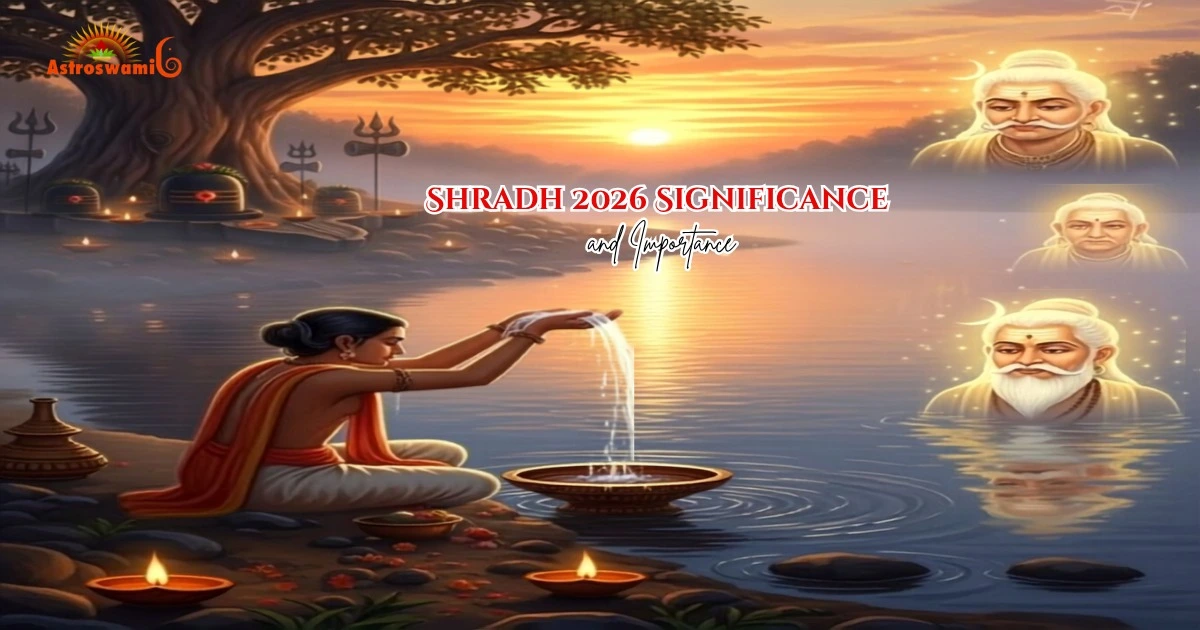
Pitru paksha is a sixteen-day period in which the Hindus pay homage to their ancestors and respect them. During this time period – which begins with the first full moon (full moon) after Ganesh Chaturthi and ends on the new moon, not only allows the people to honour them from their direct biological lineage, but rather to their spiritual, and to whom who is involved in our moral and intellectual development. There is no better way to thank them, therefore, in the patriarchal side, the ancestors Neco should be respected.

Pitru Paksha is the time to honor ancestors and resolve karmic debts Talk to Astrologers today to find remedies for peace, prosperity, and family harmony.

The history behind Pitru Paksha

According to legend, when the warrior King Karna died during the Mahabharata war and his soul ascended to heaven, he was given gold ornaments instead of food. Feeling that he cannot keep himself on these things, he addressed Swami Indra of Heaven and asked him why he is not getting real food. Lord Indra then told them because they gave these objects as their whole life charity but never donated food to their ancestors. On which Karna replied that he was not aware of her ancestors. Upon hearing this argument, Indra agreed to return Karna to Earth for a period of fifteen days so that he could cook food in the memory of her ancestors and donate. This period of time this is now known as the Pitru paksha.

By checking your kundali by date of birth, you can understand ancestral karmic debts that become active during Pitru Paksha.

2026 Pitru Paksha – Shradh Tradition and Celebrations

During this time Shradh is performed according to rituals. This specificity of this ritual may vary from person to person, but usually, it combines three components. The first part is Pindadan, Pinda’s offering to the ancestors. Pinda is rice balls that are usually made from goat’s milk, ghee, sugar, rice, honey and occasionally barley. The second part of the ceremony is the offering of burnt water with a tarp, kusha grass, barley, flour and black sesame. The last part of the ceremony is to offer food to the Brahmin. This Brahmin is giving food to the priests. Also during this time, reading from holy Sashtra is considered auspicious.

Pitru Paksha is a time to honor ancestors and resolve karmic patterns. Kundli matching during this period ensures that your marriage begins with harmony, prosperity, and ancestral blessings.

However, there are some things that should be avoided during Pitru paksha. Participants are considered to avoid getting involved in new efforts; Eat non-vegetarian foods; Shaving or haircuts; Eat onions, garlic food or junk food.

However, there are some important Pitru Paksha rules that devotees traditionally follow during this period, including avoiding certain foods, new ventures, shaving or haircuts, and other activities.

On which day do the Shradh rituals of the ancestors

However, on the new moon of every month, Shradh can be done for the peace of the ancestors, but the importance of doing Shradha in the Pitru paksha is considered to be of great importance. For the day, on the day of Pitru paksha, the scientific idea is to recite the ancestors, the father or the deceased member of the family, remembering the date of the departure of the family, should only pray on the said date falling in the paternal home. If the date of the birth is not known then Ashwin Amavasya can be made to Shradha, it is also called Sarvapatriya Amavasya. Before time, ie, those who have died due to an accident or suicide, etc. their religion is done on the date of Chaturdashi. Ashtami for father, it is considered suitable for the mother to celebrate the date of Navami.

During Pitru Paksha, Gemstones recommended by expert astrologers can remove ancestral doshas, balance planets, and ensure harmony in family and career.

When is Pitru Paksha 2026

Shradha 2026 Dates

2026 Shradh Paksha days with dates

Shradh NamesShradh DatesShradh Days
Purnima Shraddha26 September 2026Saturday
Pratipada Shraddha27 September 2026Sunday
Dwitiya Shraddha28 September 2026Monday
Tritiya Shraddha29 September 2026Tuesday
Chaturthi Shradh30 September 2026Wednesday
Panchami Shraddha1 October 2026Thursday
Shashthi Shraddha2 October 2026Friday
Saptami Shraddha3 October 2026Saturday
Ashtami Shraddha4 October 2026Sunday
Navami Shraddha5 October 2026Monday
Dashami Shraddha6 October 2026Tuesday
Ekadashi Shraddha7 October 2026Wednesday
Dwadashi Shraddha8 October 2026Thursday
TrayodashiShraddha9 October 2026Friday
Chaturdashi  Shraddha9 October 2026Friday
Sarva Pitru Amavasya10 October 2026Saturday

Pitru Paksha – Shradha Paksha 2026 dates

 September 26, 2026 (Saturday) to October 10, 2026 (Saturday) 

What should be done in Pitru Paksha

One thing is to keep in mind that the person who remembers his ancestors and praises the ancestors in the paternal home, his big miseries and sufferings begin to dispel. The souls of the ancestors have so much power that they can redress the major difficulties of a person. If friends are delighted to feed the ancestors in the father’s family, all the problems of planetary turmoil is also taken away. Therefore, the person should please his ancestors with special precautions in these days.

Ganesh Chaturthi 2026 Date, Muhurat, Rituals and Significance

Festival Date: Monday, September 14, 2026 Visarjan (Anant Chaturdashi): Thursday, September 24, 2026 Duration: 10 Days (Ganeshotsav)

What Is Ganesh Chaturthi?

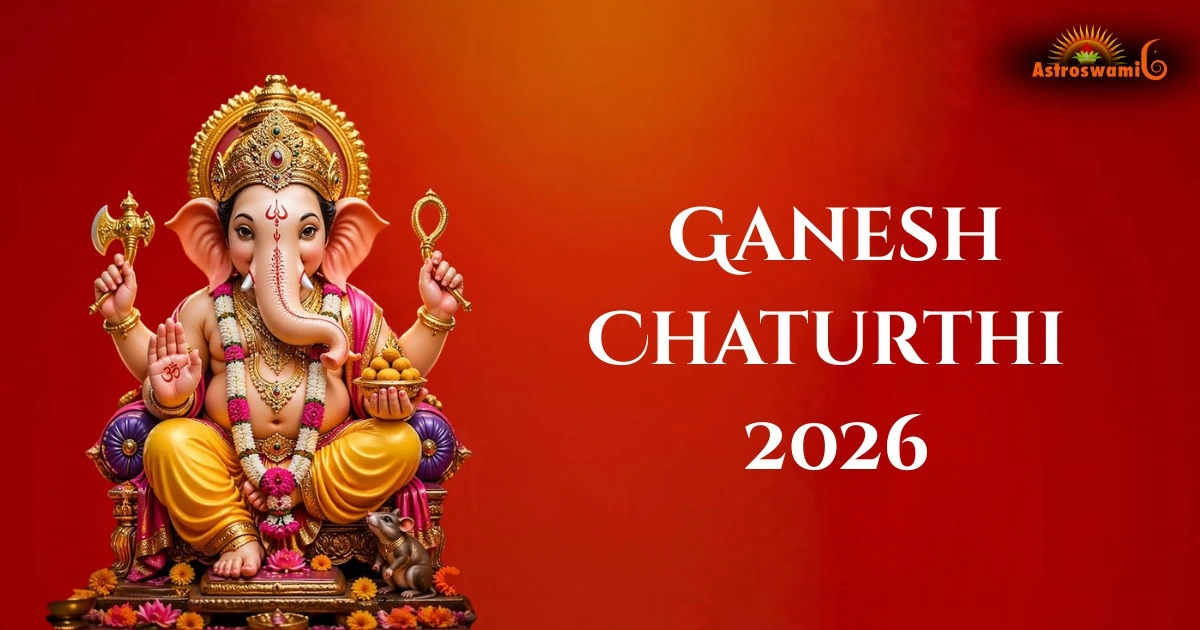
Ganesh Chaturthi is also known as Vinayaka Chaturthi or Ganeshotsav is one of the most joyous and widely celebrated Hindu festivals in India and around the world. It marks the birth anniversary of Lord Ganesha, the elephant-headed son of Lord Shiva and Goddess Parvati, who is revered as the deity of wisdom, prosperity, new beginnings, and the remover of all obstacles.

The festival falls on the Shukla Chaturthi Tithi (fourth day of the waxing moon) of the Bhadrapada month according to the Hindu lunar calendar – typically in August or September as per the Gregorian calendar. Celebrations last for 10 days, culminating in the grand immersion of Ganesha idols, known as Ganesh Visarjan, on Anant Chaturdashi.

If you are searching for what to do in 10 days of Ganesh Chaturthi 2026, this complete guide explains the daily rituals

Ganesh Chaturthi 2026: Date and Muhurat

DetailDate / Time
Ganesh Chaturthi 2026Monday, September 14, 2026
Chaturthi Tithi BeginsSeptember 13, 2026 (evening)
Chaturthi Tithi EndsSeptember 14, 2026 (afternoon)
Madhyahna Puja MuhuratApprox. 11:00 AM – 1:30 PM
Ganesh Visarjan (10th Day)September 24, 2026

Astrologer’s Note from AstroSwamig: The festival beginning on a Monday in 2026 is considered especially auspicious, as Monday (Somvar) is the sacred day of Lord Shiva — making it a doubly blessed occasion for worshipping Lord Ganesha, the divine son of Shiva.

Puja Muhurat Explained

The Madhyahna Muhurat (midday period) is considered the most auspicious time for Ganesh Chaturthi Puja. According to Vedic astrology and the Panchang, Ganesha Sthapana (idol installation) and the main puja should ideally be performed during this window. Performing the puja during this time ensures maximum blessings and divine grace.

Ganesh Chaturthi 2026: 10-Day Festival Calendar

DayDateSignificance
Day 1 – PrarambhSeptember 14Ganesha Sthapana (Installation)
Day 2September 15Ganesh Puja & bhajans begin
Day 3September 16Cultural events & community gatherings
Day 4September 17Continued devotion & offerings
Day 5September 18Panchami Visarjan (5-day immersion option)
Day 6September 19Devotional programs & prasad distribution
Day 7September 20Saptami Puja
Day 8September 21Ashtami celebrations
Day 9September 22Navami – intensified worship
Day 10 – VisarjanSeptember 24Anant Chaturdashi – Grand Immersion

The Mythological Significance of Ganesh Chaturthi

According to Hindu scriptures and Puranas, Goddess Parvati created Lord Ganesha from the sandalwood paste applied to her body, breathing life into him and appointing him as the guardian of her chamber. When Lord Shiva returned and was denied entry by Ganesha (who did not know his father), a fierce battle ensued, resulting in Ganesha’s head being severed. To pacify the grieving Parvati, Lord Shiva had his attendants (Ganas) bring the head of the first living being they encountered facing north — which was an elephant. Ganesha was thus restored to life with the head of an elephant, and Shiva declared him the leader of all Ganas, giving him the name Ganapati.

Lord Ganesha is also celebrated as the scribe of the Mahabharata — it is said that the sage Vyasa dictated the great epic to Ganesha, who wrote it down without pause.

Why Ganesha Is Worshipped First

In Hindu tradition, Lord Ganesha is invoked before the commencement of any auspicious event, ritual, journey, or new venture. This custom stems from a divine boon granted by Lord Shiva and all the gods: that Ganesha shall be the first to be worshipped, for without his blessings, no endeavour can succeed.

Historical Background: The Public Celebration Movement

While Ganesh Chaturthi has ancient Vedic roots, it was transformed into a large-scale public festival in the 19th century by the great freedom fighter and social reformer Lokmanya Bal Gangadhar Tilak. In 1893, during the British colonial era, Tilak envisioned a community-based celebration that would unite people across caste and class — using the festivity to spread nationalist ideas and foster unity in the independence movement.

His vision turned Ganesh Chaturthi from a quiet household observance into a vibrant 10-day public festival, a tradition that lives on most magnificently in Maharashtra, particularly in Mumbai and Pune.

Key Rituals of Ganesh Chaturthi 2026

1. Pratisthapana (Idol Installation)

Devotees bring home — or communities install in public pandals — clay idols of Lord Ganesha. The idol is placed on a raised platform, decorated with flowers, and the divine spirit is invoked through the Pranapratishtha ritual (infusing life into the idol through sacred mantras).

2. Shodashopachara Puja (16-Step Worship)

The main puja on Ganesh Chaturthi involves offering 16 traditional items to Lord Ganesha, including:

  • Flowers (especially red hibiscus and durva grass)
  • Dhoop (incense)
  • Deepak (lamp)
  • Naivedya (food offerings)
  • Modak (the beloved sweet)
  • Panchamrit (mixture of five sacred items)

3. Modak Offering

Modak — a sweet dumpling made from rice or wheat flour and filled with jaggery and coconut — is Lord Ganesha’s most beloved offering. It is said that offering modaks pleases Ganesha immensely and invites his choicest blessings into the home.

4. Chanting of Mantras and Aarti

Throughout the 10 days, devotees chant sacred Ganesha mantras such as:

  • Om Gan Ganapataye Namah
  • Om Vakratundaya Hum
  • Ganapati Atharvashirsha

The famous Sukhkarta Dukhaharta aarti by Sant Samarth Ramdas is sung with great devotion, especially in Maharashtra.

5. Ganesh Visarjan (Immersion)

On the final day (Anant Chaturdashi — September 24, 2026), the idol is carried in a grand procession with music, dancing, and chanting to a nearby water body, where it is immersed. This act symbolises Lord Ganesha’s return to his heavenly abode on Mount Kailash with his parents, taking with him the sorrows and obstacles of his devotees. It also represents the cosmic cycle of creation and dissolution — that all life ultimately merges back into the divine.

Moon Sighting Taboo on Ganesh Chaturthi

One of the most well-known customs associated with this festival is the prohibition against sighting the moon on Ganesh Chaturthi night. According to Puranic legend, Lord Ganesha was once insulted by the moon god (Chandra), who laughed at him after Ganesha fell from his vehicle. As a result, Lord Ganesha cursed the moon, declaring that anyone who sees the moon on Chaturthi night shall be falsely accused of a crime or theft.

This is associated with the story of Lord Krishna being falsely accused of stealing the precious Syamantaka jewel because he had seen the moon on Chaturthi. Devotees therefore carefully avoid seeing the moon on Ganesh Chaturthi.

Astrological Significance of Ganesh Chaturthi 2026

From an Vedic astrology perspective, Ganesh Chaturthi holds deep planetary significance:

  • Lord Ganesha is associated with Ketu (South Node of the Moon) in Vedic astrology. Worshipping Ganesha during this festival pacifies a malefic Ketu in one’s horoscope.
  • The festival falls during Bhadrapada Shukla Paksha, when spiritual energies are heightened and prayers are said to be especially powerful.
  • Beginning a new venture, business, or study during the Madhyahna Muhurat on Ganesh Chaturthi 2026 is considered among the most auspicious times of the year.
  • Devotees with Mangal Dosh, career obstacles, or legal troubles particularly benefit from sincere Ganesha puja during this period.

Consult an AstroSwamig expert to find out how Ganesh Chaturthi 2026 aligns with your personal Kundli and what specific puja, mantra, or donation will maximise blessings for your unique situation.

Regional Celebrations Across India

Maharashtra

The grandest celebrations in India take place in Mumbai and Pune, with iconic public pandals drawing millions. The Lalbaugcha Raja and Kasba Ganpati are among the most famous idols visited by devotees and even Bollywood celebrities and political figures.

Andhra Pradesh & Telangana

Known locally as Vinayaka Chavithi, this is a major state festival celebrated with great zeal, large pandals, and cultural performances.

Karnataka & Goa

Public and private celebrations are widespread, with Goa blending its unique cultural flavour into the festivities.

Tamil Nadu

Observed as Vinayagar Chaturthi, with special temple pujas and home rituals.

Pan-India & Global

Indian diaspora communities in the USA, UK, Australia, Singapore, Malaysia, and beyond celebrate Ganesh Chaturthi with equal devotion, organising community events and cultural programmes.

Eco-Friendly Ganesh Chaturthi 2026

In recent years, there has been a growing and heartwarming movement toward eco-friendly celebrations, driven by concerns about water and chemical pollution during idol immersion. Here’s how you can celebrate responsibly in 2026:

  • Choose clay (shadu mati) idols that dissolve naturally in water
  • Use natural, water-based colours for decoration
  • Decorate with flowers, leaves, and biodegradable materials
  • Opt for home immersion in a bucket of water, then use the water to nourish plants
  • Avoid Plaster of Paris (PoP) idols and synthetic paints

An eco-friendly celebration is not just better for the environment — it is also more aligned with the spirit of Ganesha, who, as the lord of nature’s intelligence, would surely rejoice in a celebration that honours the Earth.

Powerful Mantras for Ganesh Chaturthi 2026

For Obstacle Removal:

Om Gam Ganapataye Namah

Vakratunda Mantra:

Vakratunda Mahakaya Suryakoti Samaprabha | Nirvighnam Kuru Me Deva Sarva-Kaaryeshu Sarvada ||

Ganesh Gayatri Mantra:

Om Ekadantaya Vidmahe, Vakratundaya Dhimahi | Tanno Danti Prachodayat ||

Chanting these mantras 108 times during the Madhyahna Muhurat on September 14, 2026 is considered especially powerful for removing obstacles from your life, career, relationships, and health.

Prasad and Offerings for Ganesh Chaturthi

OfferingSignificance
ModakGanesha’s favourite sweet — invites wisdom and happiness
Durva GrassRemoves sins and bestows longevity
Red Hibiscus (Japa)Pleases Ganesha and brings success
CoconutSymbol of ego surrender
LadooSweet offering for prosperity
BananaNourishment and fulfillment

Frequently Asked Questions (FAQs)

Q: When is Ganesh Chaturthi 2026? A: Ganesh Chaturthi 2026 falls on Monday, September 14, 2026.

Q: When is Ganesh Visarjan 2026? A: Ganesh Visarjan (Anant Chaturdashi) falls on Thursday, September 24, 2026 — 10 days after the festival begins.

Q: What is the best time to perform Ganesh Puja in 2026? A: The most auspicious time is the Madhyahna Muhurat, approximately between 11:00 AM and 1:30 PM on September 14, 2026.

Q: Why should we not look at the moon on Ganesh Chaturthi? A: It is believed that sighting the moon on this night brings false accusations upon the viewer, based on the Puranic story of Ganesha’s curse on the moon.

Q: Is Ganesh Chaturthi a public holiday in 2026? A: Yes, it is a public holiday in Maharashtra, Karnataka, Goa, Andhra Pradesh, and Telangana.

Q: Which sweet is offered to Lord Ganesha? A: Modak is Lord Ganesha’s most beloved offering.

Conclusion: Invite Ganesha’s Blessings into Your Life

Ganesh Chaturthi 2026 is a magnificent opportunity to seek the divine blessings of Vighnaharta — the remover of all obstacles. Whether you’re embarking on a new business, seeking success in your career, praying for family harmony, or simply wishing to deepen your spiritual practice, there is no more powerful time than the ten auspicious days of Ganeshotsav.

Begin with a pure heart, perform the puja with devotion, chant his sacred mantras, and surrender your obstacles at his divine feet. Ganpati Bappa Morya!

Apart from Ganesh Chaturthi, several other significant Hindu festivals and fasts will also be observed in September 2026. You can read our related articles for more information on the dates, rituals, fasting rules, and religious significance of these festivals: Remove Pitra Dosh | Shradh Significance and Importance | Pitru Paksha rules | Krishna Janmashtami | Aja Ekadashi |