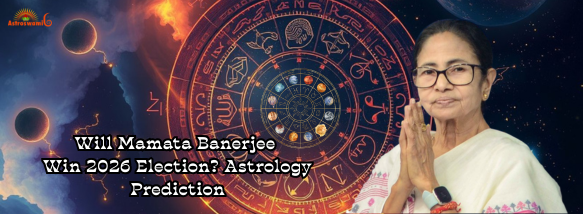
Mamata Banerjee, affectionately known as Didi in Bengal, has transformed West Bengal's political landscape since unseating the Left Front in 2011. As the 2026 West Bengal legislative assembly elections draw closer, the question echoes across households: Will Mamata Banerjee win 2026 election? astrology Vedic astrology offers a nuanced perspective, not a crystal‑ball guarantee, analyzing planetary cycles that shape leadership fortunes. This article blends that astrological insight with real political context, focusing on trends rather than fabricated numbers.
Bengal's politics remain volatile—TMC's dominance since 2011, but BJP's foothold has deepened dramatically. The 2026 verdict will hinge on economic performance, welfare delivery, and public sentiment. Astrology, however, highlights timing and cosmic patterns that can amplify or test an incumbent's strength.
From a Vedic astrology vantage point, Mamata Banerjee appears to be in a strong yet contested position for 2026. Her birth chart indicates a resilient leadership nature, and current planetary transits suggest that she will face a close contest rather than an easy win. Historical patterns show that experienced leaders often navigate tough phases successfully, and the 2021 results support this trend.
West Bengal's election history reveals consistent high turnout, with the TMC consolidating rural support while BJP expands in certain regions. Recent data underscores the role of governance and welfare schemes in shaping voter preferences, even as unemployment and other issues create headwinds.
|
Year |
Total Seats |
TMC Seats |
TMC Vote Share |
BJP Vote Share |
Voter Turnout |
|
2011 |
294 |
184 |
41.6% |
3.9% |
79.8% |
|
2016 |
294 |
211 |
44.9% |
10.2% |
82.7% |
|
2021 |
294 |
215 |
47.8% |
38.0% |
82.4% |
Source: Election Commission‑based analyses and historical records.
These figures illustrate TMC's steady gain in seats and vote share, against BJP's rise, setting the stage for a fiercely contested 2026 election where astrology and data intersect.
Born on 5 January 1955 in Kolkata, Mamata Banerjee's Capricorn ascendant fuels her tenacious, grounded leadership style. Her chart suggests an ability to connect with the masses—qualities that have defined her three‑term reign. As 2026 approaches, the interplay of planetary transits—especially Saturn, Rahu, and Jupiter—shapes the cosmic backdrop.
In Vedic astrology, the 10th house governs career, authority, and public image, while the Sun symbolizes leadership and command. Mamata Banerjee's chart indicates a strong emphasis on these sectors, enabling her to maintain visibility and influence. Her Moon placement supports emotional resonance with voters, particularly in rural and women‑centric constituencies.
West Bengal's electorate exceeds 90 million, with high literacy and politicization shaping a dynamic battleground. The 2026 election will reflect not only party strategies but also broader astrological currents influencing public sentiment.
The political climate is charged—TMC's welfare‑driven narrative versus BJP's national‑centric agenda. Collective planetary transits indicate that status‑quo challenges will mount, yet parties with strong grassroots networks may retain advantages. Recent analyses highlight TMC's consolidation in South Bengal, while BJP gains in select districts.
Rural and women voters have historically leaned towards TMC, and Jupiter's influence may reinforce this tilt by enhancing trust in welfare‑oriented governance. Urban areas, however, show greater volatility, where Rahu‑driven narratives could sway opinions. Overall, the signals point to a nuanced but generally positive lean for incumbents who manage perceptions effectively.
The 2026 contest represents a direct clash between TMC's incumbency and BJP's national momentum. Astrology adds context to this real‑world rivalry.
TMC's ground network, bolstered by welfare schemes like Lakshmir Bhandar and Duare Sarkar, strengthens its 11th‑house gains in astrological terms—symbolizing mass support and public victories. Economic indicators, such as West Bengal's GDP growth around 7.6% (2023–24, RBI data), provide a backdrop for this stability.
BJP has surged from three seats in 2016 to 77 in 2021, and its national narrative promises further expansion. However, internal dynamics and Rahu‑influenced unpredictability may cap its gains. Recent unemployment data, with West Bengal's rate fluctuating around 6.9–17.4% depending on the period (CMIE), underscores economic concerns that opposition can exploit.
Every leader confronts tests, and 2026 will intensify these for Mamata Banerjee.
Anti‑incumbency and local issues—such as allegations of violence—generate pressure. Governance scrutiny, amplified by recent reports, demands transparency and accountability. These pressures align with Saturn's influence, rewarding leaders who demonstrate integrity and action.
Saturn may introduce health or administrative stress, while Rahu could trigger controversies that test crisis management. However, these same energies can sharpen leadership if navigated wisely. Vedic remedies emphasize balance—such as maintaining routine discipline on Saturdays (Saturn) and engaging in wisdom‑sharing on Thursdays (Jupiter)—to foster resilience.
Beyond 2026, the horoscope suggests a trajectory of continued influence for Mamata Banerjee.
Jupiter's favorable cycles may propel her onto a national stage, reinforcing TMC's stability. Leadership transitions, including within her family, could align with these planetary patterns. The long‑term outlook indicates sustained relevance, provided governance remains responsive to public needs.
Long‑range dasha patterns hint at enduring political stability, underpinned by experience and legacy. Family involvement, such as through her nephew Abhishek Banerjee, may further solidify TMC's base. Saturn's maturation of her leadership narrative could cement her legacy as a transformative figure.
Astrological trends indicate that Mamata Banerjee will face a challenging but winnable 2026 election. Her established ground connect, resilience, and responsiveness to public sentiment position her strongly, even as Saturn applies pressure. Voters will ultimately decide, with astrology offering a reflective lens rather than a definitive verdict.
Patterns suggest that incumbent leaders with strong mass appeal often prevail in close contests, as seen in 2021 when TMC secured 215 seats despite BJP's rise to 77. The 2026 scenario echoes this, with Mamata's leadership poised to navigate turbulence successfully, albeit with elevated scrutiny.
Disclaimer: This article presents astrological interpretations based on Vedic principles and verifiable political data. It does not endorse any party or candidate. Real‑world outcomes depend on democratic processes, voter decisions, and governance. Astrology serves as a symbolic reflection, not a scientific prediction.
Q: Can astrology predict election results?
A: Astrology analyzes planetary cycles and leadership dynamics, not exact vote counts. It offers insights into timing and trends.
Q: Which planet governs political power?
A: The Sun represents leadership, while Saturn provides long‑term stability and Jupiter bestows public trust in Vedic astrology.
Q: Does Saturn always cause loss of power?
A: Saturn tests leaders through accountability and pressure but rewards resilience, not instant downfall.
Q: Why is Jupiter significant in 2026?
A: Jupiter's transit may enhance public trust and legitimacy, benefiting ethical leadership.
Q: Should people rely on political astrology?
A: Treat it as cultural insight; civic engagement and informed choices remain paramount.
Download Now





 99587 87570
99587 87570
99587 87570
If you have face any problem at our Website related to payments Or any other issues then take screenshot and send it on our WhatsApp number mentioned above.
Monday To Sunday | 24/7Submit details and our representative will get back to you shortly.
 0124-3659395
 99587 87570
 En
En






.png)
.png)