En
En

What is Nadi Dosha
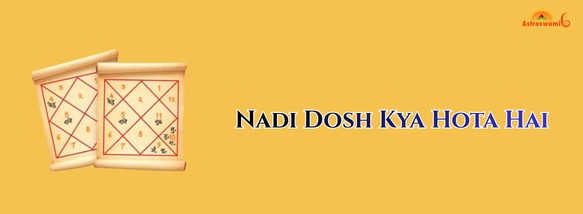
Nadi Dosha is a major compatibility factor in Vedic astrology, a system explained in detail in Jyotish Shastra, that appears during kundli matching for marriageand is believed to affect marital harmony, children, and health when it is present in a couple’s charts. In simple terms, Nadi Dosha occurs when both partners share the same Nadi in their birth charts, and this is considered one of the most inauspicious conditions in guna milan.
What is Nadi Dosha?
In traditional ashtakoot guna milan, a total of 36 points are evaluated between the prospective bride and groom, out of which Nadi carries the highest weight of 8 points. There are three primary Nadis considered in Vedic astrology – Aadi (first), Madhya (middle), and Antya (last), and each native belongs to one of these based on their birth star or nakshatra.
When the boy and girl belong to the same Nadi type, 0 out of 8 points are awarded in the Nadi category, and this situation is called Nadi Dosha in the match. This is why many astrologers consider it a sensitive factor and advise families to check it carefully before finalizing a marriage.
Symbolic meaning of Nadi in astrology
Nadi in this context is linked with the flow of life‑force energy and the physical–psychological nature of a person Similar ideas about destiny and life patterns are also discussed in systems like Nadi Jyotish not the medical pulse that doctors check. Each Nadi is often associated with certain temperaments and constitutional traits, similar to how some traditions connect it with Vata, Pitta and Kapha type qualities.
Because of this, when two people with the same Nadi marry, it is believed that their life‑force patterns may clash or become unbalanced, creating stress in emotional, physical and reproductive areas of life. This symbolic reasoning is what makes Nadi Dosha important in classical texts and among traditional astrologers.
What happens due to Nadi Dosha?
Astrologers commonly associate Nadi Dosha with three broad areas of life – marital harmony, children, and health. In married life, it is said to cause frequent misunderstandings, emotional distance, repeated arguments, or a constant feeling of dissatisfaction between partners even when they try to keep the relationship stable.
On the progeny side, Nadi Dosha is believed to create delays in conception, repeated miscarriages, or long waiting periods before childbirth, especially when other negative combinations also appear in the chart. Some sources also mention unexplained or recurring health issues, ups and downs in vitality and, in extreme cases, serious illnesses that indirectly strain the relationship and finances of the couple.
Of course, not every couple with Nadi Dosha will face all these situations, but in classical astrology it is treated as a risk factor that should be evaluated with care.
Why is it sometimes called “Nadi Maha Dosha”?
Nadi Dosha is often referred to as one of the most serious or “maha” doshas in the context of marriage matching because it carries the highest score and is tied directly to the future of children and the stability of marriage. When Nadi Dosha appears along with other negative combinations affecting the 5th (children), 7th (marriage) or 8th (longevity, sudden events) houses, some astrologers describe it as a form of “Nadi Maha Dosha” due to the compounded risk.
However, the same authorities also note that strong benefic planets, supportive dashas and powerful yogas can significantly reduce the harmful impact of this dosha. Because of this, responsible practitioners insist on examining the full birth charts of both partners instead of making a final decision based on Nadi alone.
How is Nadi decided in a chart?
From a practical point of view, Nadi is determined primarily through the nakshatra (birth star) and sometimes its specific quarter or pada. Every nakshatra is assigned to one of the three Nadis – Aadi, Madhya or Antya – and therefore each person automatically falls into one of these categories based on their exact birth star.
During horoscope matching, the Nadi of the bride and groom is compared; if the Nadis are different, the pair generally receives 8 full points in the Nadi category. If both have the same Nadi group, this is marked as Nadi Dosha and they receive 0 points there, which is why elders often react very carefully when this result shows up in a report.
Types of Nadi and their basic traits
Most marriage‑matching systems acknowledge three Nadi types – Aadi, Madhya and Antya (sometimes called Antar). While exact interpretations vary between traditions, they are often loosely connected with different temperaments and energies in a person’s nature.
-
Aadi Nadi is commonly linked with more active, outgoing and high‑energy traits, similar to a dominant, initiating temperament.
-
Madhya Nadi is connected with emotional depth, sensitivity and a more balancing or middle‑path approach to life.
-
Antya Nadi is associated with introversion, calmness and an inward, sometimes spiritual orientation of the personality.
When astrologers explain Nadi Dosha, they also consider which of these three Nadis is involved, because the kind of emotional or physical strain expected in married life may differ depending on whether the clash happens in Aadi, Madhya or Antya. Some practitioners believe that matches involving the same Madhya Nadi can be particularly delicate for emotional and progeny issues, which is why they handle such cases very cautiously.
How to identify Nadi Dosha in practice
For a layperson, manually calculating Nadi can be difficult because it requires accurate birth chart details, proper identification of the nakshatra and knowledge of which Nadi that star belongs to. In a simple sense, if both partners’ nakshatras fall in the same Nadi group and the Nadi section in guna milan shows 0 out of 8 points, the match is considered to have Nadi Dosha.
Today, many websites and software tools generate automatic “generate your kundli report” or full guna milan charts that clearly flag whether Nadi is matched or not. Even so, most experts advise that the final judgment about marriage should be taken only after a skilled astrologer has reviewed both full charts, including other doshas and positive yogas, instead of relying only on one parameter.
General remedies briefly mentioned in tradition
Although the main purpose of defining Nadi Dosha is risk assessment in matching, classical texts and modern astrologers do talk about certain nadi dosh remedies when a couple chooses to proceed despite it. These may include specific pujas, homas (fire rituals), mantra recitation, fasting on particular days, charity to the needy, and in some cases, performing rituals at designated temples before or soon after marriage.
Some practitioners also suggest lifestyle‑oriented remedies such as maintaining mutual respect, open communication, and consciously working on emotional bonding, because these practical steps can greatly soften the real‑life expression of any astrological dosha. Detailed and personalized remedies, however, are normally prescribed only after a thorough reading of both kundlis, since the same Nadi Dosha can behave very differently from one couple to another.
Does every marriage with Nadi Dosha fail?
Astrology sources are quite clear that the presence of Nadi Dosha does not automatically mean that a marriage will fail or that the couple must be separated. Many couples with this dosha live stable, loving lives, especially when benefic combinations support the 5th and 7th houses or when effective remedies and conscious relationship work are in place.
Some authorities also mention conditions in which the dosha can be partially or fully cancelled, such as when the couple’s rashis or nakshatras differ in certain ways, or when strong positive yogas overpower the negative score given by Nadi. Because of this, informed astrologers treat Nadi Dosha more as a warning signal that calls for deeper analysis and careful decision‑making, rather than as an absolute verdict on the future of the relationship.
In many traditional communities, the strictest application of Nadi rules is seen among Brahmin families, but the underlying idea—that this factor can influence husband–wife dynamics—has gradually spread across other groups as well. Ultimately, the impact of Nadi Dosha is understood as a blend of astrological combinations, individual karma and how consciously the couple works on their bond in real life.
check your personalised kundli report
To deepen your spiritual connection, explore our complete festival wisdom series:- ram navami 2026 / mahavir jayanti 2026 / Holika Dahan Remedies / Holi 2026/Holi Festival Significance/ 2026 Chaitra Navratri
Related Articles
Recently Added Articles

Discover Nadi Jyotish online, the ancient palm leaf astrology that reveals insights about your past, present, and future through thumb impression read...

Nadi Dosh remedies explained by Vedic experts. Get free, accurate and trusted guidance with instant solutions. 15+ years experience, 5 star rated supp...
Right and left itchy palm meanings in astrology for men and women. Discover spiritual signs, financial beliefs, and Hindu astrology interpretations....
Is right eye blinking good or bad for females? Know its astrology meaning, signs & remedies based on Vedic insights. Free guide with accurate solution...





.png)
.png)

Download Now



Quick Links
HOROSCOPE
Safe & Secured Payment



Legal
Customer Support
Head office:Call Us On:
WhatsApp On:
 9958787570
If you have face any problem at our Website related to payments Or any other issues then take screenshot and send it on our WhatsApp number mentioned above.
Monday To Sunday | 24/7Get Free Quote!
Submit details and our representative will get back to you shortly.