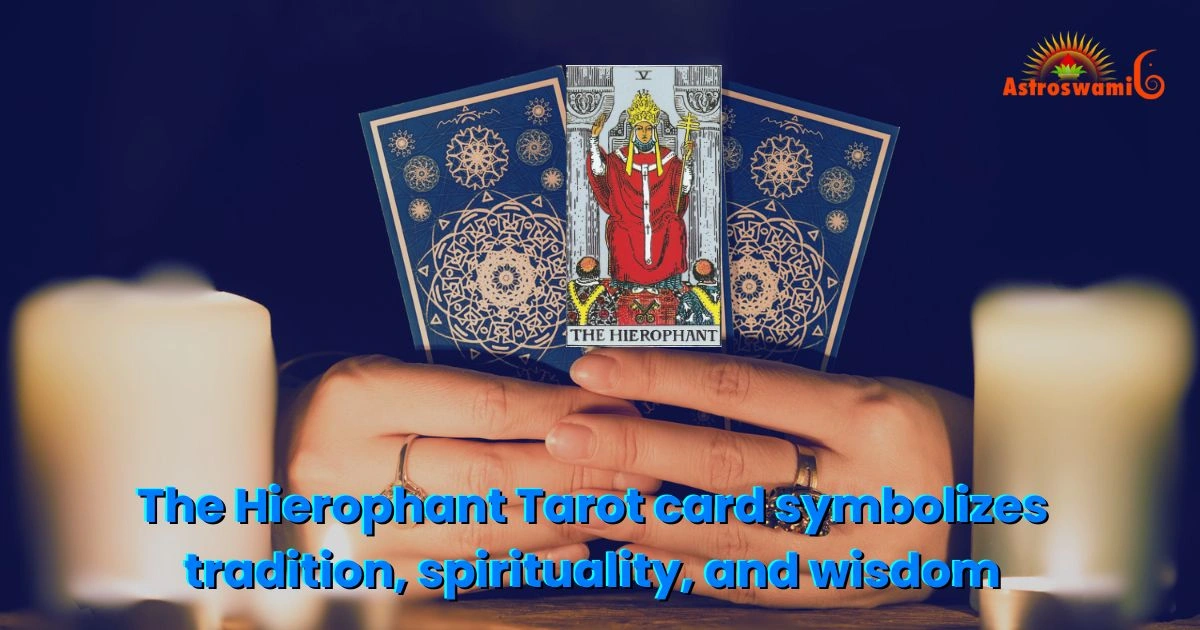
The Hierophant Tarot card symbolizes tradition, spirituality, and wisdom

The Hierophant tarot card, the fifth card in the Major Arcana, represents tradition, conformity, spiritual wisdom, and institutional knowledge. Often referred to as “The Pope” or “The High Priest” in some tarot decks, the Hierophant embodies teachings from established belief systems, acting as a bridge between divine wisdom and human understanding. In this article, we’ll explore the Hierophant’s symbolism, its spiritual and astrological associations, and what it reveals when it appears in various positions in a tarot reading.

The Structure of the Tarot and the Role of the Major Arcana

Before delving into the details of the Hierophant card, it’s essential to understand the structure of the tarot and the significance of the Major Arcana:Many people who study tarot alongside Vedic Astrology also prefer learning both systems together to understand deeper spiritual connections.

  • Major Arcana: Made up of 22 cards, the Major Arcana reflects life’s major themes, pivotal experiences, and spiritual archetypes. Each card offers profound insights into personal and universal growth.
  • Minor Arcana: Consisting of 56 cards divided into four suits (Cups, Pentacles, Swords, and Wands), the Minor Arcana deals with everyday experiences, challenges, and smaller themes.

As the fifth card of the Major Arcana, the Hierophant stands as a figure of spiritual wisdom, echoing universal truths through established systems of faith, culture, and morality. His teachings emphasize learning through tradition and adhering to values that provide a structured path toward spiritual growth. When seekers feel confused about spiritual decisions, they often prefer to talk to astrologer for clarity along with their tarot readings.

Visual Symbolism of the Hierophant Card

Each detail in the Hierophant card is rich with symbolism, carrying meanings that deepen our understanding of his role and message.

1. The Hierophant’s Pose and Robe

Typically depicted sitting on a throne in formal, often ecclesiastical attire, the Hierophant exudes a sense of authority and sacred wisdom. His robe often bears intricate patterns symbolizing knowledge, ritual, and spiritual discipline. This attire signifies his role as a teacher and moral guide, bridging the realms of the divine and the mundane.

2. The Triple Cross Staff

The Hierophant holds a triple cross staff, symbolizing his authority over the three realms: the physical, mental, and spiritual. The three bars on the staff also represent the Holy Trinity, highlighting his connection to religious doctrines and established spiritual truths. This staff serves as a symbol of divine authority and alignment with the cosmic laws that govern creation.

3. The Keys

Two crossed keys are often depicted at the Hierophant’s feet, representing access to spiritual knowledge and wisdom. These keys, commonly understood Some seekers also compare this symbolism with the unlocking of one’s destiny through kundali free prediction based on planetary energies.

4. The Supplicants

At the foot of the Hierophant, two supplicants (often monks or followers) kneel in reverence. This imagery reflects the tradition of passing down knowledge and the respect for those who have committed themselves to a spiritual path. Their presence represents the hierarchy of spiritual learning and the role of mentorship.

5. The Throne and Pillars

The Hierophant sits between two gray pillars, symbolizing stability and duality. These pillars echo the two contrasting forces of life, similar to the pillars seen in the High Priestess card. However, unlike the High Priestess, the Hierophant’s role is to teach, guide, and offer structure, emphasizing learning through established systems rather than intuitive wisdom.

The Meaning of the Hierophant in a Reading

The Hierophant’s primary role in a reading is as a messenger of traditional values, spiritual guidance, and formalized knowledge. His presence in a reading often suggests that a situation calls for structure, established practices, and guidance from conventional wisdom.

1. Tradition and Conformity

One of the central themes of the Hierophant card is tradition. This card encourages individuals to respect established systems, whether in the form of family traditions, religious beliefs, or cultural practices. The Hierophant suggests that there may be strength in following a conventional path, as these structures are built on time-tested wisdom.

2. Spiritual Guidance and Wisdom

As a spiritual leader, the Hierophant brings messages of divine wisdom and guidance. When this card appears, it may signify a need to seek counsel from a mentor, teacher, or spiritual advisor. It encourages individuals to learn from others’ experiences, acknowledging that spiritual growth often requires guidance from those with deeper knowledge.

3. Learning and Education

The Hierophant is also a card of education, representing formal learning and the pursuit of knowledge. This card may appear when a person is embarking on a journey of study, such as enrolling in a program, joining a group, or seeking to deepen their understanding of a specific topic. It signifies that learning within a structured setting can lead to valuable insights and personal growth.

4. Rules and Structure

The Hierophant is a symbol of the structures that provide order and stability in life. His appearance may indicate that a situation requires adherence to rules, social norms, or legal frameworks. It suggests that following established procedures may be beneficial, especially when facing uncertainty.

5. Religious and Moral Beliefs

On a deeper level, the Hierophant card represents a person’s moral and religious beliefs. It invites reflection on one’s values, ethics, and beliefs, encouraging alignment with core principles. This card calls for integrity, urging individuals to stay true to their spiritual beliefs while navigating life’s challenges.

The Hierophant Card in Different Positions

In tarot readings, the placement of the Hierophant card in a spread can significantly affect its interpretation.

1. Past Position

When the Hierophant appears in the past position, it often indicates that traditional beliefs or teachings have shaped one’s current circumstances. This card suggests that previous experiences with authority figures, family traditions, or educational institutions have influenced present-day decisions. Reflecting on how these influences shaped your current perspective can offer clarity and insight.

2. Present Position

In the present position, the Hierophant indicates that guidance from an established source or a need for structure may be relevant now. It encourages individuals to seek wisdom, embrace formal education, or consult a mentor to help navigate current challenges. This placement suggests that adherence to traditional methods and respect for time-honored practices could lead to positive outcomes.

3. Future Position

In the future position, the Hierophant signifies an upcoming period of learning, mentorship, or spiritual growth. This card suggests that guidance from a teacher or joining an organization may lead to valuable experiences. The Hierophant invites individuals to be open to guidance and recognize that growth may come from learning within a structured environment.

Reversed Hierophant: Breaking Free from Tradition

When the Hierophant appears reversed in a reading, it signals a departure from tradition, rebellion against conformity, or a challenge to established norms.

1. Questioning Authority and Tradition

A reversed Hierophant may suggest a questioning of authority or traditional beliefs. This card indicates a time when an individual may feel constrained by established structures and desires to break free. It encourages examining whether certain beliefs align with personal values or are imposed by societal expectations.

2. Seeking Personal Freedom

The reversed Hierophant reflects a need for personal freedom and authenticity. This card may indicate a time of exploring unconventional paths, experimenting with alternative beliefs, or embracing spiritual practices outside mainstream traditions. It suggests that an individual is seeking independence from conventional structures.

3. Rebellion Against Conformity

In some cases, the reversed Hierophant represents rebellion against societal norms and rules. It may signify resistance to authority or a challenge to traditions that no longer serve personal growth. This card encourages finding new ways to express individuality and standing firm in one’s beliefs.

Astrological and Spiritual Associations

The Hierophant card is closely linked to Taurus, the astrological sign known for stability, loyalty, and adherence to tradition.

Taurus: The Sign of Earthly Values

Taurus, ruled by Venus, is associated with grounded energy, stability, and an appreciation for the finer aspects of life. The association with Taurus reinforces the Hierophant’s themes of consistency, loyalty to established values, and an appreciation for rituals and structured practices. Taurus values persistence and dedication, which align with the Hierophant’s encouragement to follow a structured path for spiritual or personal growth.

Practical Applications of the Hierophant Card’s Lessons

The Hierophant card offers valuable guidance on how to incorporate its principles of structure, tradition, and wisdom into daily life:

1. Embrace Learning and Seek Mentorship

The Hierophant encourages individuals to pursue formal education, mentorship, or spiritual guidance. Whether through enrolling in a course, consulting a trusted advisor, or exploring spiritual teachings, learning from established sources can enrich your understanding and personal growth.

2. Find Strength in Tradition

The Hierophant’s message of tradition invites you to find strength in practices and beliefs passed down through generations. Engaging in rituals, whether family traditions, religious practices, or cultural celebrations, can provide a sense of belonging, continuity, and stability.

3. Align with Core Values

Reflecting on your moral and spiritual beliefs and aligning your actions with these core values is a key lesson from the Hierophant. This card encourages integrity, reminding you that staying true to your values enhances personal fulfillment.

4. Create Structure in Your Life

The Hierophant emphasizes the importance of structure and routine. Establishing a daily or weekly routine, setting goals, or creating a plan of action can provide stability and promote productivity. Structure brings clarity, reduces stress, and helps achieve long-term objectives.

5. Respect Authority and Rules

The Hierophant card underscores the value of respecting authority and following rules, particularly when these rules protect the well-being of a larger community. Recognize when following established guidelines can lead to positive results, and learn from those in positions of wisdom and authority.

The Hierophant is a symbol of tradition, wisdom, and the guidance found in structured teachings and institutions. This card emphasizes the importance of learning from established knowledge and understanding how traditional practices can foster spiritual and personal growth. Whether through education, mentorship, or adherence to one’s beliefs, the Hierophant guides individuals to honor their values and seek wisdom within established frameworks.
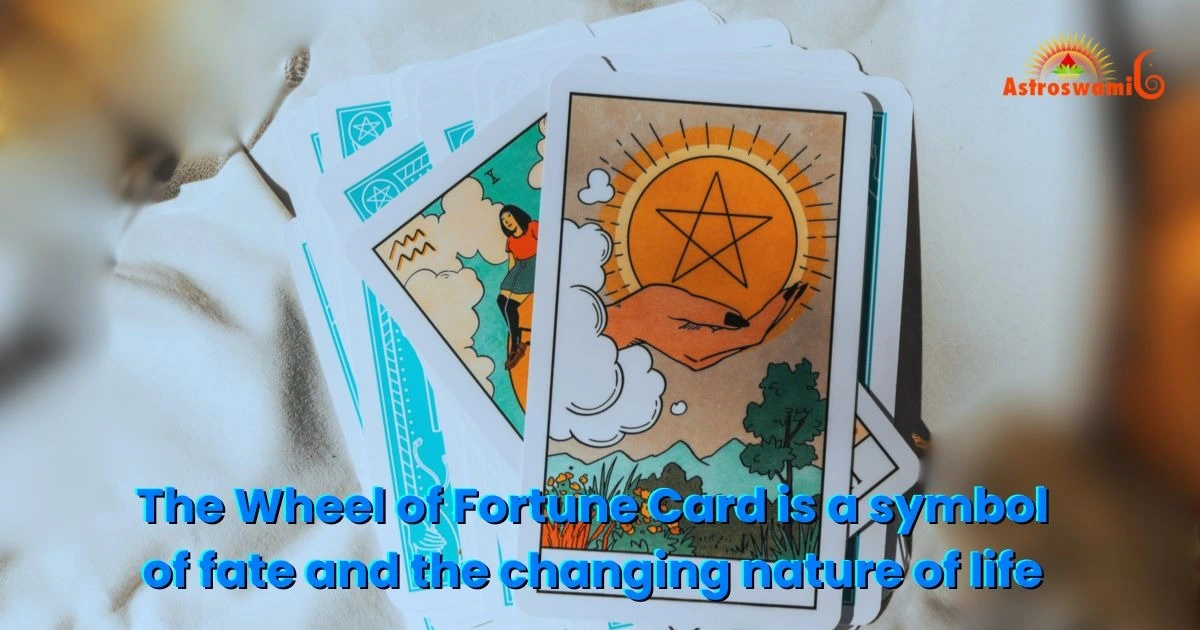
 

The Wheel of Fortune Card is a symbol of fate and the changing nature of life

The Wheel of Fortune is the tenth card in the Major Arcana of the Tarot deck. It is a powerful symbol of cycles, fate, and the ever-changing nature of life. The card represents the constant motion of the universe and reminds us of the unpredictability of life’s outcomes. As we explore the symbolism, interpretations, and deeper meanings behind this card, we will uncover its significance in various life situations and how it can guide us on our journey.

In this article, we will delve into the symbolism of The Wheel of Fortune, its meanings in different positions in a tarot reading, its astrological associations, and how it can provide valuable insights into how we interact with the forces of fate and destiny.  If you ever feel confused about these energies, you can explore guidance through astro chat for instant clarity.

Understanding the Structure of the Tarot Deck

Before we dive into the specifics of The Wheel of Fortune card, it’s helpful to understand the overall structure of the tarot deck. Many people even prefer to talk to astrologer while learning tarot because it connects cosmic energies with card meanings.

Major Arcana and Minor Arcana

  • Major Arcana: The Major Arcana consists of 22 cards, each representing a significant life event, spiritual lesson, or archetypal energy. These cards offer guidance on profound, transformative experiences.
  • Minor Arcana: The Minor Arcana consists of 56 cards divided into four suits—Cups, Pentacles, Swords, and Wands. These cards reflect the day-to-day experiences and challenges that shape our lives.

The Wheel of Fortune belongs to the Major Arcana, symbolizing fate, destiny, and the natural order of life.

Symbolism of The Wheel of Fortune Card

The Wheel of Fortune card is rich in symbolism, each element reflecting the themes of fate, cycles, and the forces that govern the universe. Understanding these symbols is key to unlocking the deeper meanings of the card.  Spiritual seekers often match this symbolism with their lagna kundali online to understand how fate cycles affect their personal journey.

1. The Wheel

The central image in the Wheel of Fortune card is, of course, the wheel itself. The wheel often appears as a large, circular shape, with spokes radiating outward. This wheel represents the cyclical nature of life—the constant turning of time, events, and circumstances. The wheel reminds us that life is in constant motion, and nothing remains stagnant for long.

The wheel can also represent the circle of life, emphasizing that our experiences, good or bad, are part of a larger, eternal cycle. Just as the wheel turns, so too do our fortunes, and life’s cycles come and go.

2. The Sphinx

Often depicted at the top of the wheel, a sphinx is a mythical creature that symbolizes knowledge and mystery. The sphinx’s presence on the Wheel of Fortune card is a reminder that fate is often an enigma. We can try to understand the cycles of life, but some things remain beyond our comprehension. The sphinx challenges us to embrace the mystery of life, rather than trying to control or predict every outcome.

3. The Four Creatures

In many depictions of the Wheel of Fortune card, four creatures—each representing the four fixed signs of the zodiac (Taurus, Leo, Scorpio, and Aquarius)—are shown around the wheel. These creatures represent the four corners of life, the four seasons, and the balance of the elements.

  • Taurus symbolizes stability and the grounding force in life.
  • Leo represents vitality, courage, and the energy of action.
  • Scorpio symbolizes transformation and rebirth.
  • Aquarius embodies change, innovation, and the unpredictable forces of the universe.

These four creatures signify the interconnectedness of all things and the cyclical nature of existence.

4. The Tapestry of Life

The Wheel of Fortune card often features intricate designs that resemble a tapestry or intricate pattern. This represents the interconnectedness of all events, emphasizing that our lives are part of a greater fabric that is constantly weaving new experiences. Every action, decision, and event in life creates ripples that affect the larger picture.

5. The Clouds and the Planets

In some tarot depictions, the Wheel of Fortune is surrounded by clouds and planets, emphasizing the role of divine influence and cosmic forces in shaping the flow of events. The presence of planets suggests that our fate is not entirely within our control, and external forces, such as time and destiny, play a significant role in shaping our lives.

The Meaning of The Wheel of Fortune Card

The Wheel of Fortune card is traditionally associated with change, cycles, and the concept of fate. It represents the ebb and flow of life’s fortunes, reminding us that life is not static but rather ever-changing. Whether the wheel turns in our favor or against us, it is a constant reminder that change is inevitable.

Let’s explore the main themes of The Wheel of Fortune card in detail:

1. Cycles and Change

At its core, The Wheel of Fortune is a card of cycles and change. Life is in constant motion, and circumstances are always shifting. This card emphasizes that both good and bad times are temporary, and we should learn to accept the ebb and flow of life.

When The Wheel of Fortune appears in a reading, it often signals that a new cycle is beginning or an existing one is coming to a close. The wheel turning represents a significant change, a turning point in life, or a time of transition. It is a reminder that life is dynamic, and we must be adaptable to the inevitable changes that come our way.

2. Fate and Destiny

The Wheel of Fortune card is strongly associated with fate and destiny. It suggests that there are forces at play beyond our control that shape the course of our lives. This can be both empowering and humbling. On one hand, it reminds us that there are aspects of life that we cannot control; on the other hand, it shows us that we are part of a larger cosmic plan.

The Wheel of Fortune can indicate that destiny is at work in a situation, guiding events in a way that is beyond our comprehension. This can be a time when opportunities present themselves unexpectedly, and we are asked to trust the flow of events, even if we don’t fully understand them.

3. Luck and Fortune

This card is often associated with luck, fortune, and chance. It can represent a fortunate turn of events, a breakthrough, or the end of a period of bad luck. When the Wheel of Fortune appears in a positive position in a reading, it can suggest that the wheel is turning in your favor, and opportunities are coming your way.

However, the card also serves as a reminder that luck can be fleeting. Just as the wheel can bring good fortune, it can also bring challenges. This card invites us to be prepared for the cycles of fortune, accepting both the highs and the lows that come our way.

4. Karma and The Law of Cause and Effect

The Wheel of Fortune is also associated with the concept of karma and the law of cause and effect. The actions we take today create the conditions for our future, and this card reminds us of the interconnectedness of our decisions.

In a reading, The Wheel of Fortune can signify a time when the consequences of past actions are being realized. If you have worked hard and made positive decisions, this card can signify a time of reaping rewards. Conversely, if you have made negative choices, the wheel may bring challenges or lessons to help you grow and learn from those experiences.

5. External Forces and Cosmic Timing

While The Wheel of Fortune is associated with change, cycles, and karma, it is also linked to the concept of cosmic timing. Sometimes, things happen at the right moment in time, as if guided by a higher force. This card suggests that there are external influences, whether they are divine, cosmic, or universal, that are in control of timing and unfolding events.

When The Wheel of Fortune shows up in a reading, it may indicate that the universe is aligning to bring about a new chapter in your life. It’s a reminder to trust that things are happening for a reason, even if you can’t see the full picture right now.

The Wheel of Fortune in Different Positions

In tarot readings, the position of the Wheel of Fortune card can influence its meaning. Let’s explore what The Wheel of Fortune might mean when it appears in different positions of a tarot spread.

1. Past Position

When The Wheel of Fortune appears in the past position, it often indicates that you have experienced a significant change or turning point in your life. This could be a pivotal moment that set the course for your current path. It may also suggest that your past actions or decisions have led to the current situation you find yourself in.

2. Present Position

In the present position, The Wheel of Fortune suggests that change is happening now, or is about to occur. It indicates that you are in the midst of a transition, and the wheel is turning in your favor. The card may suggest that now is a time to embrace the flow of events and allow yourself to be guided by the forces of fate.

3. Future Position

When The Wheel of Fortune appears in the future position, it signifies that a major shift is on the horizon. This can represent a time of transformation, when a new cycle of life begins. The card suggests that you should be open to the upcoming changes, as they could bring new opportunities or insights into your life.

Reversed Wheel of Fortune: Resistance to Change

When The Wheel of Fortune card appears in reverse, its meaning can take on a different tone. While the upright card suggests change and fortune, the reversed Wheel can indicate resistance to change, a lack of control, or a period of bad luck.

1. Resistance to Change

The reversed Wheel of Fortune can suggest that you are resisting the changes that are taking place in your life. You may be holding on to old habits, beliefs, or situations, preventing you from moving forward. This resistance can block your growth and cause frustration.

2. Bad Luck or Setbacks

The reversed Wheel of Fortune can also indicate a period of bad luck or misfortune. You may be experiencing a time when things aren’t going as planned, and the forces of fate seem to be working against you. However, this card is a reminder that, like all cycles, this period will eventually pass.

3. Delays and Timing Issues

In the reversed position, The Wheel of Fortune may also point to delays or issues with timing. You may be feeling like things are not happening according to plan or that opportunities are slipping through your fingers. Patience and understanding of divine timing can help you navigate this period.

The Wheel of Fortune tarot card is a profound symbol of the cycles of life, the forces of fate, and the ever-changing nature of existence. It teaches us that life is in constant motion, and every experience, whether good or bad, is part of a larger pattern of growth and transformation.

The Star Card Meaning in Tarot Reading Explained

The Star is one of the most uplifting and hopeful cards in the Tarot deck, representing inspiration, healing, and the renewal of faith. Positioned after the destruction of The Tower in the Major Arcana, The Star provides a calming light amidst darkness, offering a sense of purpose and clarity. As an astrologer, I view The Star not just as a card of hope but as a cosmic signal of spiritual alignment, guiding individuals toward harmony, authenticity, and inner peace.

This article will explore The Star Tarot card’s symbolism, its astrological correspondences, its meanings in various areas of life, and how it can be interpreted both upright and reversed. With a clear understanding of The Star’s message, we can tap into its healing energy and let it guide us toward personal and spiritual transformation.


1. The Symbolism of The Star Tarot Card

The Star card (number 17 in the Major Arcana) is imbued with symbols of peace, hope, and divine connection. Typically depicted as a woman kneeling by a body of water, pouring water from two jugs, one into the pool and the other onto the land, The Star embodies balance, tranquility, and a sense of harmony between the physical and spiritual realms. Such symbolism is often studied in online astrology and modern spiritual practices.

Key Symbols in The Star:

  • The Woman: The woman in the card is often seen as a symbol of purity, intuition, and the divine feminine energy. She represents a connection with one’s higher self and a gentle reminder to trust in the beauty of the journey.
  • The Water and Earth: The water being poured into the pool symbolizes emotions, subconscious thoughts, and spiritual nourishment. The water flowing onto the land represents grounding energy, connecting spirituality with practical life, and symbolizing a balanced approach to both inner and outer worlds.
  • The Stars: Surrounding the central, radiant star are seven smaller stars, often seen as a representation of the seven chakras, indicating alignment and spiritual wholeness. The large star signifies guiding light and inspiration, illuminating the path forward.
  • The Tree and Bird: Some depictions include a tree and a bird, often an ibis. These symbols add to the idea of growth, enlightenment, and spiritual freedom, symbolizing the natural world’s connection to the divine.

The Star card serves as a reminder of the beauty and light that exist within each person. After the upheaval of The Tower, The Star brings healing energy, calm, and assurance that the universe is guiding us. Many users also explore these deeper meanings with the help of free online kundli to connect tarot insights with their birth charts and planetary influences.

2. Numerology and Astrological Correspondences of The Star

Numerology: The Star is associated with the number 17. When reduced (1 + 7), it becomes the number 8, a number of balance, strength, and karmic cycles. In the case of The Star, this numerological association reflects a harmony between personal growth and spiritual abundance. It signifies a stage in life where one can align with their true purpose and harness inner power.

Astrological Association: The Star is commonly associated with Aquarius, the fixed air sign ruled by Uranus. Aquarius is known for its humanitarian spirit, innovation, and visionary qualities. Just like The Star, Aquarius encourages us to look beyond limitations and embrace progressive ideas. Aquarius is about connecting with the collective and seeking truth, and The Star embodies these Aquarian traits through its theme of divine inspiration, hope, and spiritual insight.

Many Aquarian individuals also seek gemstone recommendations such as Amethyst to enhance intuition aligned with The Star’s energy.

3. The Star in a Tarot Reading: Upright Meaning

When The Star appears upright in a reading, it brings a message of hope, renewal, and faith. The card suggests that a period of healing is ahead, and it encourages one to reconnect with their true self and the world around them. After challenging times, The Star brings a promise of calm and reassurance, inspiring a belief in the universe’s plan. 

People seeking personalised interpretations often choose to talk to astrologer specialists through online platforms

Key Upright Meanings:

  • Renewal and Healing: The Star indicates a time for emotional, mental, and spiritual healing. It brings a sense of relief and signals that any struggles are now in the past, making way for peace and tranquility.
  • Inspiration and Clarity: This card often appears when one is ready to embrace creative or spiritual pursuits. It can inspire new ideas, provide clarity, and guide toward a more fulfilling path.
  • Optimism and Faith: The Star reminds us to have faith in ourselves and the universe. Even if the future seems uncertain, this card encourages trust in life’s process and assures that things will unfold as they’re meant to.
  • Divine Guidance: The Star often represents a connection with higher realms, symbolizing that one is being watched over by spirit guides or a benevolent force. It invites individuals to trust their intuition and the guidance they receive from within.

4. The Star in a Tarot Reading: Reversed Meaning

When The Star appears reversed, it can indicate a temporary loss of faith or a sense of discouragement. However, it also serves as a reminder that hope is not lost and that renewal is still possible by shifting one’s mindset or perspective.

Key Reversed Meanings:

  • Self-Doubt and Pessimism: The reversed Star may indicate that someone is struggling to see the positive aspects of life. There could be a tendency to focus on failures or difficulties, leading to a sense of being disconnected from one’s goals or dreams.
  • Blocked Creativity: This reversal might signal a creative block, where one’s inspiration or intuition feels stifled. The card encourages finding new sources of inspiration or reconnecting with passions that have been neglected.
  • Disconnected from Spirit: When reversed, The Star can signify a disconnection from one’s spiritual path. It invites introspection and a return to practices that foster inner peace and spiritual clarity.
  • Lack of Direction: The reversed Star suggests a sense of uncertainty or aimlessness. It’s a reminder to regain focus, trust in oneself, and seek guidance to rediscover a sense of purpose.

5. The Star and Relationships

In a relationship reading, The Star is a wonderful omen, bringing harmony, trust, and understanding. It represents a bond that encourages growth and healing, emphasizing open communication and mutual support.

  • Hope and Renewal: The Star may appear after a period of discord or misunderstanding, offering the promise of healing and renewed connection. It’s a sign that both partners are ready to work together in a balanced and harmonious way.
  • Support and Compassion: This card encourages an atmosphere of compassion and empathy within the relationship. Each partner can inspire and uplift the other, creating a supportive and nurturing environment.
  • Spiritual Connection: The Star often signifies a deep, spiritual connection, suggesting that both partners may share a unique understanding or purpose. This can be especially powerful in relationships that encourage personal and spiritual growth.

6. The Star and Career

In the context of career, The Star signifies inspiration, success, and the alignment of one’s career with their true calling. It suggests that one’s professional path is becoming clearer and that new opportunities may soon appear.

  • New Ideas and Innovation: The Star indicates a period of creative breakthroughs and inspired thinking. It suggests that one’s ideas are aligned with their career goals, bringing fulfillment and recognition.
  • Reaching New Heights: This card suggests that recognition or success may be within reach. It invites individuals to remain optimistic and to trust that their talents and efforts will be rewarded.
  • Purposeful Work: The Star card often appears when one is on a career path that resonates with their core values and higher purpose. It encourages focusing on work that brings personal and collective fulfillment.
  • Renewal in the Workplace: If one has felt stagnant in their career, The Star suggests an upcoming shift or opportunity that brings renewed enthusiasm and growth.

7. The Star and Personal Growth

For personal growth, The Star is a beacon of spiritual alignment, self-awareness, and inner peace. It encourages reconnecting with one’s higher self, pursuing self-discovery, and trusting in life’s journey.

  • Spiritual Rebirth: The Star invites a phase of spiritual awakening or renewal. It encourages exploring one’s beliefs, expanding awareness, and engaging in practices that align with inner peace and truth.
  • Authenticity and Self-Expression: This card encourages letting go of fear and embracing one’s authentic self. It supports self-expression and the courage to live in alignment with one’s true values.
  • Intuitive Guidance: The Star indicates a period of heightened intuition and connection to spiritual realms. It invites a deeper trust in one’s inner voice and the wisdom that flows from within.

8. The Star in Astrology

Astrologically, The Star is closely associated with the qualities of Aquarius, a sign ruled by Uranus and traditionally linked to progressive ideas, humanitarian efforts, and visionary pursuits. Aquarius embodies the energy of looking beyond conventional boundaries to create a more enlightened, inclusive world. The Star’s presence in a reading aligns with this Aquarian quality, encouraging one to think beyond themselves and to find meaning in the greater collective purpose.

  • Connection to Higher Realms: Like Aquarius, The Star is about connecting to higher realms of thought and consciousness. It encourages personal and collective transformation, aligned with values of unity, freedom, and universal harmony.

The Star Tarot card is a message of optimism, renewal, and spiritual alignment. When it appears in a reading, it brings the assurance that, no matter how challenging the journey, there is a guiding light offering hope, clarity, and inspiration. Whether it appears upright or reversed, The Star encourages trust in life’s journey, invites one to embrace their authentic self, and guides them toward inner peace and fulfillment.


The Strength card represents inner strength and courage

The Strength card is the eighth card in the Major Arcana of the tarot deck, embodying themes of courage, resilience, and inner strength. Unlike what its title might suggest, the Strength card emphasizes not only physical prowess but also the power of compassion, patience, and self-control. This article will delve into the visual symbolism of the Strength card, its various meanings in different contexts, its astrological associations, and how it can guide us in tarot readings and life.

The Structure of the Tarot

Before diving into the specifics of the Strength card, it’s essential to understand the overall structure of the tarot:

  • Major Arcana: Comprising 22 cards, the Major Arcana represents significant life themes, archetypes, and spiritual lessons. Each card conveys profound insights into personal and universal growth, reflecting the journey of the self.
  • Minor Arcana: This consists of 56 cards divided into four suits (Cups, Pentacles, Swords, and Wands) that deal with everyday experiences and smaller themes.

As the eighth card in the Major Arcana, the Strength card highlights the internal qualities necessary to face challenges and overcome obstacles.

Visual Symbolism of the Strength Card

The Strength card is rich in symbolism, and each element within the card holds significant meaning that enhances our understanding of its interpretations.

1. The Woman and the Lion

At the center of the card is a woman gently holding the jaws of a lion. This striking imagery embodies the card’s core message: the power of love and compassion in overcoming fear and adversity. The woman’s calm demeanor reflects her inner strength, suggesting that true courage comes from a place of compassion and understanding.

2. The Infinity Symbol

Above the woman’s head, there is often an infinity symbol, representing eternity and the infinite potential of inner strength. This symbol emphasizes the idea that our capacity for resilience and courage is limitless, reflecting the ongoing nature of personal growth and self-discovery.

3. The Flowers and Nature

The woman is often surrounded by flowers and a lush background, symbolizing the natural cycle of life, growth, and healing. The vibrant colors and life depicted in the card highlight the beauty and richness of life, underscoring the harmony between strength and gentleness.

4. The Color Palette

The colors used in the Strength card are often warm and inviting, with yellows, greens, and earthy tones predominating. These colors evoke feelings of warmth, vitality, and a deep connection to nature, reinforcing the theme of inner strength rooted in harmony and balance.

The Meaning of the Strength Card

The Strength card encompasses a variety of meanings, primarily focused on courage, resilience, and compassion. Let’s explore its core themes:

1. Inner Strength and Courage

At its essence, the Strength card represents the inner strength and courage required to face challenges. It suggests that true bravery lies not in the absence of fear, but in the ability to confront it with confidence and grace. This card encourages individuals to tap into their inner reserves of strength, reminding them that they possess the power to overcome obstacles.

2. Compassion and Patience

The Strength card emphasizes the importance of compassion and patience in achieving one’s goals. It encourages individuals to approach challenges with empathy and understanding, rather than aggression or force. This card suggests that gentle perseverance can be more effective than brute strength, highlighting the strength found in love and kindness.

3. Self-Control and Resilience

The presence of the lion symbolizes the primal instincts and raw emotions that often need to be tamed. The Strength card encourages individuals to practice self-control and resilience, reminding them that true strength is about mastering oneself. This card serves as a reminder that overcoming internal struggles is just as vital as conquering external challenges.

4. Harmony Between Opposing Forces

The Strength card also highlights the need to balance opposing forces within oneself. It encourages individuals to embrace both their strength and vulnerability, recognizing that these qualities coexist harmoniously. The integration of these opposing aspects leads to a more authentic and empowered self.

5. Healing and Growth

The lush background of the Strength card symbolizes healing and growth. This card often indicates a period of personal transformation, where individuals are encouraged to embrace their journey toward self-discovery and emotional healing. It suggests that nurturing oneself and cultivating inner strength can lead to profound growth and renewal.

The Strength Card in Different Positions

In tarot readings, the position of the Strength card can significantly influence its interpretation. Let’s explore what it means when the Strength card appears in various positions:

1. Past Position

When the Strength card appears in the past position, it often signifies a time when the querent demonstrated remarkable courage or resilience in overcoming challenges. This card suggests that past experiences have shaped the querent’s current strengths and abilities. Reflecting on these experiences can provide valuable insights into how to approach present and future challenges.

2. Present Position

In the present position, the Strength card indicates that the querent is currently facing a situation that requires inner strength and courage. This card encourages individuals to tap into their resilience and approach challenges with confidence. It serves as a reminder that they possess the power to overcome difficulties, urging them to embrace their inner warrior.

3. Future Position

When the Strength card appears in the future position, it suggests that the querent will encounter situations that will test their courage and resilience. This card indicates that if they remain patient and compassionate, they will successfully navigate these challenges. It encourages individuals to trust in their inner strength as they move forward.

Reversed Strength Card: Weakness and Self-Doubt

When the Strength card appears reversed in a reading, it signals themes of weakness, self-doubt, and imbalance.

1. Lack of Confidence

A reversed Strength card often indicates a lack of confidence or feelings of inadequacy. The querent may be struggling with self-doubt and may find it challenging to confront their fears. This card encourages individuals to reflect on their strengths and recognize their capabilities, urging them to cultivate self-love and acceptance.

2. Impatience and Aggression

The reversed Strength card can also suggest impatience or aggression in dealing with challenges. It indicates that the querent may be resorting to force or control instead of approaching situations with compassion and understanding. This card serves as a reminder to practice patience and find healthier ways to cope with difficulties.

3. Struggles with Emotional Control

When the Strength card appears reversed, it may signify struggles with emotional control or unresolved inner conflicts. The querent might be grappling with their primal instincts or feeling overwhelmed by their emotions. This card encourages individuals to address these inner struggles, seek support, and develop healthier coping mechanisms.

4. Imbalance and Disconnection

The reversed Strength card may also indicate an imbalance between opposing forces within oneself. It suggests that the querent may be neglecting certain aspects of their life or struggling to find harmony between their strength and vulnerability. This card encourages individuals to embrace their authentic selves and seek balance in their lives.

Astrological and Spiritual Associations

The Strength card is closely linked to Leo, the astrological sign associated with bravery, creativity, and leadership. To gain deeper insight into how Leo influences your personality and life path, you can explore your Lagna Kundali online for a more personalized astrological analysis.

Leo: The Sign of Courage and Leadership

Leo, ruled by the Sun, embodies qualities of confidence, warmth, and self-expression. The association with Leo reinforces the Strength card’s themes of inner courage and the power of the heart. Just as Leo radiates warmth and creativity, the Strength card encourages individuals to embrace their uniqueness and approach challenges with bravery and compassion.

Practical Applications of the Strength Card’s Lessons

The Strength card offers valuable guidance on how to incorporate its principles of inner strength, courage, and compassion into daily life:

1. Cultivate Inner Strength

The Strength card serves as a reminder to cultivate inner strength and resilience. Individuals can practice self-reflection and self-care to build their confidence and emotional fortitude. Engaging in activities that promote personal growth, such as meditation, journaling, or physical exercise, can enhance one’s sense of empowerment.

2. Practice Compassion

Emphasizing the importance of compassion, the Strength card encourages individuals to approach challenges with empathy and understanding. Practicing kindness towards oneself and others can create a positive environment that fosters growth and healing. Taking the time to listen and support others can also strengthen personal relationships.

3. Develop Self-Control

The Strength card highlights the need for self-control and emotional mastery. Individuals can work on managing their impulses and responses to challenging situations. Techniques such as mindfulness and deep breathing can help individuals regain control over their emotions, allowing them to respond thoughtfully rather than reactively.

4. Embrace Vulnerability

The Strength card reminds individuals that vulnerability is a strength, not a weakness. Embracing one’s authentic self and acknowledging one’s feelings can lead to deeper connections and personal growth. Recognizing that everyone experiences struggles allows individuals to foster a sense of community and support.

5. Seek Balance

The Strength card emphasizes the importance of balance between opposing forces. Individuals are encouraged to evaluate their lives and seek harmony between their strengths and vulnerabilities. Engaging in self-care practices, setting boundaries, and nurturing all aspects of oneself can lead to greater fulfillment and overall well-being.

The Strength tarot card represents the profound interplay between inner strength, courage, and compassion. Its themes of resilience, self-control, and the balance between opposing forces resonate deeply with the human experience. Whether in the context of personal challenges, relationships, or spiritual growth, the Strength card serves as a powerful reminder that true strength lies within.

Bhadra in Astrology

Muhurat is very important in Vedic astrology. In Indian society, we look at Muhurats before doing any auspicious work. The Bhadra also plays an important role in the process of finding Muhurats. Muhurat can be auspicious but if Bhadra is an inauspicious effect, then work can be hampered. That’s why it is necessary to study the Bhadra also while finding Muhurat.

No auspicious work is done at the time of Bhadra. But there are some situations where Bhadra has proved to be beneficial. Bhadra has an influence on all three Loks that are Swarg, Patal and Dharti or earth.

Who is Bhadra?

Bhadra Mata is the daughter of the Sun God and the sister of Shani Dev. She has a virile form of black, with long hair and teeth. Because of this eloquent form, she has been given a special place in Hindu Panchang. At birth, Bhadra Mata was going to make the whole world her food, and because of this, all the sacrificial fires, puja, festivals or any mangal work began to be interrupted. Later, Brahma Ji explained to her, and she was given a place as the seventh Karana in all the 11 Karans. Bhadra is also known as the Vishtita Karan. She still exists as a Bhadra Kal.

Calculation of Bhadra 

Hindu Panchang is made up of five main elements, tithi, war, yoga, nakshatra and Karana. Half of the lunar day is called Karana and there are 2 Karana in each Tithi. In all, there are eleven Karnas, four of which are in fixed places, and the remaining seven are unstable. The four fixed one are- Shakuni, Chatushpad, Nag and Kistugan. The other seven are Bhav, Balav, Kaulav, Titel, Gar, Visti, Vistikarana is also called Bhadra. It is always in a mobile state. Bhadra has an important place in the construction of Panchang. 

Bhadra  State 

Bhadra lies in all three Loks or worlds. It moves all the time in all the three Loks. When the moon is located in Aries, Taurus, Gemini or Scorpio, then Bhadra lies in heaven. When the Moon lies in Virgo, Libra, Sagittarius and Capricorn are located then Bhadra is considered to be in Patal Lok. When the moon is in Cancer, Leo, Aquarius and Pisces are then the Bhadra is considered to be placed in the Earth or Prithvi Lok. On Earth, the face of Bhadra is on the front side of the Earth. When it is in heaven, its face is upwards and the face of Bhadra is downwards when its placed in Patal Lok.

It is powerful to have the face of Bhadra on the front of the Earth. Due to this, no auspicious work is fulfilled on Earth during Bhadrakal. Tasks done at such times bring unsuccessful results. When Bhadra dwells in heaven or in the underworld, it is likely to have good results. It is suggested to avoid the following actions in Bhadrakal. 

Bhadrakal is considered to be an unholy or inauspicious time. Therefore, it is a good idea to avoid doing any tasks during this period. The inauspicious and auspicious work is also divided according to the location of parts of the body of Bhadra. According to astrology, when Bhadra’s mouth, throat and heart is on earth, no one should do any good work. However, the tail of Bhadra is considered good for the fulfilment of the works. In Bhadrakal, Mundan, marriage, house warming, pilgrimage, property or trade business or investment and other important works should not be done in Bhadrakal. If you did something in Bhadrakal, which should not have been done, then to get relief from the negative effects of Bhadra, Shiv must be worshipped. 

What to do in Bhadrakal 

Waging war with an enemy, using arms, surgery, operation, taking legal action against someone, setting the fire, buffalo, horses, camels related works can bring a good result. Yagya-Havan can also be performed. It has also been said that if one has to do any necessary work, they should do it in the morning when Bhadra is in the second half or at night when Bhadra is in the first half. According to astrologers, to get relief from the evil effects of Bhadra, the 12 names of Bhadra should be awakened while you wake up in the morning.  

12 names of Bhadra 

Dhanya, DhadhiMukhi, Bhadra, Mahamari, Kharanna, Kalratri, Maharudra, Visthi, Kulputrika, Bhairavi, Mahakali, Asurashakari. It is believed that if you respect Bhadra, worship them with customs, chant the 12 names, you will be free from distress in Bhadrakal. So, in Muhurat, Bhadra place is very important because it has a good effect or bad effect on your life.

Free Astrology Chat Online and Ask Astrologer Now

Introduction

Life is full of questions—some easy, some confusing, and some deeply personal. Whether you’re unsure about your career, love life, or health, astrology has long been a trusted way to seek answers. And now, with free astrology chat online, getting expert advice from astrologers is faster and more convenient than ever before.

Let’s explore how this service works, what you can expect, and how it can help you gain clarity in your life’s most important areas.

What Is Free Astrology Chat?

Free astrology chat is a service where you can consult a professional astrologer online—without paying for the first few minutes. It’s usually text-based, though some platforms also offer voice or video chats. This allows you to ask questions and get real-time answers based on your Janam kundli (birth chart) and planetary positions.

The service is popular among people who want a quick consultation or prefer the privacy of chatting instead of a face-to-face session.

Why Is It Free?

The “free” part is mostly an introductory offer. Many astrology websites offer the first 3 to 5 minutes for free to let new users try their service. It’s like a demo session that helps build trust and encourages users to go for a paid session afterward.

Benefits of Free Astrology Chat

Here are some reasons why millions are choosing live astrology chats today:

  • Instant Connection: No long wait or appointments. Log in and chat immediately.
  • Try Before You Pay: Free minutes allow you to test the service.
  • Expert Guidance: Most platforms list astrologers with ratings, reviews, and specializations.
  • Private & Convenient: Ask your questions from home, office, or on the go.
  • Customized Predictions: Get answers based on your exact birth chart.

What Can You Ask?

Here are some common questions people ask during a free astrology chat session:

  • Will I get married this year?
  • Is this the right time to change jobs?
  • How can I grow my business?
  • Is there a good time to invest money?
  • What is my lucky color or number?
  • My right eye is blinking repeatedly, what is its astrological meaning?
  • Is left eye blinking good or bad for me?

How to Start a Free Astrology Chat

Getting started is simple. Here’s what you need to do:

  • Visit an astrology website or app like AstroswamiG.
  • Register as a new user.
  • Select an astrologer based on reviews, language, and specialization.
  • Enter your birth details for personalized advice.
  • Start chatting for free!

What Makes a Good Astrology Chat Platform?

If you’re trying this for the first time, here are a few features to look for:

  •  Verified Astrologers with experience in Vedic astrology, numerology, tarot, etc.
  •  Secure Chat Options that protect your privacy.
  •  Mobile-Friendly Access through apps or mobile browsers.
  •  Availability—astrologers who are online 24/7.
  •  User Ratings and reviews to help you choose the best expert.

Why Try AstroswamiG?

At AstroswamiG, we bring together the power of ancient astrology and modern technology. Our platform offers:

  •  3 to 5 Free Minutes for New Users
  •  Kundli-based Personalized Guidance
  •  Astrologers fluent in multiple languages
  •  Experts in Career, Love, Marriage & Health
  •  100% Confidential Consultations

Pro Tips for a Better Session

  • Have your birth time and location ready.
  • Write down your main question beforehand.
  • Don’t try to ask everything in one session—focus on your most important concern.
  • Take notes during the session so you can reflect later.

Final Thoughts

We all go through moments of doubt. During those times, talking to someone who can look into your stars and guide you can bring a lot of peace. With free astrology chat online, you no longer need to wait or spend money just to ask a few questions.

It’s quick, easy, and available whenever you need clarity.

Free Online Astrology Consultation on phone

Free Online Astrology Consultation at our site, Astroswamig.com, we share the knowledge of Vedic Astrology that is an accumulation of years of astrological expertise including a complete understanding of every aspect of this ancient Hindu practice. We use a combination of strategies for a holistic view of birth charts and date of birth of the seeker and offer advice that will put them on the path to living their best lives through their journey on the planet Earth. 

Free astrology consultation on phone

Our site offers you daily, weekly as well as yearly horoscopes for free. Our yearly online reading provides in-depth horoscope analysis with a focus on Health, Family Life, Wealth, Home, Vehicles, Education, Love, Children, Married Life, Career, Profits as well as Expenses by our expert online Astrologers/Pundits. Talk to an astrologer on phone and get a genuine guide for your ongoing problems. Free astrology consultation on phone from our best astrologer will assure you to get a genuine solution for your incoming worries.

How does Free Astrology Consultation will help?

Vedic astrology has the potential to determine weakness in the horoscopes and remedy the same. Some people may also tend to develop illnesses based on their natal charts, and the planetary combinations and placements in a natal or progressed chart can help provide solutions at the right time. No matter what the problem, whether related to health, careers, relationship or life in general, our experts can recognize the positives and negatives of every personality based on the study of Vedic Astrology.

Vedic Astrology or Jyotish Shastra originated from the Vedas that are part of our ancient heritage which was also abundant in arts, philosophy, medicine, and science. Jyotish finds mention in Rig Veda as well as other great Indian epics. It was the learned sages who first were able to conceive the idea of Jyotish Vidya through consciousness that went beyond the limitations of time and space. They could interpret the energy of the planetary bodies and their influence on life on earth. 

The brilliance and experience of Acharya KN Joshi can be witnessed through Astroswamig’s online astrology portal. Acharya Ji runs this portal along with a team of equally competent astrologers. He has a deep knowledge of astrological consultation such as Vedic astrology, Numerology, Lal Kitab and Nadi, etc. and shares this through the site for readers to learn and understand this ancient science better.  Here you can also check your kundli for detailed horoscope insights.

Why  Free Astrology Prediction is the best option?

The destiny of a person also depends on past, present karma and astrology can give an insight into our past thoughts and deeds. When we evaluate a horoscope, we are looking at a mixture of different energies, which have many combinations. To help you make the most of your journey through life through good karma and thoughts, our expert astrologers are available online. Some of our astrological consultations are available free of cost.  

Our free astrology consultation service provides detailed information about Kundli, love reports, marriage horoscope, numerology, daily Panchang, Vedic astrology, online puja, feng shui, Vastu and more through accurate and high-quality content published at astroswamig.com. Ancient Indian remedies, festivals, auspicious days, rituals, pujas have been described for our readers through the articles which are published regularly. These enlighten readers in various aspects of Vedic astrology, Indian customers and traditions how these should be celebrated as per our proper Indian methods. 

If you are uncertain about any of our services or remedies, you can try our free online astrology consultation which is available from time to time. We also run many contests for your benefit that also provide an opportunity to get a free online astrological consultation from one of our panel experts.

The Cultural and Spiritual Importance of Sindoor

Sindoor: History and Cultural Significance

The tradition of Sindoor is considered to be very ancient in Indian culture, it is considered to be a great symbol of good fortune and Sindoor has a great cultural and religious significance for a woman, the word Sindoor is considered to be very sacred and also as a wedding ornament for Hindu women, it has been prevalent among women in Indian society for thousands of years, and it is associated with Vedas and Puranas.

Your destiny becomes clearer when you check your kundali by date of birth from expert astrologers.

History of Sindoor

If we talk about history, then the history of Sindoor seems to be very ancient. The use of Sindoor has also been seen in the Harappa and Mohenjo-Daro civilizations. During excavations, traces of Sindoor have been found in the parting of the idols of women. This evidence proves that Sindoor has been used in India for a very long time. It has been associated with ancient times. It is mentioned a lot in the Upanishads, Vedas, scriptures, Puranas, and unique stories of the Puranas. Many types of stories are associated with it, in which there is talk of Sindoor and the importance of Sindoor. So the history of Sindoor is linked to the roots of Indian society.

Want to know why your marriage is getting postponed again and again? This article on Late Marriage in Astrology gives clear astrological insights.

Importance of Sindoor

Sindoor is not just about beauty, but it has great spiritual importance. Sindoor is considered a sign of auspiciousness and love. Its red color is a symbol of fertility and also a sign of good fortune. Sindoor is filled in the parting of the same woman. Nowadays, married urban women are rarely seen with sindoor in their maang; otherwise, ancient Indian women, or those who belong to villages or towns, put a very long sindoor in their maang. It also works as a tilak, which starts from the tip of the nose and reaches the maang. It is a symbol of wishing for the husband’s long life and prosperity, and it shows the energy and vibrancy in the life of women.

Cultural significance of sindoor

Cultural significance and influence of sindoor are also very high among people. In the Sanatani Hindu religion, marriage is considered complete only when the husband fills sindoor in his wife’s maang. There are other rituals of marriage as well. But the ritual of sindoor bharai is very important. The Brahmin who conducts the marriage, after completing all the rituals and marriage ceremonies, fills sindoor in the parting of the newlywed bride three times with a gold ring by chanting the mantras of Maa Lakshmi, and they are officially declared husband and wife. This ritual is prevalent in different parts of Indian society in slightly different forms, but its basic meaning remains the same. Married women fill sindoor in their parting every day, which they see as dedication and respect towards their husband. Apart from this, sindoor is also used specially on special occasions and festivals. And for a woman, sindoor in the parting can be considered an important act of Pativrata Dharma.

Scientific view of sindoor


Sindoor is not worn only for religious and cultural reasons, but according to other Hindu customs, there are scientific reasons for it too, and it is believed that the main components found in sindoor, such as turmeric and mercury and sindoor, are considered beneficial for health. Turmeric is a natural antiseptic, and while mercury controls blood pressure and also maintains mental balance, sindoor is important not only from a religious and spiritual point of view but also from a scientific point of view.

Conclusion

Sindoor is an integral part of our culture. It has great importance in our society and history. Our rituals and things are important in Indian culture and social fabric. We have inherited it from our ancestors, and we should preserve it. The use of sindoor is not just a tradition but also a symbol of good luck, love,e and power in the life of women. We all know this, and after Operation Sindoor, its importance increases even more, or we can say that Operation Sindoor has recognized its true importance.

Frequently Asked Questions (FAQ) related to Sindoor

1. What is Sindoor, and what is its religious significance?

→ Sindoor is a red coloured powder, which is used by women in Hindu culture in the parting of hair (middle of forehead). It is considered a symbol of good luck, long life for the husband, and marital bliss.

2. Why is Sindoor applied?

→ Religious reasons: Symbol of Goddess Parvati and her union with Lord Shiva. Tradition associated with Mata Sita and Goddess Lakshmi. Scientific reasons: Sindoor contains elements like turmeric, lime, and mercury, which help in controlling and keeping the mind calm.

3. Can widowed women apply Sindoor?

→ According to Hindu tradition, widows are not allowed to apply Sindoor, as it is a symbol of marital bliss. However, in modern times, some women may apply it as per personal choice.

4. Is Sindoor used only in the Hindu religion?

→ No, Sindoor is also used in Buddhism and Jainism. Some cultures also apply it as a part of worship and tika on auspicious occasions.

5. How to apply sindoor correctly?

→ It is applied in the middle of the forehead (maang) between the eyebrows. In some traditions, it is also applied over the bindi.

 Significance of Number 13 in Numerology and Astrology

In numerology and astrology, every number holds a unique vibration and energy that influences an individual’s life. Among these numbers, the number 13 stands out as one of the most intriguing and misunderstood numbers. Often associated with superstition, mystery, and even fear, number 13 carries both positive and negative connotations in various cultures. However, from an astrological and numerological perspective, this number represents a powerful blend of energies that can bring transformation, challenges, and immense growth to those influenced by it.

This article delves into the significance of number 13 in astrology, exploring its meaning, its positive and negative aspects, and how it impacts individuals in their personal and professional lives.

Understanding Number 13: The Blend of 1 and 3

Number 13 is composed of two digits: 1 and 3. When added together, 1+3 equals 4, which is ruled by the planet Rahu (the North Node of the Moon in astrology). The number 1, ruled by the Sun, symbolizes leadership, individuality, and ambition. The number 3, ruled by Jupiter, represents knowledge, creativity, and expansion. Together, these two numbers create a complex and dynamic energy that influences those born under the number 13 or those whose name or birthdate is aligned with this number.

While the number 13 is often reduced to the number 4 in numerology (Rahu’s energy), it still retains the influence of both the Sun and Jupiter, creating a unique combination of leadership, creativity, and potential for sudden change.

Positive Aspects of Number 13

Contrary to the negative connotations surrounding number 13, there are several positive aspects to this number in numerology and astrology. These individuals are often gifted with a strong sense of purpose and determination. They have the ability to overcome obstacles and emerge stronger from difficult situations.

1. Creativity and Innovation

People associated with number 13 are often highly creative and innovative. They think outside the box and are not afraid to challenge conventional norms. Their originality and out-of-the-ordinary thinking often lead them to pioneer new ideas, trends, or technologies. These individuals have a natural gift for bringing about change and transformation in their respective fields.

2. Overcoming Challenges

One of the most defining characteristics of individuals influenced by number 13 is their ability to face challenges head-on and emerge victorious. This number is often associated with struggle and hardship, but it also indicates that after enduring difficulties, the person will achieve success. It encourages resilience, determination, and a “never-give-up” attitude.

3. Leadership and Personal Power

People with number 13 have a natural ability to lead and inspire others. The influence of the Sun (number 1) makes them charismatic and strong-willed, while Jupiter (number 3) blesses them with wisdom and knowledge. Together, these qualities make them excellent leaders who can make a significant impact in their careers and personal lives.

4. Transformation and Rebirth

The number 13 is often seen as a symbol of transformation, death, and rebirth. In astrology, this number signifies the end of one cycle and the beginning of another. While this can lead to upheaval and change, it also creates opportunities for growth, evolution, and personal transformation.

Negative Aspects of Number 13

While number 13 holds immense potential, it also comes with its share of challenges and difficulties. These obstacles often arise due to the influence of Rahu (number 4), which brings unpredictability, confusion, and sudden changes. Individuals with this number must navigate through these challenges carefully to harness the positive aspects of this number.

1. Unpredictability and Sudden Changes

Number 13 often brings unexpected events and sudden changes in life. These individuals may experience frequent disruptions or abrupt shifts in their personal or professional lives. While these changes can lead to growth, they can also be unsettling and cause confusion. It is important for individuals with this number to remain adaptable and flexible in the face of uncertainty.

2. Struggles and Obstacles

People with number 13 are often faced with a series of struggles and obstacles throughout their lives. These challenges may manifest in the form of financial difficulties, relationship problems, or health issues. However, these obstacles serve as life lessons, and those who persevere through them often come out stronger and more successful.

3. Negative Thoughts and Fear

Due to the challenging nature of number 13, individuals influenced by this number may struggle with negative thoughts, fear, and self-doubt. The constant trials and tribulations in their lives can lead them to develop a pessimistic outlook. It is essential for them to cultivate a positive mindset and focus on the silver lining in every situation.

4. Tendency Toward Rebellion

The influence of Rahu can sometimes lead people with number 13 to rebel against authority, rules, or societal norms. While this rebellious nature can foster creativity and innovation, it can also create difficulties in relationships and professional environments if not managed carefully.

The Influence of Rahu on Number 13

In astrology, Rahu is considered a shadow planet that represents illusion, confusion, and sudden events. Its influence on number 13 cannot be ignored. Rahu’s energy can be both beneficial and challenging, depending on how it is expressed in an individual’s life.

1. Power of Rahu

Rahu is known for bringing unexpected success, wealth, and fame, but it often does so through unconventional means. People with number 13 may experience sudden opportunities or breakthroughs that lead to success, but these may come after a period of hardship. Rahu encourages individuals to take risks, think differently, and embrace the unknown.

2. Illusions and Deception

One of the negative aspects of Rahu’s influence is its connection to illusions and deception. People with number 13 should be cautious of situations that seem too good to be true or individuals who may try to deceive them. It is important to stay grounded and rely on their intuition when making important decisions.

Number 13 in Personal and Professional Life

Number 13 has a profound impact on both the personal and professional lives of individuals. The influence of this number can manifest in various ways, depending on the person’s life path and choices.

1. Risk-Taking in Business

Individuals influenced by number 13 are natural risk-takers. They are not afraid to venture into uncharted territory or take bold decisions in their business or career. However, they must exercise caution and ensure that their risks are calculated, as Rahu’s influence can lead to sudden changes or disruptions.

2. Stability in Relationships

In personal relationships, individuals with number 13 may experience periods of instability or uncertainty. Their rebellious nature and desire for independence can sometimes create challenges in maintaining long-term relationships. However, with patience and understanding, they can find stability and harmony in their personal lives.

Astrological Remedies for Number 13

For those facing challenges due to the influence of number 13, astrology offers several remedies to mitigate the negative effects of Rahu and enhance the positive aspects of this number. These remedies can help individuals lead a more balanced and fulfilling life.

1. Charity and Donations

One of the most effective remedies for appeasing Rahu is to engage in acts of charity and donations. Individuals with number 13 can donate black items, such as black cloth, sesame seeds, or iron, to reduce the malefic effects of Rahu. Additionally, feeding the poor or donating to charitable organizations can bring positive energy into their lives.

2. Recitation of Hanuman Chalisa

Reciting the Hanuman Chalisa regularly can help individuals overcome the challenges posed by Rahu. Lord Hanuman is considered a protector from Rahu’s negative influence, and his blessings can provide strength, courage, and clarity of mind.

3. Wearing a Gomed (Hessonite) Gemstone

Wearing a Gomed (Hessonite) gemstone is another effective remedy for those influenced by number 13. This gemstone helps neutralize Rahu’s negative energy and brings stability, mental peace, and success in life. It is important to consult an astrologer before wearing the gemstone to ensure its suitability.

Number 13 is a powerful and transformative number in numerology and astrology. While it carries its fair share of challenges, it also offers immense potential for growth, success, and personal transformation. Individuals influenced by this number must embrace both the positive and negative aspects of their life journey, knowing that their struggles can lead to great achievements.

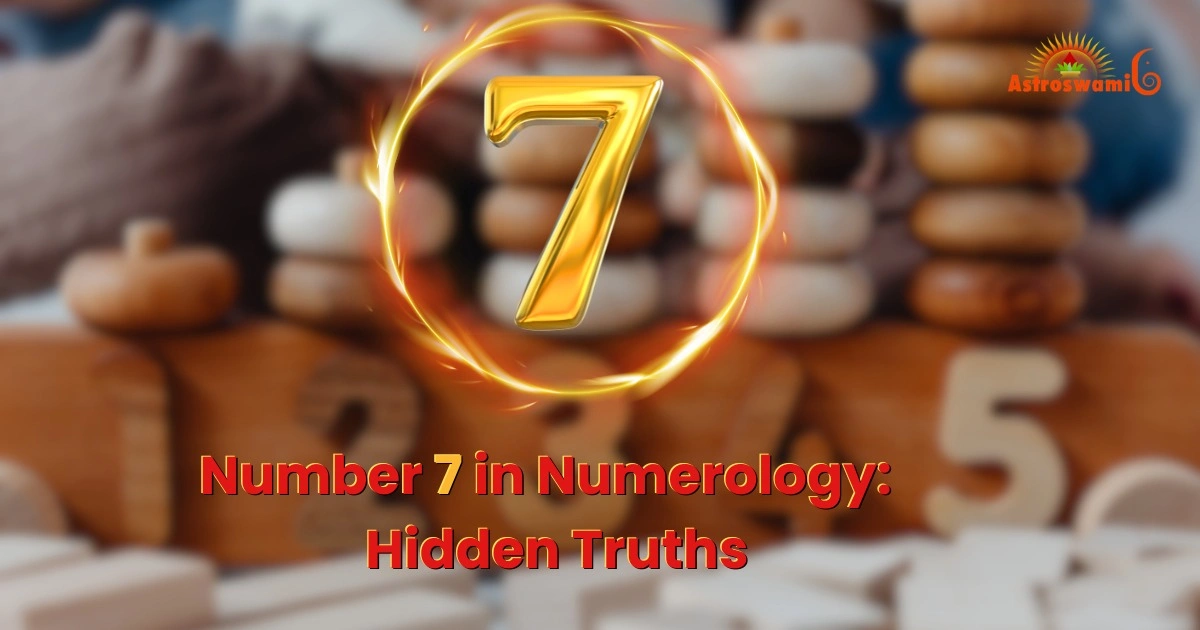
Numerology Number 7 Meaning: Personality, Career & Hidden Truths

In numerology, Number 7 represents deep thinking, spirituality, analysis, and inner awareness.

If your Life Path Number is 7, you are naturally:

  • Introverted and thoughtful
  • Highly intuitive
  • Emotionally private
  • A seeker of truth

In simple words:
Number 7 people are not average thinkers — they are deep observers of life.

Why Number 7 People Always Feel Different (Real Truth)

If you are a Number 7, you have likely experienced:

  • You don’t enjoy small talk
  • You prefer meaningful conversations
  • You feel people don’t fully understand you

This is not just in your head.

The Real Reason

Your mind processes life differently.

While most people focus on:

  • Social validation
  • Trends
  • Surface-level happiness

You focus on:

  • Meaning
  • Truth
  • Understanding deeper patterns

This creates a natural gap between you and others.
This gap is the biggest hidden struggle of Number 7.

What Does Number 7 Mean in Numerology?

Every number carries a unique energy.

The number 7 is associated with the following:

  • Spiritual awakening
  • Deep analysis
  • Profound inner understanding

The number 7 is often referred to by people as:

  • The Seeker
  • The Philosopher

You are not satisfied with easy answers. You continue to ask questions relentlessly until you find the true answers to your inquiries:

  • Why am I here?
  • What is the true purpose of life?
  • What lies beyond what we see?

This is precisely what sets the number 7 apart from other numbers.

Everyone wants to know: How do I calculate my Life Path Number?

An Easy Method for You

Add up all the digits of your date of birth and reduce them to a single digit.

Example:

Date of Birth (DOB): 12-06-1996
1 + 2 + 0 + 6 + 1 + 9 + 9 + 6 = 34
3 + 4 = 7

If your final result is 7, then you are a “Number 7” individual. And these are the traits you will observe within yourself.

Personality Traits of Number 7

Positive Qualities

  • Highly analytical and intelligent.
  • Possess strong intuition (their inner voice is often accurate), and they recognize and trust this inner guidance.
  • Deep thinkers who observe things with great attention to detail.
  • Independent thinkers who dislike being restricted or controlled.
  • Naturally inclined toward spirituality, and they find fulfillment in prayer and spiritual practices.

People often come to you for advice because you are able to perceive things that others cannot. Therefore, you also make for an excellent advisor.

Negative Traits

  • You tend to overthink everything, which can often leave you feeling distressed.
  • You find it difficult to express your emotions; consequently, you are unable to open up and share your inner thoughts with just anyone.
  • You prefer to keep your distance from others.
  • You may come across as aloof or distant.
  • Issues related to trust.

Your greatest strength—your depth of thought—can also become your greatest weakness.

Hidden Behavior Patterns of Number 7 (Real Life)

This is where most people relate deeply.

  • You observe more than you speak
  • You try to understand why people behave the way they do
  • You mentally replay conversations

Social Pattern

  • You feel mentally drained quickly
  • You need time alone to recharge

Decision Pattern

  • You don’t accept things immediately
  • You analyze first

This gives clarity but also delays decisions.

Biggest Problems Number 7 People Face in Life

1. Overthinking

Too much analysis leads to confusion

2. Isolation

Preference for solitude turns into loneliness

3. Emotional Disconnect

Feel deeply but struggle to express

4. Trust Issues

Difficulty trusting people limits growth

Root cause: Mind dominates emotion

The Biggest Mistakes Number 7 People Make

  • Overthinking and delaying action can lead to delays.
  • We are waiting for the perfect clarity before beginning
  • Afraiding people from thinking they don’t know
  • The suppression of emotions

Reality:
Clarity comes from action, not just thinking

Love Life of Number 7 (Hidden Reality)

Love Behavior

  • Sincere and loyal
  • Do you require a deep emotional connection?
  • Avoid relationships that are superficial

Challenges

  • It is difficult to express feelings
  • Do you require personal space?
  • The partner may feel that they are not being heard.

Compatibility

  • 2 (emotional support)
  • Number 5 (balance)
  • Number 7 (deep understanding)

You don’t have to struggle to love.
You are struggling to express your love.

Career Path for Number 7 (2026 Reality)

Not Suitable Careers

  • High-pressure sales
  • Repetitive corporate jobs
  • Socially active roles

Best Career Options

  • Research and Science
  • Writing and Content Creation
  • Psychology and Counseling
  • Data Analysis and IT
  • Astrology and Healing

It is possible to succeed if you work:

  • Independently
  • Deeply
  • Meaningfully

Best Business Ideas for Number 7

  • Freelancing (writing, consulting, research)
  • Digital products (courses ebooks, courses)
  • Knowledge-based businesses
  • Healing or astrology
  • Remote work

Your performance is best when the mind is going more into speaking.

Money and Wealth Pattern of Number 7

  • You shouldn’t run after money.
  • You are interested in knowing more
  • Growth is slow, but stable

Problem:
You put more emphasis on the meaning of your life over the money.

Solution:
Income and balance

Life Path Journey of Number 7 (Age-wise Growth)

  • 18-25: Confusing and search for your identity
  • 25-35 Career shifts and struggle
  • 35 + The key to clarity and stability

Understanding this pattern reduces frustration.

Why Number 7 People Feel Misunderstood

  • You avoid surface-level conversations
  • You don’t express emotions easily
  • You are selective with people

Result:

  • People see you as distant
  • But you are just different

Lucky Elements for Number 7

  • Lucky Dates: 7, 16, 25
  • Lucky Colors: Light Blue, Grey, White
  • Lucky Gemstone: Cat’s Eye
  • Ruling Planet: Ketu

Remedies for Number 7 (Practical and Astrology)

Practical Fixes

  • Take faster decisions
  • Express yourself more
  • Reduce isolation
  • Follow a routine

Astrology Remedies

  • Chant Om Ketave Namah
  • Practice meditation
  • Spend time in nature

Simple rule:
Less thinking, more action

Daily Habits That Can Change Your Life

  • Journaling daily
  • Making quick small decisions
  • Talking to people regularly
  • Practicing meditation

These habits balance mind and emotion.

Signs You Are a True Number 7

  • You enjoy solitude
  • You think deeply
  • You feel misunderstood
  • You prefer meaningful conversations

If this matches, you are a strong Number 7.

Conclsionu

Being a Number 7 is not easy.

  • You think more
  • You feel different
  • You live differently

But this is your biggest strength.

If you learn to:

  • Control overthinking
  • Express emotions
  • Take action

You can achieve:

  • Success
  • Clarity
  • Inner peace

FAQs for Number 7

Is Number 7 lucky?

Yes, but success depends on how you manage your mind.

Why are people with the Number 7 introverted ?

Because they focus more on their inner thoughts rather than on the external world. Consequently, they dedicate themselves to working on their own personal growth.

Can people with the Number 7 become wealthy ?

Yes; they tend to have a particular interest in analytical and independent fields, and they give their absolute best in those specific domains.

Which businesses are suitable for people with the Number 7 ?

Research-based ventures, consulting services, and digital businesses.

Why do people with the Number 7 tend to overthink ?

Because they are constantly seeking the deeper meaning behind things. Furthermore, they possess a natural inclination toward conducting research.