Holi 2026

Holi is included amongst the many traditions and customs of Indian culture, which is deeply enjoyed and celebrated with full spirit, enthusiasm, and color across the country. The traditional meaning behind this festival is directly associated with the advent of spring, as this season marks a new beginning, full of warmth, blossoming, and fresh starts. Similarly, the festival of Holi is not associated with colors only, but this is also the occasion when people meet, forgive, and refrain from past grievances, strengthening the bonds of love and friendship. Every year, on this festival, many families and friends meet together to experience the spirit of this amazing occasion, marking it as a noteworthy festival awaiting its turn.

Through online astrology chat, one can also understand the astrological significance, rituals, and auspicious timings associated with this vibrant festival. 

The colors of Holi are mixed with water, songs, music, dance, and delectable festive dishes. But few are aware of the fact that there are two main ways of indulging themselves in Holi, namely Holika Dahan and Rangwali Holi. Each one of them has its special meaning and rituals, therefore, making this festival not only full of fun but deeply meaningful too.

To understand the deeper spiritual meaning behind colours, bonfire and celebrations, you can read our detailed guide on the spiritual significance of the Holi festival

In the section below, we’ve collected all the necessary information that you need to know regarding Holi 2026 date and time in India, such as Holika Dahan 2026 muhurat, the importance of Holi, traditions, and valuable suggestions for enjoying this renowned event.

 So let’s understand a few facts, rituals of this auspicious festival and about holi 2026 date and time.

When is Holi 2026?

In the year 2026, the celebration of the Holi festival will take place on the full moon day, also known as Phalguna Purnima, in the month of Phalguna as per the Hindu calendar. Special sweets like malpua, kheer, and Basanti Sandesh are cooked on this occasion, and auspicious beginnings, including kundli matching, are often considered during this festive time.

Rangwali Holi (Main Festival Day): Wednesday, 4 March 202

Holika Dahan (Chhoti Holi/Bonfire Ritual): Tuesday, 3 March 2026

Accordingly, Holi 2026 date and time celebrations start with Holika Dahan on March 3 and conclude with colorful celebrations on March 4.

When is Holika Dahan Muhurat Time in 2026?

The significance of the rituals performed in the ceremony of Holika Dahan is very profound as it represents the conquest of goodness over evil. On this day, families collect firewood and sacred items, construct the holy fire pit, and finally light it after reciting many prayers to signify the burning of the character named Holika. Thus, Holi is a symbol of the ‘good’ over the ‘bad’, and such divine destinies can also be understood through Janam kundali by date of birth and time.

Holika Dahan 2026 Muhurat

As per traditional panchang timings:

Holika Dahan Date: 3 March 2026 (Tuesday)

Shubh Muhurat (Auspicious Time): 6:22 PM to 8:50 PM 

Duration: Approx. 2 hours 28 minutes

Visit the Astro Store for authentic gemstones, yantras, and spiritual remedies.

If you want to remove negativity and invite prosperity during this Holika Dahan, you can also follow simple Holika Dahan remedies that are performed exactly at this auspicious time

Holi 2026 festival date in India

Likewise, the vibrant and lively Holi 2026 Indian festival date is on Wednesday, the 4th of March 2026. On this day, the people assemble and indulge in the play of colors and water and savor the festive snacks of gujiya, thandai, and malpua.

Although most of the celebration routines are carried out on the daytime of March 4, certain rituals may be conducted on early mornings or even nights following the culmination of Holika Dahan festivities.

This period of time represents the most favorable time for conducting the rite of fire during Holika Dahan. Many astrologers suggest starting the rite after sunset and when purnima tithi, or full moon lunar day, is active.

Maha Shivratri 2026 Date

Maha Shivaratri 2026: Date, Puja Timings, Rituals & Spiritual Significance

Maha Shivratri is an important Hindu festival that is celebrated in honor of Lord Shiva, the great ascetic and slayer of evil. Devotees honor this day by observing a fast, meditating, chanting mantras, and participating in worship through the night. This occasion provides millions of devotees with a chance to enhance their spirituality, promote their self-awareness, and receive the blessings of the divine.

If you are wondering when is Shivratri in 2026, this detailed guide covers everything  from the Maha Shivratri 2026 date, puja timings, vrat rules, rituals, mantras, and spiritual importance — in a clear and easy-to-understand way.

2026 maha shivaratri date and time (India)

The most awaited information for devotees is the Maha Shivratri 2026 date, which is calculated based on the Hindu lunar calendar.

Maha Shivaratri Date: Sunday, 15 February 2026

This Maha Shivratri 2026 date falls on Phalguna Krishna Paksha Chaturdashi, making it an extremely auspicious day for Lord Shiva worship.

     Chaturdashi Tithi:

Tithi Begins: 15 February 2026 at 5:04 PM    

Tithi Ends: 16 February 2026 at 5:34 PM

According to the 2026 Maha Shivaratri date and time, devotees should observe fast and perform puja during the night of 15 February.

Nishita Kaal Puja (Most Auspicious Time)

  • 12:12 AM – 1:01 AM (16 Feb 2026)

Performing puja during this period on the Maha Shivratri 2026 date is believed to grant maximum spiritual benefits.

Prahar Puja Timings

  • First Prahar: 6:30 PM – 9:33 PM (15 Feb)
  • Second Prahar: 9:33 PM – 12:36 AM (16 Feb)
  • Third Prahar: 12:36 AM – 3:39 AM (16 Feb)
  • Fourth Prahar: 3:39 AM – 6:43 AM (16 Feb)

Devotees who worship Lord Shiva during all four prahars on the Maha Shivratri 2026 date are believed to receive divine protection and blessings.

Why Is Maha Shivaratri So Important?

Maha Shivaratri is not just a festival—it is a night of spiritual awakening. According to Hindu scriptures, this sacred night marks powerful cosmic events associated with Lord Shiva.

The Story of Neelkanth (Poison Episode)

During the Samudra Manthan, a deadly poison (Halahala) emerged from the ocean, threatening the existence of the universe. To protect creation, Lord Shiva drank the poison and held it in his throat, which turned blue—earning him the name Neelkanth.

Worshipping Shiva on the Maha Shivratri 2026 date helps devotees:

  • Good health
  • Protection from negativity
  • Long life and spiritual strength

Marriage of Lord Shiva and Goddess Parvati

Another sacred belief associates Maha Shivaratri with the divine union of Lord Shiva and Goddess Parvati. After Sati’s sacrifice and rebirth as Parvati, this night symbolizes love, devotion, and divine partnership.

This makes the Maha Shivratri 2026 date highly auspicious for:

      Marriage

      Relationship harmony

      Kundli matching

Spiritual Significance of Maha Shivaratri 2026

Benefits of worship on the Maha Shivratri 2026 date include:

     Deep meditation and self-realisation

     Awakening of inner consciousness

     Removal of past karmic blocks

     Spiritual growth and moksha 

     Powerful for removing past karmic blockages

     Highly auspicious for spiritual growth and moksha

Astrologers believe that planetary energies are at their peak on this night, making it perfect for spiritual remedies.

Know how planets are influencing your life – Get your free Kundali by date of birth now.

Maha Shivratri 2026 Vrat Rules & Guidelines

Fasting on the Maha Shivratri 2026 date purifies the body and mind.

Types of Shivaratri Fast

     1. Partial Fast (Phaladhar Vrat)
    Devotees can consume items such as:
    * Fruits (apples, bananas, pomegranates)
    * Milk and milk products (curd, buttermilk)
    * Coconut or mineral water
    * Vrat-friendly foods (sabudana khichdi, kuttu ka paratha, singhare ka atta)

     2. Nirjala Vrat

Complete fast without food or water until next morning.

Vrat Vidhi (Step-by-Step)

Morning (15 February 2026)

     Wake up early

     Take bath and wear clean clothes

     Take sankalp for fast 

 Daytime

  • Chant “Om Namah Shivaya”
  • Read Shiva Purana or Chalisa
  • Avoid negativity and anger

Night (Main Puja Time)

     Perform puja during four prahars

     Stay awake in meditation

     Focus on devotion

Breaking the Fast (16 February)

  • Break fast after sunrise
  • Consume light food
  • Donate food if possible

Foods to Avoid During Shivaratri Vrat

  Rice and wheat
  Onion and garlic
  Regular salt (use rock salt/sendha namak)
  Non-vegetarian food
  Alcohol and tobacco
  Beans and lentils

Complete Mahashivratri Puja 2026 (Rudrabhishek Vidhi)

Performing puja at home on the Maha Shivratri 2026 date brings divine grace.

Puja Samagri

  • Shivling or Shiva image
  • Bilva leaves
  • Milk, honey, ghee, curd
  • Gangajal
  • White flowers
  • Incense, diya, camphor

Puja Steps

  • Clean puja area
  • Chant Ganesh mantra
  • Perform Panchamrit Abhishek
  • Offer Bilva leaves
  • Chant Shiva mantras
  • Perform aarti

Powerful Mantras for Maha Shivratri 2026

  • Om Namah Shivaya
  • Maha Mrityunjaya Mantra
  • Rudra Gayatri Mantra
  • Shiv Tandav Stotram

Chanting these on the Maha Shivratri 2026 date brings protection, peace, and spiritual upliftment.

Benefits of Observing Maha Shivratri

Spiritual Benefits

  • Removal of sins
  • Kundalini awakening
  • Path to moksha

Material Benefits

  • Career growth
  • Marriage blessings
  • Family harmony

Mental Benefits

  • Stress relief
  • Emotional balance
  • Mental clarity

Maha Shivaratri 2026 Celebrations Across India

 Famous Shiva Temples for Shivaratri Darshan

  • Kashi Vishwanath Temple, Varanasi (Uttar Pradesh)
  • Somnath Temple, Gujarat
  • Mahakaleshwar Temple, Ujjain (Madhya Pradesh)
  • Kedarnath Temple, Uttarakhand
  • Sri Kalahasteeswara Temple, Andhra Pradesh
  • Umananda Temple, Assam
  • Lingaraj Temple, Bhubaneswar (Odisha)
  • Bhutnath Temple, Mandi (Himachal Pradesh)
  • Matangeshwar Temple, Khajuraho (Madhya Pradesh)
  • Amarnath Cave, Jammu & Kashmir

These temples witness grand celebrations as per the maha shivaratri 2026 in India calendar.

Maha Shivaratri vs Masik Shivaratri: What’s the Difference?

Masik Shivaratri occurs every month on the 14th day of the dark fortnight (Krishna Paksha Chaturdashi). Devotees who worship Shiva can observe monthly Shivaratri vrat.

Maha Shivaratri is the great Shivaratri that occurs once a year in the month of Phalguna (February-March). It is considered the most auspicious and powerful Shivaratri with maximum spiritual significance.

Health Benefits of Shivaratri Fasting (Scientific Perspective)

Modern science recognizes several health benefits of fasting:

        1. Detoxification

Fasting allows the digestive system to rest and helps eliminate toxins from the body.

        2. Improved Metabolism

Short-term fasting can boost metabolic rate and help with weight management.

        3.  Mental Clarity

Fasting has been linked to improved focus, concentration, and mental alertness.

        4. Cellular Repair

During fasting, the body initiates autophagy—a process of cellular cleansing and repair.

        5. Blood Sugar Regulation

Controlled fasting can improve insulin sensitivity and blood sugar levels.

        6. Spiritual Awakening

Fasting combined with meditation enhances spiritual awareness and inner peace.

Important Note: Those with medical conditions, pregnant women, and children should consult a doctor before observing strict fasts.

Do’s and Don’ts During Maha Shivaratri 2026

Do’s

  •         Wake up early and take a purifying bath
  •         Wear clean, light-colored clothes (white preferred)
  •         Maintain celibacy and purity of thoughts
  •         Visit Shiva temple if possible
  •         Offer Bilva leaves, milk, and sacred water
  •         Chant “Om Namah Shivaya” throughout the day
  •         Stay awake during the night in meditation
  •         Help the needy and donate food
  •         Read Shiva Purana or spiritual texts
  •         Listen to Shiva bhajans and mantras
  •         Maintain positive attitude and kindness

Don’ts 

  •         Avoid onion, garlic, and non-vegetarian food
  •         Don’t sleep during the night
  •         Avoid alcohol and intoxicants
  •         Don’t use harsh words or get angry
  •         Avoid breaking the fast before the prescribed time
  •         Don’t offer Tulsi leaves to Shivling (offer to Vishnu only)
  •         Avoid offering coconut water on Shivling
  •         Don’t use broken or dried Bilva leaves
  •         Avoid worldly pleasures and entertainment
  •         Don’t ignore hygiene and cleanliness

Shivaratri Puja at Home vs Temple: Which Is Better?

Both home puja and temple darshan have their own significance:

     Temple Puja Benefits

     Powerful collective energy

     Expert pandits perform elaborate rituals

     Sacred atmosphere enhances devotion

     Darshan of ancient and powerful Shivlings

     Community celebration and satsang

     Home Puja Benefits:

     Personal and intimate worship

     Flexible timing according to convenience

     Entire family can participate

     No crowd or rush

     Can maintain silence and deep meditation

Common Mistakes to Avoid During Shivaratri Puja

     1. Using Tulsi leaves: Tulsi is sacred to Lord Vishnu, not Shiva. Always use Bilva leaves.

     2. Offering coconut water on Shivling: While coconuts can be offered, avoid pouring coconut water directly.

     3. Breaking the fast carelessly: Break your fast gradually with light food; avoid heavy meals immediately.

     4. Sleeping during the night: The night vigil (jagran) is essential for maximum spiritual benefits.

     5. Negative thoughts:  Maintain purity of mind; avoid anger, jealousy, and negative emotions.

     6. Ignoring cleanliness: Both physical and environmental cleanliness are crucial for puja.

     7. Performing rituals mechanically: Do puja with devotion and understanding, not just as a ritual.

Those who wish to observe a special fast on Mondays can follow the simple rules of the Somvar Vrat (Monday fast). For the rules, what to eat and what not to eat, and the puja procedure, please refer to our monday fast guide.

Maha Shivaratri 2026 – Frequently Asked Questions

1. Why is Maha Shivaratri celebrated?

Maha Shivaratri celebrates the night when Lord Shiva performed the Tandava, married Goddess Parvati, and consumed the deadly Halahala poison to save the universe. It’s a night of spiritual awakening and seeking divine blessings.

2. Can pregnant women observe Shivaratri fast?

Pregnant women can observe a fast by consuming fruits, milk, and light foods. However, it’s recommended to consult a doctor before observing strict nirjala vrat during pregnancy.

3. Kya Shivaratri par sona chahiye?

No, sleeping on Shivaratri night is not recommended. Devotees should stay awake (jagran) throughout the night, engaging in meditation, chanting mantras, and worshipping Lord Shiva for maximum spiritual benefits.

4. Which mantra is most powerful for Shivaratri?

The Maha Mrityunjaya Mantra is considered the most powerful mantra for Shivaratri. Other important mantras include “Om Namah Shivaya” (Panchakshar Mantra) and Rudra Gayatri Mantra. Chanting these 108 times brings health, prosperity, and spiritual awakening.

5. Can we fast on Maha Shivaratri?

Yes, devotees observe a day-long fast, consuming fruits, milk, or water. Some observe a strict nirjala vrat for spiritual benefits.

6.  Can we offer flowers to Shivling?

Yes, you can offer white flowers like Datura, Aak, and Jasmine to Shivling. However, avoid offering Tulsi leaves (sacred to Vishnu) and Ketaki flowers (cursed by Shiva).

7. Can I do Shivaratri puja without Shivling?

Yes, if you don’t have a Shivling, you can worship Shiva’s picture or even mentally visualize Lord Shiva during meditation. The devotion in your heart matters more than physical items.

8. Is Shivaratri good for marriage?

Yes, Maha Shivaratri is highly auspicious for marriage-related matters. Unmarried individuals worship Lord Shiva to get an ideal life partner like Goddess Parvati and Lord Shiva. Married couples pray for a strong and happy married life.

9. What should I wear on Shivaratri?

White or light-colored clothes are recommended as they represent purity. Avoid black, red, or dark colors. Both traditional and modern modest clothing is acceptable as long as it’s clean and respectful.

10. How to make Panchamrit for Shivaratri?

Panchamrit Recipe: Mix equal parts of milk (1 cup), curd (½ cup), honey (2 tbsp), ghee (2 tbsp), and sugar or jaggery (2 tbsp). Mix well and use for abhishek. After puja, distribute as prasad.

Pitru Paksha Rules

Based on the Hindu Calendar, according to the Pitru Paksha rules the Shradh Paksha or Paternity Paksha starts on 26 September, 2026 (Saturday) and ends on 10 october 2026 (Saturday). Shradh is a ritual that is done by the children or relatives of the deceased ancestors for the peace of the dead soul.

Confused about Pitru Paksha rituals? Talk to Astrologers and get the right guidance for peace and prosperity. 

Our ancestors are very close and dear to us because our lives are firmly on the foundation of their sacrifice. Paternity is the special time of year when Hindus follow certain Pitru Paksha rules performing specific rituals for their ancestors while avoiding certain actions themselves. It is believed that during Bhadrapad month, the souls of our dead ancestors come to the earth in the form of energy for 16 days from full moon to the new moon. These energies can influence our lives according to their wishes.

If you are facing ancestral problems or want to overcome the difficulties caused due to Pitra Dosha, then do read this detailed guide on 10 ways to overcome the effects of Pitra Dosha and remedies

For deeper ancestral insights reflected in your Janampatri, don’t miss our detailed guide on Pitru Paksha Rules to understand the right rituals and their astrological significance. 

Shradha 2026 Dates in India

DateDayShraddha Tithi / Observance
26 September 2026SaturdayPurnima Shraddha
27 September 2026SundayPratipada Shraddha
28 September 2026MondayDwitiya Shraddha
29 September 2026TuesdayTritiya Shraddha (Mahanavami / Maha Bharani)
30 September 2026WednesdayChaturthi Shraddha
1 October 2026ThursdayPanchami Shraddha (Also Valid for Maha Bharani Observance)
2 October 2026FridayShashthi Shraddha
3 October 2026SaturdaySaptami Shraddha
4 October 2026SundayAshtami Shraddha
5 October 2026MondayNavami Shraddha (Matru Navami – Special for Deceased Women Ancestors)
6 October 2026TuesdayDashami Shraddha
7 October 2026WednesdayEkadashi Shraddha
8 October 2026ThursdayDwadashi Shraddha (For Sannyasis/Ascetics)
9 October 2026FridayTrayodashi / Chaturdashi Shraddha
10 October 2026SaturdaySarva Pitru Amavasya (Mahalaya Amavasya – For All Known and Unknown Ancestors)

Things to do in Pitru Paksha Shradh days

During this period, food, clothing and donations are given to Brahmins priests who help in performing Shrad Paksha rituals. Animals like cows, dogs and crows are fed. In Hinduism, Brahmins are considered to be the primary servants of God and they are the link between a common man and supreme power. They are an integral part of all religious ceremonies and rituals.

There is also a famous story behind feeding Brahmins. Karna, the renowned Mahabharata character and son of Kunti, donated immense wealth to the poor and needy during his lifetime, but he never donated food. When Karna went to heaven after his death, he was given every luxury but no food. On realizing the reason, Karna requested Yamraj to send him back to earth for 15 days so he could donate food to Brahmins and the poor. Yamraj granted his wish. After completing this noble act, Karna returned to heaven where he was welcomed with abundant food. This story emphasizes why feeding Brahmins, the poor and animals during Shradh is a vital ritual.

Marriage is not just about love, it is also about harmony, trust, and lifelong compatibility—discover how Kundli Matching can reveal the hidden cosmic balance between two souls.

The rules of Pitru Paksha one can satisfy ancestors’ souls and receive blessings of peace, prosperity and moksha.

Father’s side is the most auspicious time about our dead ancestors. Keeping them happy through various good actions is one of the methods of obtaining liberation or salvation.But during this sacred period, one must know What not to do in Pitru Paksha to avoid negative effects and to receive blessings.

Bring cosmic balance into your life with Astroswamig’s certified Gemstones each stone radiates energy to align with your destiny.

These things should not be done in Shradh Paksha

Follow some simple rules and benefits during Shradh 

1. Avoid eating rice, non-veg, garlic, onions and out-of-the-box during paternal side. Eat only homemade savoury food. Also, avoid cooking or eating eggplants in Shradha Paksha. 

2. Do not use lentil, black urad, gram, black cumin, black salt, black mustard and any unclean or stale food product in Shraddha food. 

3. The person doing Shradh should not cut his nails. Do not cut a beard or hair too. She should not wear dirty clothes. 

4. The person should not use products made of leather such as belts, wallets or shoes while performing rituals.

If you are performing Shradh rituals and chanting mantras, do not stop chanting to talk to anyone. This can lead to negative energy. 

5. Alcohol destroys your good deeds and donations during Shradh. Many times people chew tobacco, drink cigarettes or consume alcohol. Do not engage in such bad behaviour. This gives the result of performing Shradh Karma. Avoid making physical relationships. Stay at Brahmacharya mode. 

6. Do not lie or use harsh words or curse others. If possible, do not wear sandals at home for all 16 days in Pitru Paksha. 

7. Avoid the use of black or red flowers and highly aromatic or odourless flowers for Pitru paksha Shraddha puja and rituals.

It is forbidden to eat food often on the day of Shradh by a person who practices Pitru Paksha Shraddha. 

8. Do not use iron vessels for rituals. Instead, use gold, silver, copper or bronze utensils to please their ancestors. Do not use iron in any way to sit. Use the seating of silk, wool, wood etc. 

9. Do not buy or wear new clothes during the Shradh period. Do not enter a new house during this fortnight, start a new business or a new venture or celebrate birthday etc. During this period, do not put new material things in the house, new cars etc.

Shradh Karma should not be done during the evening, night, noon or evening. Do not wash clothes on the day of Pitru Paksha Shradh.  

10. During the patriarchal side, pray honestly to God and your ancestors to purify their past actions and bring happiness and prosperity in their life. 

Pitru Paksha is the time to honor ancestors wearing the right Gemstone helps clear karmic debts, bring peace to the soul, and attract prosperity into life.

What to do in Pitru Paksha Shradh?

1. If a person is poor, and despite the lack of money, he wants to make Shradh, then he should put black sesame in water and a Brahmin should donate a fist full of black sesame. 

2. In the days of Pitru Shradh, we must make Shraddha for our ancestors. It would be better if you organize a pooja in the house for your ancestors on the day of Shradh. 

3. Every morning of the night, morning and evening must worship for their ancestors. If you cannot worship, then take some time in the day to remember them. 

4. In the days of Shradh, the poor should definitely have food. At the same time, giving special benefits to the Brahmin also provides food. 

5. In the days of Pitru Paksha Shradh, feeding paddy or feeding the dough and feeding the cow to the cow, our ancestors’ souls receive peace

Shradh is a ritual performed by the children or relatives of deceased ancestors for their peace. To understand the religious meaning and purpose of these ancestral rituals, read our guide to Shradh Significance and Importance.

Apart from Janmashtami, several other significant Hindu festivals and fasts will also be observed in September 2026. You can read our related articles for more information on the dates, rituals, fasting rules, and religious significance of these festivals: –  Ganesh Chaturthi 2026 | Krishna Janmashtami | Aja Ekadashi

Yogini Ekadashi 2026: Date, Time, Vrat Katha, Significance & Fasting Rules

Yogini Ekadashi 2026 will be observed on Friday, 10 July 2026. According to the Panchang, the Ekadashi Tithi begins at 08:16 AM on 10 July 2026 and ends at 05:22 AM on 11 July 2026. The Parana (fast breaking) will be done on 11 July 2026, and the auspicious Parana time is between 01:50 PM and 04:36 PM. Yogini Ekadashi is dedicated to Lord Vishnu and is considered highly important for spiritual purification, health, and relief from past karmic effects.

What is Yogini Ekadashi 2026?

Yogini Ekadashi is one of the most important Ekadashi fasts observed during the Krishna Paksha of Ashadha month. In Hindu tradition, this vrat is believed to remove sins, improve health, and bring peace and prosperity into life.

The word “Yogini” symbolically represents spiritual power and purification. Devotees observe this fast to seek blessings from Lord Vishnu and free themselves from negativity and suffering.

Many people especially observe this vrat for:

  • Better health
  • Mental peace
  • Relief from karmic burdens
  • Spiritual growth
  • Family happiness

Yogini Ekadashi 2026 Date and Time

Yogini Ekadashi 2026 Date

EventDate & Time
Yogini Ekadashi 202610 July 2026, Friday
Ekadashi Tithi Begins10 July 2026 at 08:16 AM
Ekadashi Tithi Ends11 July 2026 at 05:22 AM
Parana Date11 July 2026, Saturday
Parana Time01:50 PM to 04:36 PM

These timings are based on New Delhi Panchang calculations.

Yogini Ekadashi Significance in Hindu Tradition

The significance of Yogini Ekadashi is deeply connected with purification and redemption. Hindu scriptures mention that observing this vrat with sincerity can help a person overcome suffering and move toward a better life path.

It is believed that this vrat:

  • Removes negative karmic effects
  • Helps improve physical health
  • Reduces stress and emotional instability
  • Strengthens devotion toward Lord Vishnu
  • Brings spiritual discipline

According to religious beliefs, the benefits of this Ekadashi are equal to feeding thousands of Brahmins.

People facing health problems, financial stress, or emotional instability often observe this vrat with complete faith.

Why Do Devotees Observe Yogini Ekadashi Fast?

People observe Yogini Ekadashi vrat for spiritual purification, mental peace, and relief from negative karmic effects. According to Hindu beliefs, this Ekadashi helps devotees overcome suffering, improve discipline, and strengthen devotion toward Lord Vishnu.

Many devotees also keep this fast for:

  • Good health
  • Family peace
  • Relief from stress
  • Spiritual growth
  • Positive life changes

Yogini Ekadashi Fast Rules

How to Observe Yogini Ekadashi Fast

The Yogini Ekadashi Fast starts from sunrise on Ekadashi and continues until the next day after Parana.

Devotees generally follow these fasting rules:

  • Avoid rice, wheat, barley, and grains
  • Eat only satvik food
  • Maintain cleanliness and positive thoughts
  • Worship Lord Vishnu
  • Chant Vishnu mantras
  • Avoid anger and negative speech

Many devotees also stay awake at night and perform bhajans and prayers dedicated to Lord Vishnu.

Tulsi leaves are considered extremely important during Vishnu worship. However, Tulsi should be plucked one day before Ekadashi because plucking Tulsi on Ekadashi is traditionally avoided.

Yogini Ekadashi Benefits

Yogini Ekadashi benefits are mentioned in several Hindu scriptures and Ekadashi vrat stories. It is considered especially powerful for people dealing with health-related issues and emotional stress.

Spiritual and Personal Benefits

1. Helps in Spiritual Cleansing

The vrat is believed to remove accumulated negative karma and encourage spiritual discipline.

2. Improves Mental Peace

Regular fasting and prayer help calm the mind and improve emotional balance.

3. Supports Better Health

Traditionally, Yogini Ekadashi is associated with relief from diseases and body purification.

4. Brings Positivity in Life

Devotees believe that sincere worship helps reduce obstacles and attract positive energy.

5. Strengthens Devotion

The vrat deepens faith in Lord Vishnu and encourages a more disciplined lifestyle.

Vrat Katha Yogini Ekadashi

The Vrat Katha Yogini Ekadashi is mainly associated with Hemamali, who served Kubera, the king of Yakshas.

Hemamali was responsible for bringing flowers for Lord Shiva’s worship. One day, instead of completing his duty, he became distracted and failed to deliver the flowers on time.

Kubera became angry and cursed him with severe disease and suffering.

After wandering in pain, Hemamali met Sage Markandeya, who advised him to observe Yogini Ekadashi vrat with complete devotion.

He followed the vrat sincerely, worshipped Lord Vishnu, and eventually became free from the curse and suffering.

The story highlights an important lesson:

Discipline, devotion, and sincere repentance can transform life.

Yogini Ekadashi Puja Vidhi

Simple Puja Process at Home

On Yogini Ekadashi, devotees wake up early, take a bath, and wear clean clothes.

The puja setup usually includes:

  • Lord Vishnu idol or picture
  • Tulsi leaves
  • Flowers
  • Incense sticks
  • Ghee lamp
  • Fruits and sweets

Devotees chant Vishnu mantras like:

“Om Namo Bhagavate Vasudevaya”

Bhajans, Vishnu Sahasranama, and Ekadashi Katha are also recited during the day.

After completing the puja, prasad is distributed among family members.

Foods Allowed During Yogini Ekadashi Fast

During the vrat, devotees usually consume:

  • Fruits
  • Milk
  • Dry fruits
  • Sabudana
  • Makhana
  • Singhara flour
  • Potatoes
  • Rock salt (Sendha Namak)

Grains and regular salt are generally avoided.

Many people also reduce water intake during strict fasting practices.

Yogini Ekadashi and Health Connection

Traditionally, Yogini Ekadashi is considered beneficial for physical and mental purification.

Fasting helps many people:

  • Improve eating discipline
  • Reduce unhealthy habits
  • Stay mentally focused
  • Practice spiritual mindfulness

Religious texts especially mention its importance for people facing skin-related issues and long-term suffering.

What Should Be Avoided on Yogini Ekadashi?

On Yogini Ekadashi, devotees usually avoid:

  • Eating grains and rice
  • Consuming alcohol or non-vegetarian food
  • Anger and negative speech
  • Plucking Tulsi leaves
  • Sleeping during puja time

According to Hindu beliefs, purity in thoughts and actions increases the spiritual benefits of the vrat.

FAQs on Yogini Ekadashi 2026

When is Yogini Ekadashi 2026?

Yogini Ekadashi 2026 will be observed on Friday, 10 July 2026.

What is the Parana time for Yogini Ekadashi 2026?

The Parana time is on 11 July 2026 from 01:50 PM to 04:36 PM.

Which god is worshipped on Yogini Ekadashi?

Lord Vishnu is worshipped on Yogini Ekadashi.

What are the benefits of Yogini Ekadashi Fast?

The vrat is believed to improve spiritual growth, mental peace, and overall positivity.

Can anyone observe Yogini Ekadashi vrat?

Yes, both men and women can observe this fast according to their health and devotion.

What should not be eaten during Yogini Ekadashi?

Rice, wheat, barley, grains, and regular salt are generally avoided during the fast.

Vivah Panchami 2026

Vivah Panchami, also known as Ram Vivah Utsav, is one of the most auspicious occasions in the Hindu calendar. This sacred festival celebrates the wedding of Lord Ram and Goddess Sita, believed to have occurred in the ancient kingdom of Mithila during the Treta Yuga. For couples planning marriage in 2026, understanding when Vivah Panchami falls and how it can bless their union is essential.

When Is Vivah Panchami 2026? The Exact Date and Time

Vivah Panchami 2026 Date: December 14, 2026, Monday

Panchami Tithi Start: December 13, 2026 (04:47 PM)

Panchami Tithi End: December 14, 2026 (07:15 PM)

Shubh Muhurat (Auspicious Timing): 7:00 AM to 12:30 PM on December 14, 2026

This timing is considered exceptionally favorable for all marriage ceremonies, engagement rituals, and wedding-related auspicious activities. The morning hours between 7:00 AM and 12:30 PM on December 14 represent the most powerful window for conducting marriage vows and ceremonies.

What Is Vivah Panchami? Understanding the Festival’s Significance

Vivah Panchami commemorates the divine marriage of Ram and Sita in King Janak’s court at Janakpur. According to the Ramayana, Sita had undertaken a Swayamvar (self-choice) ceremony where she would select her groom. After Lord Ram broke the divine bow and proved his worthiness, he won Sita’s hand on the sacred day of Margashirsha Shukla Panchami.

This festival holds profound meaning for modern couples. The Ram-Sita union represents an ideal marriage based on mutual respect, devotion, and shared values. When couples choose to marry on Vivah Panchami or fix their wedding date for this occasion, they invoke the blessings of this legendary couple.

The observance occurs during Margashirsha month (November-December in the Gregorian calendar) on the fifth day of the waxing moon phase (Shukla Paksha). In Nepal, particularly in Janakpur (Sita’s birthplace), this festival is celebrated for an entire week with grand processions, temple ceremonies, and community gatherings.

Is Vivah Panchami Good for Marriage? The Astrological Perspective

Yes, Vivah Panchami is exceptionally auspicious for marriage. Vedic astrology reveals several reasons why this date is ideal for wedding ceremonies:

Moon Phase Influence: The Shukla Paksha (waxing moon) represents growth, expansion, and increasing prosperity. This lunar phase naturally supports new beginnings like marriage, making it spiritually powerful for union ceremonies.

Tithi Power: The Panchami tithi (fifth lunar day) is ruled by Mercury, the planet governing communication and harmony. This planetary influence promotes understanding, trust, and effective communication between spouses—essential foundations for marriage success.

Margashirsha Month Significance: In the Bhagavad Gita, Lord Krishna states, “Among months, I am Margashirsha,” elevating this month’s spiritual importance. Marriages performed during this month receive cosmic blessings and divine protection.

Planetary Alignment: In Vedic astrology, astrologers generally evaluate planetary positions, Nakshatra, and individual birth charts before recommending a marriage muhurat. Therefore, while Vivah Panchami has religious significance, the suitability of the day for marriage should ideally be assessed according to the couple’s Kundli and local Panchang.

Nakshatra Connection: The Mrigashira nakshatra associated with this month carries qualities of nurturing, care, and gentle strength—ideal characteristics for building stable marriages and family foundations.

According to Vedic traditions, many devotees consider Vivah Panchami a spiritually auspicious day because it commemorates the divine union of Lord Ram and Mata Sita. Marriage harmony ultimately depends on mutual understanding, commitment, and personal circumstances, while this festival is observed as a symbol of blessings and devotion.

Ram Sita Marriage Date 2026: Planning Your Perfect Vivah Panchami Wedding

For Couples Fixing Wedding Dates:

If you’re planning marriage in December 2026, securing the Vivah Panchami date (December 14) offers multiple advantages:

  1. Spiritual Blessings: Your marriage receives the direct blessings of Ram and Sita, whose example of marital harmony has inspired millions for millennia.
  2. Astrological Advantage: The planetary and tithi configurations on this date work actively in favor of marital stability and happiness.
  3. Cultural Connection: Celebrating your wedding on a day that honors one of Hinduism’s most revered couples connects your marriage to a sacred tradition.
  4. Kundli Matching Clarity: Many couples with challenging kundli (birth chart) combinations find that Vivah Panchami’s spiritual power can mitigate potential doshas.

Vivah Panchami Wedding Checklist:

  • Confirm exact date with your pandit (6-8 weeks before)
  • Complete kundli matching (36 guna analysis minimum)
  • Check for marriage doshas (Manglik, Nadi, Bhakoot)
  • Book venue early (December dates fill quickly)
  • Arrange pandit experienced with Vivah Panchami ceremonies
  • Plan pre-wedding rituals (mehendi, sangeet) for December 12-14

Vivah Panchami Rituals for Marriage Success: Step-by-Step Guide

Morning Preparation (Pre-Puja):

  • Wake before sunrise and bathe with fresh water
  • Wear clean, preferably new clothes (yellow or red preferred)
  • Ensure the altar and prayer space are thoroughly cleaned
  • Gather all puja materials: flowers, fruits, sweets, incense, lamp, water, and ritual items

Puja Ritual :

Step 1: Sankalp (Vow-Taking) — Express your intention and commitment before Ram and Sita’s presence. Take a sincere vow about your marriage’s purpose.

Step 2: Invocation & Aarti — Light the lamp and invoke Ram-Sita using traditional mantras. Wave incense in circular motions while singing devotional songs like “Shri Ramchandra Kripalu Bhajman.”

Step 3: Pushpa Archana (Flower Offering) — Offer flowers individually to both deities while expressing gratitude and seeking their blessings.

Step 4: Prayer for Marital Happiness — Pray specifically for marriage harmony, mutual respect, progeny blessing, and family prosperity.

Step 5: Prasad Distribution — Consume the blessed food and distribute it to family members. Share prasad with neighbors and friends, spreading the festival’s spiritual energy.

Kundli Matching and Vivah Panchami: Ensuring Compatibility

For couples with challenging kundli combinations, Vivah Panchami offers special advantages. The 36-guna kundli matching system (minimum 18 gunas for acceptable compatibility) should be completed before marriage. However, even couples with lower guna scores often proceed with Vivah Panchami marriages after appropriate remedial rituals.

Key matching points to verify:

  • Nadi (health and progeny compatibility)
  • Bhakoot (financial prosperity alignment)
  • Graha Maitri (planetary friendship)
  • Varna (spiritual compatibility level)

If your kundli shows Manglik dosha (Mars in 1st, 4th, 7th, 8th, or 12th house), Vivah Panchami carries particular remedial power. The waxing moon’s strength and this date’s divine connection can substantially mitigate dosha effects.

Why Choose Vivah Panchami for Your 2026 Marriage?

Reduced Conflict Risk: Couples married on this date report minimal major conflicts and strong partnership foundations.

Enhanced Fertility: The Moon’s full strength during Shukla Paksha supports progeny and reproductive health.

Family Blessings: Extended family typically experiences positive outcomes when weddings occur on such auspicious dates.

Emotional Bonding: Venus’s favorable positioning naturally strengthens emotional intimacy and mutual affection.

Long-Term Stability: Marriages conducted on Vivah Panchami show higher longevity rates and relationship satisfaction across decades.

Finding a Qualified Pandit for Your Vivah Panchami Ceremony

Selecting the right priest is crucial for an authentic, properly-conducted ceremony:

  • Verify minimum 10-15 years of marriage ceremony experience
  • Request references from previous couples
  • Ensure proficiency in Vedic chanting and ritual knowledge
  • Confirm understanding of kundli and dosha remedies
  • Discuss ceremony timeline and contingency plans

A qualified pandit will guide you through proper rituals, explain their spiritual significance, and ensure timing aligns with auspicious astronomical positions.

Regional Vivah Panchami Observance

North India (Uttar Pradesh, Bihar, Madhya Pradesh): Celebrated with temple worship, marriage ceremonies, and family gatherings

Nepal (Janakpur): Week-long festival featuring symbolic Ram-Sita marriage ceremony and massive temple processions

South India (Tamil Nadu, Karnataka): Mrigashira nakshatra observance aligned with similar auspicious principles

Conclusion: Making Vivah Panchami 2026 Your Wedding Day

Vivah Panchami 2026 on December 14 presents an extraordinary opportunity for couples to marry on one of the Hindu calendar’s most auspicious occasions. The alignment of planetary forces, tithi power, and spiritual significance creates optimal conditions for marital success.

Whether you’re fixing your wedding date, checking compatibility through kundli matching, or seeking remedies for marriage challenges, Vivah Panchami offers comprehensive benefits. By celebrating your marriage on this sacred day, you connect your union to the timeless example of Ram and Sita—a relationship built on devotion, respect, and eternal commitment.

Plan ahead, consult with a qualified astrologer, arrange your pandit, and prepare to begin your married journey under the most favorable cosmic circumstances.

Get Your Kundli Matched Today | Book Your Wedding Pandit Now | Explore Other Auspicious 2026 Wedding Dates

On the auspicious occasion of Vivah Panchami, attract prosperity and strengthen planetary support by wearing authentic Gemstones.

Frequently Asked Questions About Vivah Panchami 2026

Q1: Why is Vivah Panchami celebrated?
Ans: Vivah Panchami is celebrated in memory of the marriage of Lord Rama and Goddess Sita.
Q2: Is it auspicious to get married on Vivah Panchami?
Ans: Yes, getting married on this day is considered extremely auspicious.
Q3: What should be donated on Vivah Panchami?
Ans: It is auspicious to donate grains, clothes or Dakshina on this day.
Q4: Which mantra should be chanted on Vivah Panchami?
Ans: Chant the mantra Shri Ramchandray Namah or Sitaye Namah

Vasant Panchami 2026

1.About
2.Vasant Panchami 2026 Date and Time
3.About Goddess Saraswathi
4.Significance of Vasant Panchami
5.Stories and Legends
6.Conclusion

India is full of traditions, festivals, and culture where we celebrate every festival with the same enthusiasm which holds a lesson, a story, and belief. Vasant Panchami is a festival that marks the ending of the winter season and welcomes the springtime. Vasant Panchami is celebrated on the fifth day of Shukla Paksha of Magh Maas which is governed by Aquarius. It is also known as Saraswathi Puja, named after Goddess Saraswathi who is known for her wisdom, knowledge, music, and creativity. Vasant Panchami is widely celebrated in the eastern states of India where devotees worship the deity by offering yellow flowers, sweets, and books. Students, artists, scholars, and musicians seek blessings from Goddess Saraswathi in their careers on the occasion of Vasant Panchami. This festival is celebrated when the Sun enters the zodiac sign Aquarius, which is also linked to Mercury, the planet of communication, intellect, and learning. Therefore, this auspicious alignment of planets is celebrated as Vasant Panchami. On this holy day, many people also check their free online kundali to understand the planetary influences on knowledge, wisdom, and creativity in their lives.

Vasant Panchami 2026 Date and Time

DateFriday, 23 January, 2026
Time07:15 AM to 12:50 PM
Duration05 Hours 36 Minutes
Panchami Tithi Begins02:28 AM on 23 January, 2026
Panchami Tithi Ends01:46 AM on 24 January, 2026

About Goddess Saraswathi

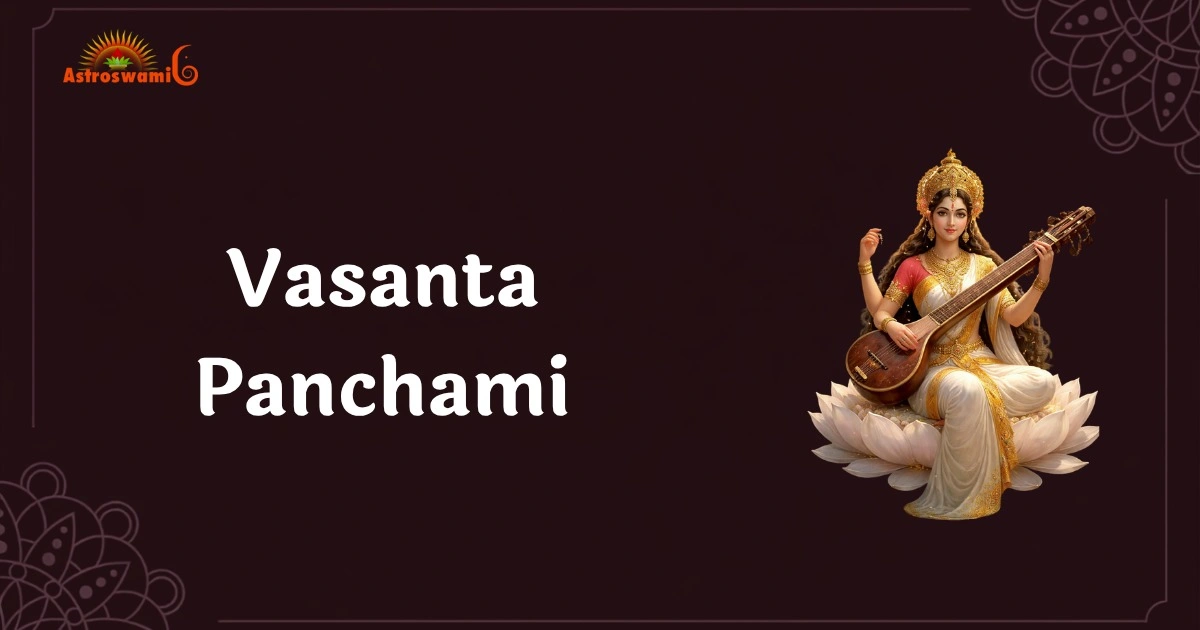
Goddess Saraswathi is worshiped as the epitome of knowledge, creativity, music and arts. In Hindu mythology, she is depicted as a beautiful lady in a white saree, sitting on a swan, she carries lotus and scriptures in her hand while playing veena. She has four hands, and each hand represents ego, intellect, alertness and the mind. She symbolises harmony, peace and purity and also represents the divine force that handle knowledge and enlightenment like Jupiter.

 On Vasant Panchami, people also do kundli matching before huge life events to ensure both partners have their spiritual and intellectual growth together, making their union more harmonious. It is also considered as a perfect time to reflect its significance and how it aligns with spiritual practices including the Janam Kundli or birth chart in astrology.

Significance of Vasant Panchami

Vasant Panchami have religious, cultural, educational and agricultural significance which includes worship of Goddess Saraswathi, arrival of spring, symbol of renewal, promoting knowledge, harvesting season and new beginnings. Astrologically, worshipping Goddess Saraswathi on this day strengthen the positive influence of Mercury such as focus, communication skills and enhancing intellect. Due to auspicious timing and planetary position it is also considered that Vasant Panchami is best time for starting new projects, building strong bonds and understanding in all your relationships. The Vasant Panchami is very important and significant festival for students preparing for exams or want to excel in their studies. They offer their book to Goddess Saraswathi so that she can bless them in focusing, learning and excelling in their exams. The Vasant Panchami importance isn’t just about knowledge and wisdom but also about the agricultural factor for the farmers. The farmers celebrate the arrival of new harvesting secolour dresses which is considered as Goddess Saraswathi favourite colour. They make offerings to the goddess of sweets, meals, flowers and books as a gift on her birthday. 

From an astrological perspective, it is also a time to strengthen an individual’s janam kundli by enhancing the positive energies of the planets. Many people consult astrologers on this day to enhance their destinies by wearing gemstones according to their astrological readings which brings prosperity, harmony and wisdom into their lives. Talk to astrologer if you need guidance for smooth and fruitful journey on this Vasant Panchami.

Mantras and their meanings

1.Om Aing Saraswathye Namah: Chanting this mantra early in the morning around 4:00 AM to 6:00 AM brings spiritual clarity to the person. This mantra is used for offering greets to the goddess and ask for her blessings of wisdom.

2.Saraswathi Namasthubhyam Varde Kamarupini Vidhyarambam Karishyami Siddhir Bhavathume Sadha: Early morning chanting this mantra before starting studies or intellectual work helps in removing the obstacles in studies. This mantra is commonly used by the students, asking the goddess to grant success in gaining knowledge.

3.Ya Kundendu Tushaara Haaradhavlaa, Yaa Shubhravastraavritha: This mantra asks the goddess for her protection and guidance to enhance wisdom and remove ignorance. It also praises the divine appearance and qualities of Goddess Saraswathi. As per ancient beliefs and Astrology predictions, chanting such mantras improves concentration and balances intellectual energies.

4.Om Aim Hrim Kleem Maha Saraswati Devaya Namah: It is considered as the most powerful mantra which evokes Maha Saraswathi who’s well known for her supreme form of knowledge and wisdom. It also acts as a request for guidance and blessings.

5.Vad Vad Vaagwaadinee Swaha: It’s a short mantra used for invoking the goddess to bless the devotee with wisdom, understanding and clarity.
 

Stories and legends

 There are many stories considered as a reason behind Vasant Panchami. According to a legend, Lord Shiva was in a deep meditation when Goddess Parvati asked Kamadev to assist in awakening Lord Shiva from his meditation. At her request Kamadev took a bow and an arrow made of flowers to bring Lord Shiva back into the material world but it made Lord Shiva angry. So, using his third eye he burned Kamadev to ashes. Later on, Rati, the wife of Kamadev requested Lord Shiva to bring his husband back to life. Hence, the day Lord Shiva resurrect Kamadev and get back to his material world is known as Vasant Panchami.

 Another legend says, Lord Brahma was unhappy by the silence and sad state of universe and so he created Goddess Saraswathi, who brought music and life to the world with her veena. And just like this there are many other stories revolving around the reason behind Vasant Panchami but there is no solid proof about a mythological story behind this festival.

Conclusion 

Vasant Panchami is an ancient Hindu festival which that marks the beginning of the spring and many other auspicious events. It is celebrated as the birthday of Goddess Saraswathi, who bless her devotees with knowledge, education, wisdom, speech and creativity. As an old-age tradition, toddlers begin writing or reading on this day and to get the bless of Goddess, many write their first letter as ‘Om’. Yellow is the theme colour of Vasant Panchami and this day, devotees wear yellow dresses to worship Goddess Saraswathi, flying kites and preparing festive meals to offer Goddess Saraswathi.

 Whether you are looking for success in education, a prosperous career, or harmonious life partnership through kundli matching, that is the day to start your journey with divine blessing.

Frequently Asked Questions Vasant Panchami 2026

Q1. What is Vasant Panchami?

Ans. It is a festival that celebrates the arrival of spring season and is dedicated to Goddess Saraswathi known for her intellect, wisdom and creativity. It is celebrated on the fifth day of Shukla Paksha Magh Maas.

Q2. When is Vasant Panchami 2026?

Ans. Basant Panchami in 2026 will be held on Friday, 23 January 2026.

 Q3. What is the significance of the yellow colour in Vasant Panchami?

Ans. The significance of the yellow colour for Vasant Panchami is its connection to spring and the Goddess Saraswathi. The colour yellow represents the blooming mustard crops, the sun, the knowledge and wisdom. It is also considered as the favourite colour of Goddess Saraswathi.

Q4. Why students keep their books near the goddess during Puja? 

Ans. This day plays a special role in the life of students. It is considered that this day, Goddess Saraswathi blesses the students with knowledge and wisdom which helps them to focus on their studies. Hence, as an request for knowledge and focus, students offer their books to her to get blessings.

Q5. Why does Saraswathi hold a Veena?

Ans. Veena in the hand of Saraswathi represents the knowledge and wisdom. And when she play the veena it is considered that through that veena she is spreading knowledge and wisdom in the universe.

 Q6. Why Vasant Panchami is a good day?

Ans. At this time the Sun comes into a connection with Aquarius which is linked to Mercury, the planet of communication, learning and intellect. Therefore, due to a powerful alignment of planets it is considered as a good day to start something new or to expand their knowledge and wisdom.

Q7. Who can celebrate Vasant Panchami?

Ans. Anyone regardless of age can celebrate Vasant Panchami and get the blessings of Goddess Saraswathi. This day students worship her for knowledge, musicians and artists worship her for good vocals and creativity and others worship her for her blessing and protection.

Q8. What are the benefits of celebrating Vasant Panchami?

Ans. Celebrating Vasant Panchami brings prosperity, knowledge and harmony. Worshipping Goddess Saraswathi on this day enhances intellect abilities, promotes creativity and helps in achieving success.

Q9. How do I perform Saraswathi Puja at home?

 Ans. To perform Saraswathi Puja at home, clean the house and setup the goddess in the temple. Offer her some yellow flowers, fruits, sweets and place books, musical instruments or any other tool related to learning and creativity near the statue of the goddess. Chant mantras and worship the goddess for her blessings. 

Q10. What is the historical or cultural reason behind celebrating Vasant Panchami?

Ans. In ancient legends it is said that Goddess Saraswathi was born on this day. Hence people celebrate Vasant Panchami as her birthday and culturally it is the harvesting time of the season when farmers look forward for healthy crops in their fields. 

2026 Varuthini Ekadashi Fasting Date, Rituals, and Katha

Varuthini Ekadashi is the most auspicious and virtuous Vrat-Puja among all Ekadashi. Devotees get liberated from all sins and increase the receptivity to acquire bright destiny. According to Hindu mythology, Fasting on Varuthini Ekadashi is considered equal to great philanthropy. If you do this Ekadashi Vrat-Puja with ever-lasting devotion you will get salvation after death. You will secure your place in Baikunth which is a holy place where Lord Vishnu resides. No evil may impede your way of success in this mundane world. The fear of death and the suffering of the agony of life are completely wiped out by doing the fast of Varuthini Ekadashi 2026 Vrat.

Here, you can also check your horoscope using an online kundali maker to understand the spiritual influence of this Ekadashi

Varuthini Ekadashi 2026 Fasting Date and Time

Varuthini Ekadashi: Monday, April 13, 2026 To On 14th April
Paran (breaking of fast) time – From 06:54 am 08:32 am
Dwadashi ends on the day of Paran Tithi – 06:54 am
Ekadashi date starts – April 13, 2026 at 01:16 am
Ekadashi date ends – April 14, 2026 at 01:08 am

Varuthini Ekadashi 2026 Fasting and Vrat Puja Method

Devotees should restrain having any food from the evening time one day before Varuthini Ekadashi. As a devotee, you get up early in the morning on VaruthiniEkadasi and have a bath. You wear clean cloth on this occasion and establish the idol of Lord Vishnu on the wooden lad to sanctify it from the Ganga Jal. It is advisable to arrange all Puja-ingredients beforehand. They are mentioned as yellow clothes for Lord Vishnu, the idol of Shri Vishnu, yellow clothe for Lord Vishnu, incense lamp, coconut, a garland of flowers, betel nut, Akshat, Tulsi leaves, sandalwood, sweet Bhog, and Panchmrit.

You do tilak and lit the lamp. The Lord Vishnu is fond of Tulsi leaves and, his worship is considered incomplete without offering these leaves. If you offer Tulsi garland to Lord Vishnu he gets pleased very easily. Devotees bestow water to the Peepal tree on VaruthiniEkadasi, it is considered very auspicious. It is believed that Lord Vishnu dwells in that tree. You do Aarti and worship Lord Vishnu and, the goddess Lakshmi in the night. You get the blessings of the goddess Lakshi and get unsaturated wealth throughout your life. Yellow color is the signature color of Lord Vishnu so devotees bestow him yellow fruit, yellow-colored sweets containing saffron to him on Varuthini Ekadashi. Devotees feed Brahmin respectfully the next day after doing worship in the morning.

Here devotees often use AI astrology platforms to understand the deeper spiritual significance of this auspicious day

 Varuthini Ekadashi Katha (Story)

There was a King and, his name was Mandhata in ancient times. His kingdom was situated on the bank of the Narmada River. He was a nobility of character and would help his subject beyond the call of duty. Despite having an abundance of wealth, he used to live his life in a self- aesthetic way. He would live his life in religious contemplation and was a great devotee of Lord Vishnu. Once Mandhata was engrossed in the devotion of the worship of the God Vishnu. He was oblivious of whatever happening around him due to his unceasing meditation of God. Suddenly a wild bear appeared in the forest and seeing his pray standstill it started eating his feet. But, king Mandahta did not break his meditation of God and controlled his anger and agony. Having seen his steadfast loyalty, the God Vishnu appeared in front of him and saved his life from the bear. Mandhata was still suffering from the grievous pain of his wounded feet. The Lord Vishnu told Mandhata that his agony of suffering is the result of the sins of his previous life. He told him not to worry about his wrongdoings and ordered him to do the Varuthini Ekadashi in Mathura. Worship the Varaha avatar idol of Lord Vishnu by observing a fast. King Mandhata fasted on the Varuthini Ekadashi and worshipped God. Soon he became liberated from his all sins and become strong and sturdy as before.

Significance of Varuthini Ekadashi 2026

According to the holy scriptures and Vedas, Varuthini Ekadashi has very special significance to get rid of all types of life’s problems and sins. After doing this Ekadashi Vrat devotees get liberated from every sin of his previous life and current life. You become a fortunate person and have a Midas touch in your action. You fast for the whole day and get absorbed completely in the devotion of the supreme God Vishnu. This Ekadashi is considered more virtuous than Kanyadan. You cannot get the blessings of God in that much intensity by doing even gold donation. Devotees have to follow all rituals and do worship, fasting, a charity in a puritanical way. You will have an abundance of wealth throughout your life and, destiny will over-prevail. Every adverse circumstance will be in your own favor. By doing fast and due to the grace of the God Vishnu, devotees do charity and earn absolute libration from the circulation of life and death.

Devotees seeking guidance for rituals or vrat timings can also talk to astrologer experts for personalized advice

The blessings of the god you get after doing fast on Varuthini Ekadashi 2026

Devotees do Varuthini Ekadasi with great passion and enthusiasm. The unceasing devotion of theGod never let them down in any field. At the time of the solar eclipse in Kurukshetra, the result obtained by donating gold on a platform is similar to that obtained by fasting on Varuthini Ekadashi. You get everything like wealth, family. Health, children, and flourishing career. It is considered equal to more than thousands of years of Vrat-penance simultaneously. You get salvation after death and come out of the vicious cycle of birth and death due to the Varuthini Ekadashi. You all great devotes should do some philanthropy according to your capacity on Varuthini Ekadashi because any donation on this auspicious Ekadashi is considered more than the donation of thousands of cows. According to the great Vedas and scriptures, you get the same blessings after doing Varuthini Ekadashi that you get the blessings Kanyadan. Because no other donation is as big as Kanyadan according to ancient Hindu mythology.

Shattila Ekadashi 2026

Shattila Ekadashi is a sacred fast observed on the Ekadashi of the Krishna Paksha (dark fortnight) of the Magh month, and it holds special significance for offering sesame seeds as charity, bathing with sesame seeds, and performing havan (fire ritual) with sesame seeds. Using sesame seeds in offerings, charity, and worship on this day is believed to lead to the expiation of sins, wealth and prosperity, worldly pleasures, and spiritual purification.

Shattila Ekadashi 2026: It is a substantial question when you will break your fast? The ritual which includes breaking the fast is called Parana. You are not supposed to break your fast the same day as Shattila Ekadashi. The breaking of fast the next day of Ekadashi is considered auspicious according to Hindu Mythology. The day is called Dwadashi. The result of doing Shattila Ekadashi seems to be obscure if you break your fast even earlier than Dwadashi.  Now we come which time duration of Dwadashi is the best to break your fast? You should break your fast early in the morning the next day of Shattila Ekadashi. Devotees wake up early in the morning. They take a bath and go to worship the Lord Vishnu before Parana (breaking the fast).

Shattila Ekadashi 2026 Fasting Date and Shubh Muhurat Timings

Shattila Ekadashi 2026 Fasting Date and Shubh Muhurat

Shattila Ekadashi dateWednesday, 14 January 2026
Ekadashi tithi begins13 January 2026, around 3:17 PM IST
Ekadashi tithi ends4 January 2026, around 5:52 PM IST
Parana (breaking the fast)15 January 2026, 7:15 AM to 9:21 AM IST
Dwadashi tithi ends15 January 2026, around 8:55 PM IST

Fasting Story of Shatila Ekadashi

The story related to Shatila Ekadashi belongs to ancient times.   There was a lady Brahmin who used to live in a village. She was a great devotee of Lord Vishnu. So, she would do every Vrat-Puja wholeheartedly. She worshiped God with uttermost sincerity and devotion. The Brahmin lady would follow every ritual without compromising the situation. But she was a bit reluctant to give food to any beggar who would come to her door. One such time she continued fasting for one month. Her body become frail due to lack of proper nutrition; however, the body became pure due to persistent fast for the Lord Vishnu.

God became pleased to see her extreme devotion. She was a true possessor of Baikunth. Despite having salvation, she was unable to have peace. She did not do any charity of food during her fast and it was an obstacle on her way to go to Baikunth. First, she had to do charity of food and the lord Vishnu himself went her home to take alms. Lord Vishnu himself gave her a chance to follow her destiny as Baikunth. The old lady gave a lump of clay to the beggar. After the donation of the lump of clay every stuff related to food became clay of her house. Whatever she touched to eat became clay. It was a depressing moment for her. She started living in starvation and her body became emaciated due to lack of eating.

 She worshiped Lord Vishnu to protect herself. The lord Vishnu came into her dream and told her that it was the result of her Karma. You donated a lump of clay to a starved beggar so you would be living a starving life due to the sin of Karma. she was a great devotee of the Lord Vishnu so he sought a solution for her to come out of the curse. He told her to donate food to everyone who is seeking food on her door. Apart from the donation of food and edibles he further told her to observe the Shattila Ekadashi Vrat.  She did the Shattila Ekadashi Vrat with high religious faith and gained everything in return for this auspicious Vrat-Puja. She got the supreme position in Vishnuloka after her demise.

On such auspicious days, many devotees also check their free janam kundali to understand their karmic patterns and seek spiritual guidance, just as the Brahmin lady learned the importance of charity and devotion.

Rituals of Shattila Ekadasi Fasting or Vrat 2026

  • Devotees who do Shattila Ekadashi should have an early bath in the morning and wear clean clothes.
  • A wooden lad is convenient to install an idol of the Lord Vishnu on it.
  • It may be an idol or Picture anything representing God.
  • Devotees must keep chanting the mantras of Vishnu Sahasranam during the Vrat-Puja. The chanting mantra of Om Namo BhagwateVasudevaya is also fruitful.
  • The Bhog which is offered to God may be fruits, milk, or any sweet.
  • Tulsi leaves are essential for worshiping the god because the Vrat-Puja is incomplete without Tulsi leaves.
  • Aarti is done in the evening to chant Mantras of the Lord Vishnu.
  • As a devotee, if you consume Sesame seeds you may be a fortunate one.
  • If you bestow sesame mixed urad khichdi to the lord Vishnu it is considered auspicious.
  • Fast on ShattilaEkadshi depends on your capacity if you find it unbearable you may have a light meal in the form of milk or fruits.

Why Pepoles doing Fasting on Shattila Ekadashi?

Shattila Ekadashi is very auspicious according to Hindu Mythology. Devotees get profuse blessings of God Vishnu in terms of wealth, and prosperity. This Vrat of Ekadashi fulfills all human desires of this life and afterlife. The donation, charity, and philanthropy are special virtues that have some extramundane effect afterlife. You will be living a prosperous and affluent life till you are alive. Whatever you feed poor people they give blessings in return, and you become a fortunate person due to the grace of the God Vishnu.

If you donate sesame seeds on this auspicious occasion you will get the immense blessings of the God Vishnu. According to Hindu mythology, there are six types of sesame donations which are considered equal to thousands of years of worship altogether. First, you must mix sesame seeds in water and use them during your bath. Devotees also do tilak of sesame seeds and consume on Shattila Ekadashi. You may drink sesame mixed water also. Using sesame seeds in Hawan is also considered very auspicious.

You will be liberated from all sins which have been committed unwillingly by doing Shattila Ekadashi 2026.

Shani Jayanti 2026 Date, Time & Puja Muhurat

Shani Jayanti 2026 will be celebrated on 16 May 2026 (Saturday). According to the Hindu Panchang, the Amavasya Tithi begins at 05:11 AM on 16 May 2026 and ends at 01:30 AM on 17 May 2026. This auspicious day marks the birth anniversary of Lord Shani Dev, the deity of karma, justice, and discipline. Devotees across India observe Shani Puja, charity, mantra chanting, and special remedies to reduce Shani Dosha and seek blessings for career, finances, health, and stability.

Shani Jayanti 2026 Date and Muhurat

Shani Jayanti 2026 Date and Time

EventDate & Time
Shani Jayanti 2026 Date16 May 2026 (Saturday)
Amavasya Tithi Begins16 May 2026 at 05:11 AM
Amavasya Tithi Ends17 May 2026 at 01:30 AM

This day is also known as:

  • Shani Dev Jayanti 2026
  • Shani Dev Janmotsav 2026
  • Saneeswara Jayanthi 2026
  • Shani Puja 2026 Date

Since Shani Jayanti falls on Saturday in 2026, its spiritual importance becomes even stronger for devotees performing Shani remedies and Saturn-related rituals.

When Is Shani Jayanti 2026?

Many devotees search queries like:

  • when is shani jayanti 2026
  • shani jayanti date 2026
  • shani dev jayanti 2026 date
  • shani jayanti date and time

The direct answer is:

Shani Jayanti 2026 falls on Saturday, 16 May 2026.

The festival is observed on the Amavasya of Jyeshtha month, which is considered highly important in Vedic astrology for reducing the negative effects of Saturn (Shani).

Why Is Shani Jayanti Important in Astrology?

Lord Shani is known as the god of Karma and justice. In Vedic astrology, Saturn is considered one of the most influential planets because it governs:

  • Discipline
  • Delays
  • Hard work
  • Justice
  • Karma
  • Financial struggles
  • Life lessons

The movement of Shani affects every zodiac sign through:

  • Sade Sati
  • Dhaiya
  • Saturn Mahadasha
  • Saturn transit effects

This is why Shani Jayanti 2026 is considered extremely powerful for spiritual remedies and karmic cleansing.

Many people also use AI astrology tools, horoscope analysis, and free kundali software to understand how Saturn is impacting their personal and professional life.

How to Impress Shani Dev in 2026

People often search: how to impress shani dev in 2026 because Saturn rewards discipline and sincerity more than luxury rituals.

Powerful Remedies on Shani Jayanti 2026

1. Worship Peepal Tree

According to Hindu beliefs, Lord Shani resides in the Peepal tree.

  • Offer water to the roots
  • Light a mustard oil diya
  • Perform parikrama around the tree

This remedy is believed to reduce Shani Dosha and financial instability.

2. Donate Black Items

Charity is one of the strongest Saturn remedies.

Donate:

  • Black sesame seeds
  • Black clothes
  • Mustard oil
  • Iron items
  • Urad dal

Helping poor and needy people on Shani Jayanti is considered highly beneficial.

3. Worship Lord Shiva

Shani Dev is believed to be a great devotee of Lord Shiva.

Offer:

  • Water mixed with black sesame
  • Milk on Shivling
  • Bilva leaves

This combination is considered spiritually powerful during Shani Jayanti.

4. Recite Hanuman Chalisa

According to religious belief, worshipping Lord Hanuman helps reduce the harsh effects of Saturn.

Devotees usually:

  • Recite Hanuman Chalisa
  • Visit Hanuman temple
  • Offer sindoor and jasmine oil

on Saturdays and Shani Jayanti.

5. Chant Shani Mantra

You can chant:

“Om Sham Shanicharaya Namah”

108 times for mental peace, stability, and karmic balance.

Things You Should Avoid on Shani Jayanti 2026

Mistakes That May Increase Shani Dosha

1. Avoid Cutting Hair and Nails

According to traditional beliefs, cutting hair or nails on Shani Jayanti may increase financial instability.

2. Do Not Look Directly Into Shani Dev’s Eyes

While visiting a Shani temple, devotees are advised to focus on the feet of Shani Dev instead of direct eye contact.

3. Never Disrespect Elders

Saturn represents discipline and karma.

Disrespecting:

  • parents
  • elderly people
  • teachers

is believed to strengthen negative Saturn effects.

4. Do Not Harm Peepal Tree

Plucking leaves or damaging the Peepal tree on Shani Jayanti is considered inauspicious.

Shani Jayanti 2026 Spiritual Benefits

Worshipping Shani Dev on this day is believed to help in:

  • Reducing Saturn Dosha
  • Improving career stability
  • Financial growth
  • Mental peace
  • Relief from obstacles
  • Better karmic balance

People facing Sade Sati or Shani Mahadasha especially observe this festival with devotion.

Shani Jayanti 2026 and Saturn Transit Connection

In 2026, Saturn remains in Pisces (Meena Rashi), making emotional and karmic lessons stronger for many zodiac signs.

Because of this transit:

  • Pisces, Aries, and Aquarius natives may feel stronger Saturn effects
  • Remedies performed on Shani Jayanti become more important
  • Spiritual discipline and patience become key themes of the year

Final Thoughts on Shani Jayanti 2026

Shani Jayanti 2026 is not just a religious festival—it is considered a powerful day for karmic correction, discipline, and spiritual growth. Lord Shani rewards honesty, patience, and hard work. Devotees who perform sincere prayers, charity, and remedies on this day believe they receive protection from obstacles and negative planetary effects.

Whether you follow astrology deeply or simply seek peace and stability, Shani Jayanti 2026 is a meaningful occasion to reflect, pray, and strengthen your inner discipline.

FAQs on Shani Jayanti 2026

1. What is the date of Shani Jayanti 2026?

Shani Jayanti 2026 will be celebrated on 16 May 2026, Saturday.

2. What is the Amavasya timing for Shani Jayanti 2026?

Amavasya begins at 05:11 AM on 16 May 2026 and ends at 01:30 AM on 17 May 2026.

3. Why is Shani Jayanti celebrated?

It marks the birth anniversary of Lord Shani Dev, the deity of karma and justice.

4. How to impress Shani Dev in 2026?

Worship Peepal tree, donate black items, chant Shani mantra, and recite Hanuman Chalisa.

5. Which zodiac signs are most affected by Saturn in 2026?

Pisces, Aries, and Aquarius may experience stronger Saturn-related effects due to Sade Sati phases.

6. Is Saturday important for Shani Puja?

Yes, Saturday is considered the most auspicious day for Shani Dev worship.

Raksha Bandhan 2026: Date, Shubh Muhurat, Rituals & Significance

Raksha Bandhan is one of the most loved and celebrated festivals in India. The festival beautifully represents the bond of love, trust, and protection between brothers and sisters. Every year, sisters tie a sacred rakhi on their brothers’ wrists and pray for their happiness, long life, and success, while brothers promise to protect and support their sisters throughout life.

In 2026, Raksha Bandhan will be celebrated with great joy and devotion across the country. Families come together, exchange gifts, enjoy sweets, and strengthen emotional connections on this auspicious day.

Raksha Bandhan 2026 Date

Raksha Bandhan in 2026 will be celebrated on Thursday, 28 August 2026.

The festival falls on the Purnima Tithi (Full Moon Day) of the Hindu month of Shravana.

Raksha Bandhan 2026 Muhurat

Performing the Rakhi tying ceremony during the correct muhurat is considered highly auspicious in Hindu traditions.

Auspicious Rakhi Tying Muhurat

  • Raksha Bandhan Date: Thursday, 28 August 2026
  • Rakhi Tying Muhurat: 06:23 AM to 09:48 AM
  • Aparahna Muhurat (Most Auspicious): 01:45 PM to 04:20 PM

Purnima Tithi Timing

  • Purnima Tithi Begins: 09:09 AM on Aug 27, 2026
  • Purnima Tithi Ends:   09:48 AM on Aug 28, 2026

Note: Muhurat timings may vary slightly depending on your city and local Panchang.

Why is Raksha Bandhan Celebrated?

The word “Raksha” means protection, and “Bandhan” means bond. Raksha Bandhan symbolizes the eternal bond between siblings. Traditionally, sisters tie a rakhi thread on their brothers’ wrists as a symbol of love and prayers, while brothers offer gifts and vow to protect their sisters.

Over time, the festival has evolved beyond biological relationships and is now celebrated among cousins, close friends, and even as a symbol of emotional connection and respect.

Significance of Raksha Bandhan

Raksha Bandhan holds deep spiritual and cultural importance in Hindu tradition. The sacred rakhi thread is believed to carry blessings of protection, positivity, and prosperity.

The festival teaches important values such as:

  • Love and affection
  • Emotional bonding
  • Family unity
  • Protection and responsibility
  • Respect for relationships

It is also considered an auspicious occasion for strengthening family ties and spreading happiness.

Raksha Bandhan Rituals

Families follow traditional customs and rituals on Raksha Bandhan with devotion and enthusiasm.

Common Raksha Bandhan Rituals Include:

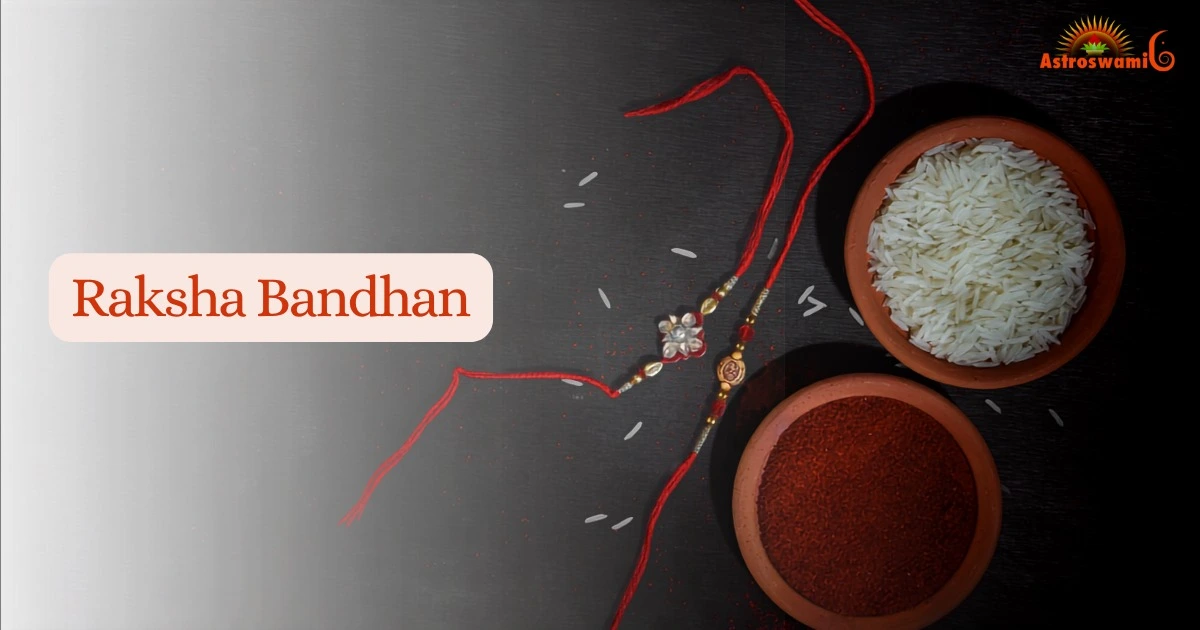
  • Sisters prepare a puja thali with rakhi, diya, roli, rice, sweets, and incense sticks.
  • Brothers sit facing east during the ceremony.
  • Sisters apply tilak on the forehead of their brothers.
  • Rakhi is tied on the brother’s wrist while chanting prayers for his well-being.
  • Sweets are exchanged to celebrate the occasion.
  • Brothers give gifts and blessings to their sisters.

Many families also perform Lakshmi and Ganesh puja on this day for prosperity and harmony.

Mythological Stories Associated with Raksha Bandhan

Several mythological stories are connected with Raksha Bandhan.

Lord Krishna and Draupadi

One of the most famous stories comes from the Mahabharata. Lord Krishna is also central to another major Hindu festival, Krishna Janmashtami, which celebrates his birth and is observed with fasting, prayers, and devotional rituals.

Goddess Lakshmi and King Bali

According to Hindu scriptures, Goddess Lakshmi tied a sacred thread to King Bali and accepted him as her brother. In return, King Bali promised to protect her and granted her wishes.

These stories highlight the importance of protection, trust, and unconditional support in relationships.

Raksha Bandhan Celebrations in India

Raksha Bandhan is celebrated differently across various regions of India.

  • In North India, sisters visit their brothers and celebrate with sweets and gifts.
  • In Maharashtra, the festival coincides with Narali Purnima.
  • In Rajasthan and Gujarat, families perform special pujas and rituals.
  • In South India, the day is also observed as Avani Avittam by Brahmin communities.

Despite regional differences, the spirit of love and togetherness remains the same everywhere. The month of Shravan is also known for other important festivals and vrat traditions. Hariyali Teej 2026 Vrat is one such festival, especially associated with traditional prayers, fasting, and celebrations during the monsoon season.

Popular Raksha Bandhan Gift Ideas

Choosing the perfect gift adds excitement to the festival. Some popular Raksha Bandhan gift ideas include:

  • Personalized gifts
  • Watches and accessories
  • Chocolates and sweet hampers
  • Spiritual items
  • Fashion accessories
  • Gadgets and electronics
  • Handmade greeting cards

Thoughtful gifts make the celebration even more memorable.

Conclusion

Raksha Bandhan 2026 is not just a festival but a celebration of emotions, memories, and lifelong relationships. The sacred bond between brothers and sisters is strengthened through rituals, prayers, and heartfelt moments shared together.

Celebrate Raksha Bandhan on 28 August 2026 with devotion and happiness, and make the day special by spending quality time with your loved ones. May this auspicious festival bring peace, prosperity, love, and protection into everyone’s lives.

Raksha Bandhan falls during the holy month of Shravan, which is also associated with several other important Hindu festivals. – Nag Panchami Festival | Sawan Somwar 2026 | Sawan Shivratri