

Do you feel that no matter how hard you work, success stays just out of reach? Marriages get delayed, children’s health or birth becomes a worry, money slips away, and family disputes never seem to end. In Vedic astrology, one possible reason behind such repeating patterns is Pitru Dosha, also called Pitra Dosh.
The good news is that Pitru Dosha is not a curse that lasts forever. Our scriptures describe simple, sincere remedies through which we can honour our ancestors, seek their blessings, and bring peace to the family lineage. In this guide by AstroswamiG, you will learn what Pitru Dosha is, how to identify it in your Kundli, its effects and symptoms, and 15+ time-honoured remedies you can follow.
What Is Pitru Dosha (Pitra Dosh)?
The word Pitru means ancestors or forefathers, and Dosha means affliction or imbalance. Pitru Dosha is an astrological condition that arises when the souls of our ancestors are believed to be unsettled or unsatisfied. This may happen because proper last rites (Shraddha, Tarpan, Pind Daan) were not performed, because an ancestor died an untimely or unnatural death, or because of unresolved wrongdoings in the family line.
According to Vedic belief, we carry the karma and blessings of seven generations on each side of the family. When our ancestors are at peace, their blessings flow to the family. When they are restless, the family may face repeated obstacles in different areas of life.
Astrologically, Pitru Dosha is read from the Kundli through the placement of the Sun (the karaka of the father and ancestors), the Moon (the karaka of the mother), Rahu, Ketu, Saturn, and the 9th house (the house of father, lineage, and fortune).
What are the Types of Pitru Dosh?
Pitru Dosha can be understood in a few ways, depending on its cause and how it shows up in the chart.
1. Based on the Source of the Dosha
- Pitru Dosha from the father’s side: Linked to the paternal lineage, often tied to the Sun and the 9th house.
- Pitru Dosha from the mother’s side (Matru Dosha): Linked to the maternal lineage and connected with the Moon.
- Dosha from both sides: In some Kundlis, both lineages show afflictions.
2. Based on Planetary Combination
- Sun–Rahu conjunction: Often called a Grahan combination on the Sun, it is one of the most commonly cited signs.
- Sun–Ketu conjunction: Linked with disconnection from paternal support or past-life ancestral karma.
- Sun–Saturn conjunction: Associated with strained father–child relations and delays.
- Afflicted 9th house or 9th lord: When the 9th house or its lord sits with Rahu, Ketu, or Saturn, or is aspected by them.
3. Based on Karmic Cause
- Ancestral karma: Unfinished duties or wrongdoings of earlier generations.
- Unnatural or untimely death of an ancestor: Accident, suicide, or sudden death without proper rituals.
- Neglected rituals: Skipping Shraddha, Tarpan, or other annual rites for the departed.
- Disrespect to elders: Harming or insulting parents or elders in the family.
Myths About Pitru Dosha
Pitru Dosha is surrounded by fear and confusion. Let us clear up the most common misunderstandings.
Myth 1: Pitru Dosha is a curse that ruins your whole life
Pitru Dosha is better understood as an indication of ancestral karma that needs attention. It is not a permanent punishment, and sincere remedies are said to reduce its impact.
Myth 2: Only people with Rahu or Ketu in the 9th house have it
Several combinations can indicate it. A proper reading of the full chart is needed instead of a single planet placement.
Myth 3: It only affects the person who has it in the Kundli
Traditionally, the effects are believed to be felt across the family, including spouse and children.
Myth 4: Expensive rituals are the only solution
Many powerful remedies are simple: water offerings, feeding the needy, charity, and daily prayer. Sincerity matters more than expense.
Myth 5: Once the puja is done, you never need to do anything again
Ancestral remembrance is an ongoing practice. Annual Shraddha during Pitru Paksha and regular Tarpan keep the connection alive.
Myth 6: Every problem in life is because of Pitru Dosha
Not every difficulty is astrological. Health, finances, and relationships also depend on effort, circumstances, and other chart factors. Please avoid blaming everything on one dosha.
How to Identify Pitru Dosha in Your Kundli
A Kundli analysis by a knowledgeable astrologer is the best way to confirm Pitru Dosha. Here are the common indicators astrologers look for:
- Rahu or Ketu in the 9th house – especially when afflicting the 9th lord.
- Sun conjunct Rahu, Ketu, or Saturn – particularly in the 9th, 1st, or 10th house.
- 9th lord placed in the 6th, 8th, or 12th house – the dusthana houses.
- Debilitated Sun (in Libra) or a weak 9th lord.
- Malefic aspects of the 9th house by Saturn, Mars, Rahu, or Ketu.
- Jupiter (karaka of wisdom and blessings) afflicted by Rahu or Ketu, sometimes called Guru Chandal Yoga, along with 9th house involvement.
- Afflicted Sun and Moon in the 5th house, which may point to ancestral karma affecting children.
- Pitru Dosha in the Navamsa or Dashamsa chart, which some astrologers also check.
Important: A single placement does not automatically mean Pitru Dosha. Strength of planets, aspects, Dasha period, and the overall chart must be studied together.
Effects of Pitru Dosh
When Pitru Dosha is present in a Kundli, astrologers say it may influence different areas of life.
Career and Finance
- Repeated obstacles in job or business despite hard work
- Sudden financial losses or money that does not stay
- Delayed promotions or lack of recognition
Marriage and Relationships
- Delay in marriage or difficulty finding a suitable match
- Frequent misunderstandings between spouses
- Family disputes and lack of harmony at home
Children and Progeny
- Difficulty in conceiving or delays in having children
- Concerns about children’s health, education, or behaviour
Health
- Recurring or hard-to-diagnose health problems in the family
- Mental stress, anxiety, and restlessness
Family and Society
- Inheritance and property disputes
- Lack of support from elders or family
- Feeling of being “blocked” despite good planning
Please note that these are traditional astrological interpretations. If you or a family member face health or legal issues, always consult qualified doctors and professionals along with any spiritual remedies.
How Do You Know If You Have Pitru Dosha?
Apart from the Kundli, many families notice patterns in daily life. Ask yourself the following:
- Do problems seem to repeat across generations in your family?
- Were there untimely or unnatural deaths among ancestors that were never properly honoured?
- Have Shraddha or Tarpan rituals been skipped or forgotten for years?
- Do you have recurring dreams of deceased relatives, especially in distress or asking for something?
- Is there a history of unresolved family conflicts, property disputes, or broken promises?
- Do good opportunities come close but fall apart at the last moment?
If you answer “yes” to several of these and your Kundli also shows the planetary indicators, it is worth consulting an experienced astrologer such as AstroswamiG for a detailed reading and personalised guidance.
Pitra Dosh Ke Upay (Remedies of Pitru Dosha)
Here are 15+ remedies described in Vedic tradition. You do not have to do all of them. Choose what suits your family tradition, ability, and astrologer’s advice.
Daily and Simple Remedies
1. Offer water to the Sun every morning Wake up early, take a bath, and offer water (Arghya) to the rising Sun, preferably in a copper vessel. The Sun represents the father and ancestors, so this strengthens that connection.

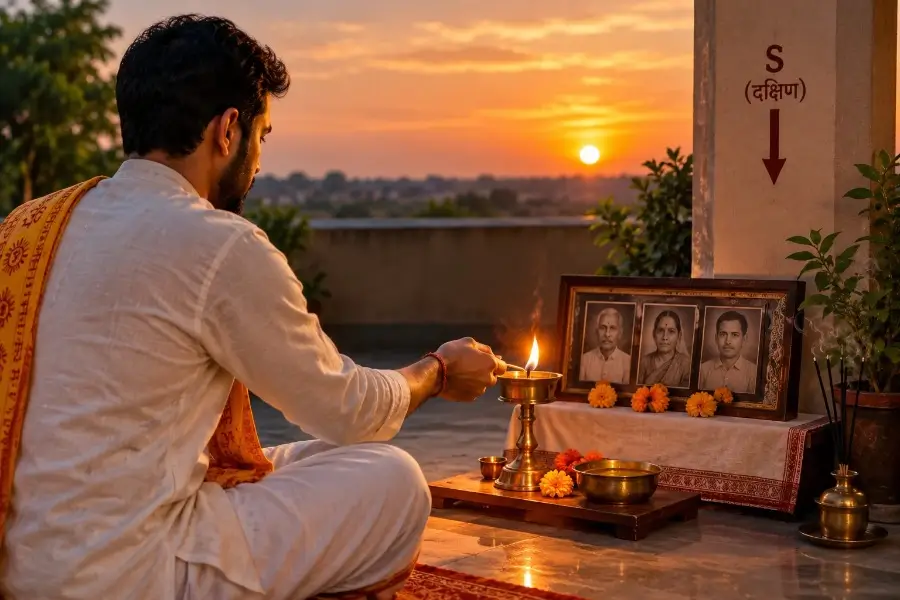
2. Light a lamp in the south direction South is the direction of ancestors (Pitru Disha). Light a mustard oil lamp every evening, especially on Amavasya, while remembering your forefathers.
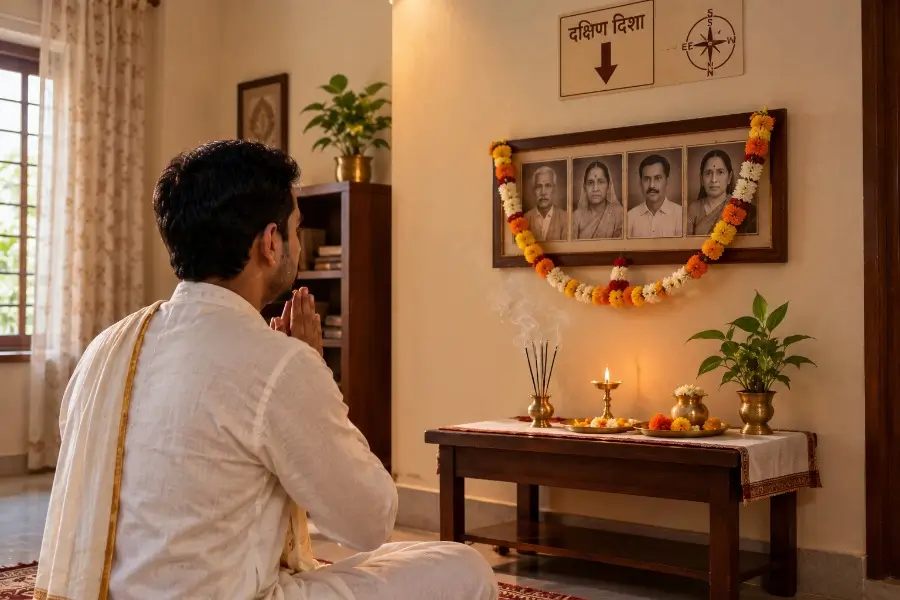
3. Keep photos of ancestors in the right direction Place ancestors’ pictures on the south wall, not in the prayer room alongside deities and not in the bedroom. Offer a garland and incense regularly.
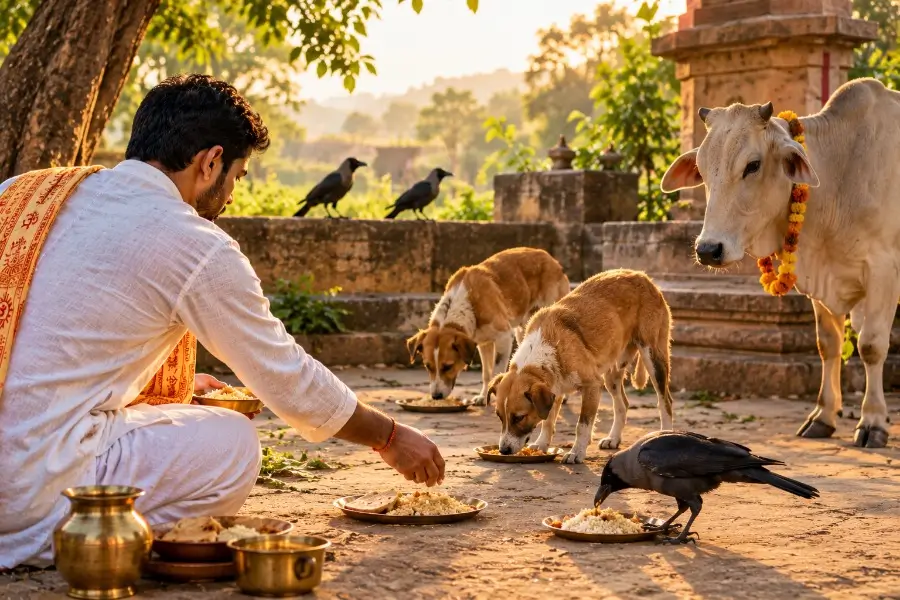
4. Feed crows, dogs, and cows In tradition, crows are seen as messengers of ancestors. Offering food to crows, dogs, and cows (Pancha Bali) before eating is considered a way of feeding the Pitrus.
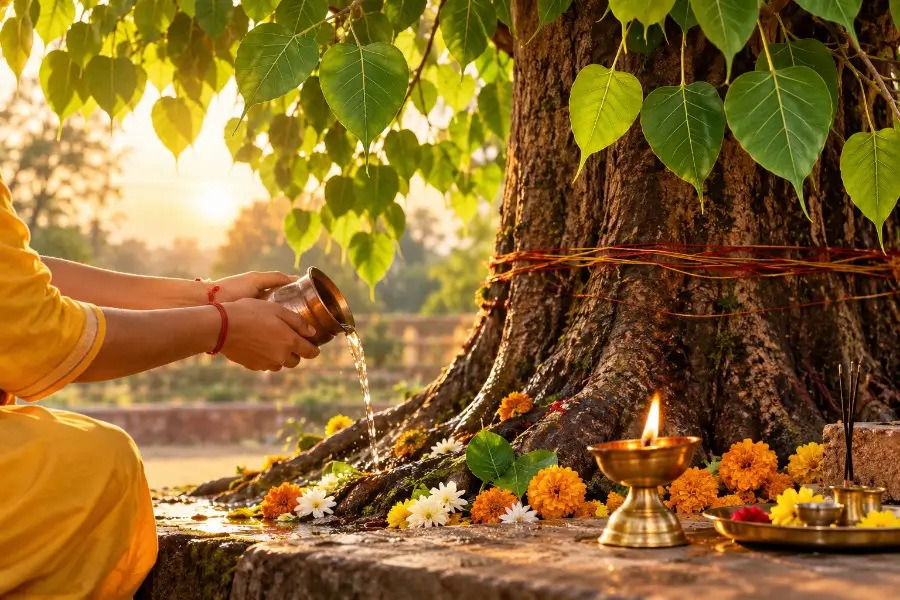
5. Water the Peepal tree The Peepal is considered sacred and associated with ancestors. Offer water and light a lamp under it, especially on Saturdays and Amavasya.
Rituals and Pujas
6. Pitru Tarpan Offering water mixed with black sesame seeds (til) and barley while chanting the names of ancestors. It can be done on Amavasya and during Pitru Paksha.
7. Shraddha during Pitru Paksha Performing Shraddha on the tithi of the ancestor’s death during the 16-day Pitru Paksha every year is the most important annual duty. If the tithi is unknown, Sarva Pitru Amavasya is the day to offer it for all ancestors.
8. Pind Daan Offering rice balls (pind) to the departed souls. Pind Daan at holy places such as Gaya is described in the scriptures as especially liberating for ancestors.
9. Narayan Nagbali Puja Performed for ancestors who had an unnatural death or for Pitru Dosha with Rahu-Ketu involvement. Traditionally done at Trimbakeshwar (Nashik).
10. Tripindi Shraddha Done to satisfy ancestors of up to three generations, especially when there are signs of ancestral disturbance for several generations. This is also commonly performed at Trimbakeshwar.
11. Kaal Sarp and Rahu-Ketu Shanti Puja If Rahu or Ketu are afflicting the 9th house or Sun, related shanti pujas can help balance their effects.
12. Pitru Dosha Nivaran Puja A dedicated puja with Sankalp, havan, and offerings in the name of ancestors, performed by learned pandits on an auspicious day.
Charity and Good Deeds
13. Donate food, clothes, and essentials Offer food (Anna Daan), clothes, umbrellas, blankets, or footwear to the poor and to Brahmins in the name of ancestors, particularly on Amavasya.
14. Donate on Saturdays and Amavasya Black sesame seeds, mustard oil, black cloth, and iron items are traditionally donated for Saturn-related and ancestral afflictions.
15. Plant trees in memory of ancestors Planting Peepal, Banyan, or Neem trees and caring for them is considered a long-lasting offering for the Pitrus.
16. Support education, temples, and the elderly Sponsoring a child’s education, contributing to a Gaushala, temple, or old-age home in your ancestors’ name is a modern and meaningful way to honour them.
Mantras and Daily Practice
17. Chant mantras for ancestors
- Om Pitrubhyo Namah
- Om Sarva Pitru Devaya Namah
- Reading the Pitru Stotra or Gayatri Mantra with devotion
18. Read Bhagavad Gita or Garuda Purana Reciting the 7th chapter of the Bhagavad Gita or listening to the Garuda Purana during Pitru Paksha is believed to bring peace to departed souls.
19. Respect your living parents and elders The simplest remedy of all. Serving, respecting, and keeping your living parents and elders happy is considered equal to pleasing the Pitrus.
Tip: Remedies work best when done with faith, regularity, and a pure heart. Consistency matters more than a single grand ritual.
Signs and Symptoms of Pitru Dosha
Here is a quick checklist of commonly mentioned signs:
- Constant delays or obstacles in important life events
- Unexplained financial troubles even with steady income
- Delay in marriage or repeated breakdown of marriage proposals
- Problems in having children, or miscarriages
- Persistent illness in the family without clear cause
- Frequent quarrels and lack of peace at home
- Dreams of ancestors, or a feeling of their presence
- Sudden accidents or untimely deaths in the family
- Lack of mental peace, restlessness, or unexplained fear
- Peepal tree growing on the house or its walls, which some traditions consider a sign of ancestral unrest
- Failure despite effort and good planning
If you notice several of these signs together, do not panic. Seek proper guidance and begin with simple remedies.
Where to Get These Pujas Done
Choosing the right place and the right pandit is as important as the puja itself. Here are some of the most respected locations traditionally associated with ancestor rituals:
Gaya (Bihar)
Known as the foremost place for Pind Daan. Many believe offering Pind Daan here brings liberation to ancestors.
Trimbakeshwar (Nashik, Maharashtra)
Famous for Narayan Nagbali, Tripindi Shraddha, and Kaal Sarp Dosh Puja.
Haridwar (Uttarakhand)
Tarpan and Shraddha on the banks of the Ganga, especially at Har Ki Pauri and Narayani Shila.
Varanasi (Uttar Pradesh)
Pind Daan, Shraddha, and Tarpan at the ghats such as Manikarnika and Pishach Mochan Kund.
Ujjain (Madhya Pradesh)
Rituals on the banks of the Shipra, particularly at Siddhavat and Ram Ghat.
Prayagraj (Uttar Pradesh)
Pitru rituals at the Triveni Sangam, where the Ganga, Yamuna, and Saraswati meet.
Rameshwaram (Tamil Nadu)
Pitru Tarpan and Shraddha at the sacred shores of the temple town.
Puja at Home with Guidance
If you cannot travel, many ancestral rituals such as Tarpan, Shraddha, and Pitru Shanti Puja can be performed at home or conducted by a qualified pandit on your behalf with proper Sankalp.
Guidance from AstroswamiG
Before choosing any puja, it is wise to have your Kundli studied to confirm whether Pitru Dosha is actually present, which type it is, and which remedy suits you. AstroswamiG can help you understand your chart and guide you towards the right remedies and the right time (muhurta) for the puja. When booking any puja, always confirm the pandit’s experience, the procedure to be followed, and the samagri involved.
Final Thoughts
Pitru Dosha is not something to fear. It is a reminder to honour those who came before us and to restore the balance of gratitude within the family. With a sincere heart, regular remembrance, charity, and the right rituals, many families report finding greater peace, harmony, and progress.
Begin today with something small: offer water to the Sun, light a lamp for your ancestors, and feed someone in need in their name. The blessings of the Pitrus are said to be among the strongest foundations for a happy life.
Want to know whether you have Pitru Dosha in your Kundli? Connect with AstroswamiG for a personalised consultation and remedy guidance.
FAQs on Pitru Dosha
1. Is Pitru Dosha permanent?
No. In Vedic astrology it is seen as an indication of ancestral karma, not a lifelong punishment. Regular remembrance, Tarpan, Shraddha, charity and sincere prayer are traditionally believed to reduce its effects.
2. Which is the best time to perform Pitru Dosha remedies?
Pitru Paksha, the 16-day period for ancestors, is considered the most powerful. Sarva Pitru Amavasya, every Amavasya, and the death anniversary (tithi) of the ancestor are also auspicious. Pujas like Narayan Nagbali are best done on a muhurta chosen after your Kundli is studied.
3. Can Pitru Dosha be removed without going to Gaya or Trimbakeshwar?
Yes. Many remedies can be done at home, such as offering water to the Sun, lighting a lamp in the south direction, Tarpan, feeding crows, cows and the needy, and chanting ancestor mantras. If you cannot travel, a qualified pandit can also perform the puja on your behalf with proper Sankalp.
4. Does Pitru Dosha affect marriage and children?
Astrologers traditionally link an afflicted 9th house, Sun, or Rahu-Ketu combinations with delayed marriage, relationship friction and difficulty in having children. However, these are not guaranteed outcomes. Other chart factors, circumstances and medical reasons also matter, so a full Kundli analysis and appropriate professional advice are important.
5. How do I confirm whether I have Pitru Dosha?
Look at the Kundli for Rahu or Ketu in the 9th house, Sun conjunct Rahu, Ketu or Saturn, or the 9th lord in the 6th, 8th or 12th house. A single placement is not enough, so have an experienced astrologer such as AstroswamiG review the full chart, planetary strength and Dasha period before recommending any puja.