

Chhath Puja 2026
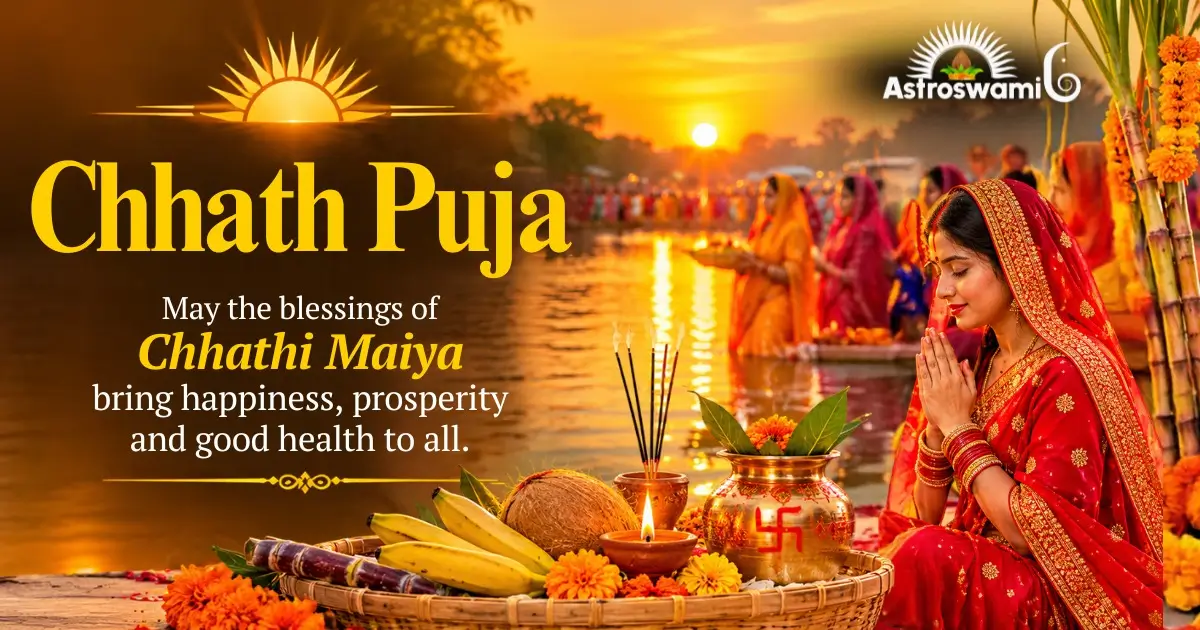
Chhath Puja Dates in 2026
| Chhath Puja 2026 Day | Chhath Puja 2026 Date | Procedure Day |
|---|---|---|
| Friday | 13th November | Nahay Khay |
| Saturday | 14th November | Lohanda & Kharna |
| Sunday | 15th November | Sandhya Arghya |
| Monday | 16th November | Suryodaya/Usha Arghya |
What Is Chhath Puja?
Chhath Puja is a four-day Hindu festival dedicated to Surya Dev, the Sun God, and his sister Chhathi Maiya. Devotees thank the Sun for sustaining life on Earth and pray for the health, prosperity and long life of their families. It is observed twice a year, but the Kartik Chhath, held six days after Diwali, is by far the grandest.
Chhath is considered one of the most disciplined festivals in India. There are no idols and no priests are needed. The devotee, known as the vratin or parvaiti, stands in a river or pond and offers prayers directly to the sun at dusk and dawn. The word “Chhath” comes from the Hindi and Sanskrit word for six, because the main rituals fall on the sixth day (Shashthi) of the bright fortnight of the month of Kartik.
Meaning and Significance of Chhath Puja
The festival is a celebration of gratitude, purity and self-discipline. The Sun is seen as the visible source of energy, light and health, and Chhath is the one festival where people worship the setting sun as well as the rising sun. This reflects the belief that both the end and the beginning of a day deserve respect.
The significance of Chhath can be understood in a few ways:
- Spiritual: The long fast, cleanliness and prayer are meant to purify the body and mind.
- Family-focused: Mothers pray mainly for the wellbeing of their children, husbands and the whole household. Many families also pray for the birth of a child.
- Social: The festival has no caste or class barriers. Neighbours, relatives and strangers help each other prepare ghats, cook prasad and share offerings.
- Environmental: Worship happens in rivers, ponds and lakes using natural, biodegradable materials such as bamboo, clay, fruits and leaves.
Who Is Worshipped: Surya Dev and Chhathi Maiya
Surya Dev is the central deity. He is worshipped as the giver of life, light and health, and as the one who removes disease and brings energy.
Chhathi Maiya, also called Shashthi Devi, is the second deity. In folk belief she is a form of Usha, the goddess of dawn and the wife of Surya in some traditions, and she is honoured as the protector of children. Many scriptures and folk traditions describe her as the sixth form of Prakriti (nature) and as a goddess who guards newborns and blesses families with children. Devotees pray to her for the safety and long life of their sons and daughters.
Where Chhath Puja Is Celebrated (Bihar, Jharkhand, Eastern UP, Nepal)
Chhath is rooted in the eastern Gangetic plains. It is celebrated most widely in:
- Bihar: The heartland of the festival, with huge gatherings on the ghats of the Ganga in Patna and along rivers across the state.
- Jharkhand: Celebrated at rivers, ponds and dams, including in Ranchi, Jamshedpur and Dhanbad.
- Eastern Uttar Pradesh: Especially in Varanasi, Gorakhpur, Ballia, Ghazipur and Prayagraj.
- Nepal: The Madhesh region, particularly Janakpur, Birgunj and the Terai towns, observes Chhath with great devotion.
Migration has carried the festival far beyond these regions. Today it is celebrated in Delhi-NCR, Mumbai, Kolkata, Odisha and many other cities, and by the diaspora in Mauritius, Fiji, Guyana, Trinidad, Suriname, the UK, the USA and the Gulf countries.
History and Origins of Chhath Puja
The exact origin of Chhath is not recorded in a single text. It grew over centuries from Vedic sun worship, epic stories and local folk practice. Several legends explain why it is celebrated, and each adds a layer to the festival’s meaning.
Mythological Stories (Ramayana and Mahabharata)
Ramayana: According to popular tradition, when Lord Rama and Sita returned to Ayodhya after the exile and the victory over Ravana, they observed a fast and worshipped the Sun God to be cleansed of the sins of war. This was done on the sixth day of the bright half of Kartik. The practice of worshipping Surya at that time of year is said to have continued as Chhath.
Mahabharata: Karna, the son of Surya and Kunti, is said to have worshipped the Sun every day while standing waist-deep in water. He is remembered as a great warrior and generous donor, and some traditions link the origin of Chhath to his daily devotion. Another tale says that Surya’s son Samba was cured of leprosy by worshipping the Sun, which is why Surya is also seen as a healer.
The Legend of Draupadi and the Pandavas
In the Mahabharata tradition, when the Pandavas lost their kingdom in the game of dice, Draupadi observed the Chhath fast on the advice of the sage Dhaumya. She worshipped the Sun God with sincere devotion, and the Pandavas are believed to have regained their lost kingdom. For this reason, Chhath is also seen as a vrat that fulfils sincere wishes and removes troubles from family life.
There is also a popular folk story of King Priyavrat and Queen Malini, who had no child. After a yajna performed by the sage Kashyap, a son was born, but he was stillborn. The grieving king was about to end his life when Devasena, the sixth form of Prakriti, appeared. She introduced herself as Shashthi and told him to worship her. The king observed the fast on the sixth day, and the child was blessed with life. This story is the basis of the worship of Chhathi Maiya as the protector of children.
Ancient Vedic Roots of Sun Worship
Sun worship is among the oldest forms of Hindu devotion. The Rigveda has many hymns addressed to Surya, and the Gayatri Mantra is a prayer to the divine light of the Sun. Ancient seers practised surya upasana, which included standing in water, fasting and meditating on the sun at sunrise and sunset.
The Surya Purana and other texts describe the Sun as the cause of life, health and time. Famous Sun temples such as Konark in Odisha, Modhera in Gujarat, Deo in Bihar and Martand in Kashmir show how widely the worship spread. The Deo Sun Temple in the Aurangabad district of Bihar is especially linked with Chhath, and thousands of devotees visit it during the festival.
Chhath, with its focus on water, sunrise and sunset, is seen by many scholars as a living form of this ancient tradition that has survived largely in its original, simple form.
Chhath Puja Vidhi
The vidhi (procedure) of Chhath is simple in form but strict in discipline. Here is the overall order of the puja:
- Clean the home and kitchen. The house is washed and the kitchen is kept pure, since all the prasad is cooked there. A separate clean area or a new earthen stove (chulha) is often used.
- Take a holy bath. The vratin bathes in a river, pond or at home with clean water and wears fresh, clean, preferably unstitched clothes such as a sari or dhoti.
- Cook the first sattvic meal. On the first day, a meal of rice, chana dal and kaddu (bottle gourd) is cooked in ghee and rock salt.
- Fast and prepare prasad. From the second day, the vratin observes a fast. Thekua, kheer, rasiao and fruits are made with great care.
- Pack the soop and daura. Bamboo baskets are filled with the offerings, with a lit diya placed among them.
- Go to the ghat. The family walks to the water, often barefoot, singing Chhath geet. The vratin carries the offerings or they are carried by family members on their heads.
- Offer Sandhya Arghya. Standing in water at sunset, the vratin offers water and milk to the setting sun while the soops are held up with the prasad.
- Keep a night vigil. Devotees return home, and many families sing songs and keep a lamp burning through the night.
- Offer Usha Arghya. Before sunrise, the family returns to the ghat and the same offerings are made to the rising sun.
- Break the fast (Parana). After prayers, the vratin takes a sip of water and a little prasad. The prasad is then shared with everyone.
The key principle across all steps is purity. No one tastes the prasad before it is offered, and strict cleanliness is kept in cooking, clothing and behaviour.
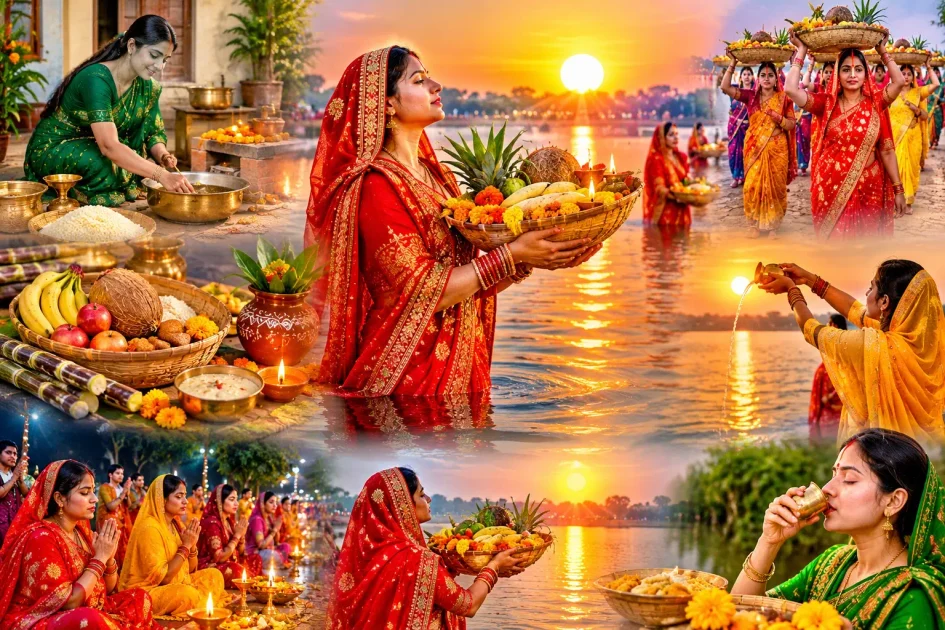
4 Days of Chhath Puja
Chhath runs for four days, starting on the Chaturthi of Kartik Shukla Paksha and ending on the Saptami. The dates change every year according to the Hindu lunar calendar, so check a local panchang for exact timings of sunset and sunrise in your city.
| Day | Name | Main ritual |
| Day 1 | Nahay Khay | Holy bath and a pure, simple meal |
| Day 2 | Kharna | Day-long fast, broken after sunset with kheer |
| Day 3 | Sandhya Arghya | Offering to the setting sun, with the 36-hour fast under way |
| Day 4 | Usha Arghya | Offering to the rising sun and Parana |
Day 1: Nahay Khay (Holy Bath and Meal)
The festival begins with Nahay Khay, which means “bathe and eat.” The vratin takes a holy bath in the Ganga or another river, or at home with Ganga jal if a river is not available. Water from the river is often brought home to cook the prasad.
The home and kitchen are cleaned thoroughly. The first meal of the vrat is then cooked and eaten by the vratin first and then by the family. It traditionally includes:
- Arwa chawal (plain rice)
- Chana dal
- Kaddu ki sabzi (bottle gourd curry)
The food is cooked in ghee with rock salt (sendha namak) and without onion or garlic. This day sets the tone of purity for the whole festival.
Day 2: Kharna (Evening Fast-Breaking Ritual)
On the second day, the vratin fasts for the whole day without even a drop of water. In the evening, after sunset, the fast is broken with the Kharna prasad.
The main prasad is rasiao-kheer, a sweet made of rice, milk and jaggery, served with rotis (puri or chapati made without salt) and bananas. After offering it to the Sun and Chhathi Maiya, the vratin eats it first. It is then shared with family, neighbours and relatives, who are invited to take the prasad. Visitors often touch the feet of the vratin, as it is believed her blessings are especially powerful on this day.
After Kharna, the vratin begins the 36-hour nirjala fast, without food or water, that lasts until the dawn arghya on Day 4.
Day 3: Sandhya Arghya (Offering to the Setting Sun)
Day 3 is the most important and busiest day. Families spend the morning preparing the prasad, mainly thekua and other fruits, and packing the bamboo soops and dalas.
In the late afternoon, the whole family goes to the ghat, singing devotional songs. The vratin stands in knee- or waist-deep water, facing the setting sun, and the offerings are lifted in the soop. Family members pour milk and water as arghya while the vratin prays. Diyas are lit on the bank and the ghat shines with thousands of lamps.
At night, many families return home and hold a kosi bharai, in which sugarcane stalks are tied together as a canopy and earthen lamps are placed under it, as a thanksgiving for a wish fulfilled. Folk songs continue late into the night.
Day 4: Usha Arghya (Offering to the Rising Sun and Parana)
On the final morning, devotees reach the ghat before dawn. They stand in the water and wait for the first rays of the sun. When the sun rises, the vratin offers arghya to Usha, the first light of the day, and prays for the blessings of Surya Dev and Chhathi Maiya.
After the final prayer, the vratin breaks the fast with a sip of water, a bit of ginger or sugar, and a small portion of prasad. This is called Parana. The prasad is then distributed to everyone present at the ghat, and the family returns home to eat a full meal. This marks the end of the festival.
Chhath Puja Rituals and Traditions
Chhath is known for traditions that have been passed from one generation to the next with very little change. Each ritual has a practical and a spiritual meaning.
The 36-Hour Nirjala Vrat (Waterless Fast)
The heart of Chhath is the nirjala vrat, a fast of about 36 hours without food and without water. It begins after the Kharna meal on the evening of Day 2 and ends with Parana at sunrise on Day 4. It is among the most demanding fasts in Hinduism and is observed with steady faith, patience and willpower.
Vratins sleep on the floor, often on a simple mat or blanket, and stay away from comforts during this time. Elderly and ill devotees who find it too hard are advised to follow the rules according to their health and to consult a doctor.
Standing in Water and Offering Arghya
Arghya is the offering of water, and sometimes milk, to the Sun. The vratin stands in knee- or waist-deep water, folds her hands and faces the sun while the soop is raised with the offerings. Family members then pour water or milk in a thin stream as the sun sets or rises.
This position, with the body in water and the face to the sun, is the most recognisable image of the festival. It reflects the idea of being fully surrendered to nature, without any barrier between the devotee and the divine.
The Role of the Vratin
The vratin is the person who observes the vrat, and she is treated with deep respect throughout the festival. Women have traditionally been the main devotees, but men also observe the vrat in many families.
The vratin’s duties include:
- Keeping herself pure in body, mind and speech
- Cooking or supervising the prasad herself
- Carrying out the whole fast and all four days of rituals
- Leading the prayers at the ghat
In many families, the vrat is passed from mother to daughter-in-law or daughter. A vratin often continues for many years, and she may stop only if there is a death in the family or on the advice of elders, in line with family custom.
Folk Songs and Chhath Geet
Chhath is impossible to imagine without its folk songs. Sung in Bhojpuri, Maithili, Magahi and Hindi, Chhath geet are performed by women in groups as they cook, walk to the ghat and wait for sunrise. The songs describe the vratin’s devotion, the Sun’s blessings, the hardships of the fast, and the family’s wishes for children and prosperity.
The songs are passed down orally and carry the cultural memory of the region. Singers such as Sharda Sinha became closely linked with Chhath, and her devotional songs are played in homes and on ghats every year. Hearing these songs in the days before the festival is, for many people, the first sign that Chhath has arrived.
Chhath Puja Samagri (Items Needed)
All items used in Chhath are simple, natural and seasonal. Most are available in local markets a few days before the festival.
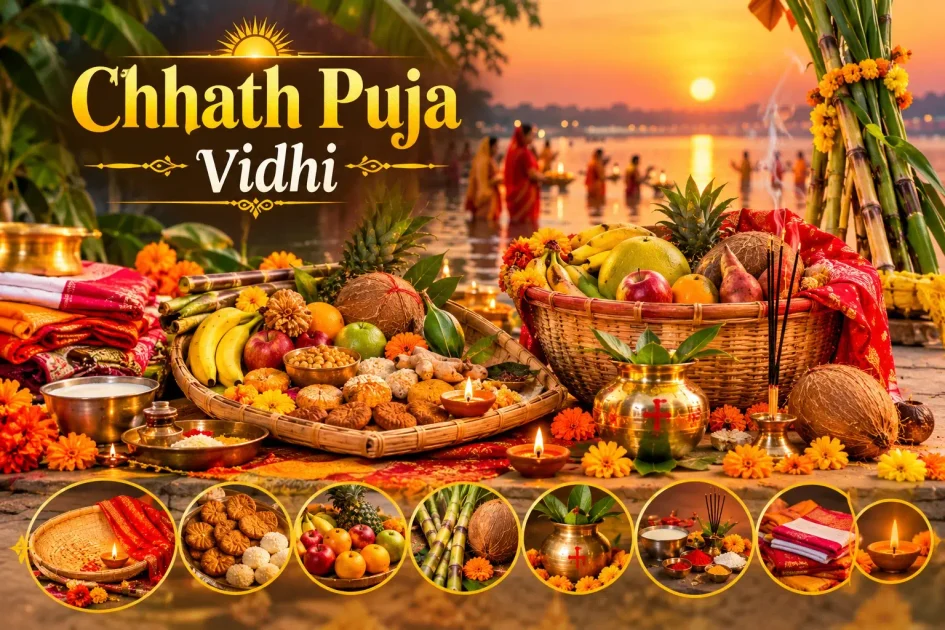
Bamboo Soop and Daura
The soop is a flat winnowing tray, and the daura (or dala) is a deep bamboo basket. They are made of fresh bamboo and are used to hold and lift the offerings at the ghat. New ones are bought each year or kept very clean for the purpose. The soop is covered with a clean cloth, and a lit diya is placed on it before it is lifted for arghya.
Thekua, Fruits and Other Offerings
The soop and daura are filled with:
- Thekua: The signature sweet of Chhath, also called khajuria
- Seasonal fruits: Banana, apple, orange, pomelo (sutha or gagar nimbu), pineapple, singhara (water chestnut) and sweet potato
- Rice laddoo (kasar or chawal ke laddu)
- Chana, lemon and ginger
- Dry fruits and whole turmeric and radish plants in some families
All fruits are kept whole, never cut, and are washed with clean water.
Sugarcane, Coconut and Diya
- Sugarcane: Long stalks are tied together at the ghat or at home and used to form a canopy for the kosi.
- Coconut: A whole coconut is part of the offering.
- Diya: Earthen lamps filled with ghee or mustard oil are lit at the ghat and at home.
Other items to keep ready:
| Item | Use |
| Clean new clothes | For the vratin and family at the ghat |
| Milk and Ganga jal | For arghya |
| Incense sticks and camphor | For prayer |
| Vermilion (sindoor) and rice (akshat) | For tilak and the puja |
| Earthen stove, mango wood and clay pots | For cooking prasad |
| Leaves and flowers (red or yellow) | For decoration and offering |
Traditional Chhath Prasad Recipes
Chhath prasad is cooked with devotion, in a clean kitchen, usually on a mud stove or a gas stove used only for the festival. The cook bathes first, wears clean clothes, and does not taste the food before it is offered.
Thekua is a crisp, sweet, deep-fried cookie made of whole wheat flour, jaggery and ghee. It is the best-known Chhath offering.
Kheer and Rasiao (Kharna Prasad)
Rasiao-kheer, also called gur ki kheer, is the main prasad on the evening of Kharna. It is made with rice and milk and sweetened with jaggery instead of sugar.
Why Prasad Is Cooked Without Onion and Garlic
Chhath prasad follows the rules of sattvic food. Onion and garlic are considered tamasic and rajasic in the Hindu and Ayurvedic tradition, as they are believed to heat the body, increase restlessness and dull the mind. During a festival that is about purity, calm and devotion, they are avoided in all dishes.
The prasad is also cooked in ghee, with rock salt (sendha namak) used only where needed, and with fresh and seasonal ingredients. The aim is a simple, light and pure meal that supports a long fast and a clear mind.
Science and Health Benefits of Chhath Puja
Chhath is a matter of faith, and its practices are not medical treatment. Still, many of its customs match what modern science says about sunlight, fasting and mental health. People with medical conditions, pregnant women and the elderly should talk to a doctor before taking part in the fast.
Sun Exposure and Vitamin D
The body makes vitamin D when skin is exposed to sunlight. Chhath arghya is offered at sunrise and sunset, when the sun’s rays are gentler and the UV index is lower than at midday. This gives a calm, low-intensity exposure while devotees stand in water.
Sunlight is also linked to better mood, a steadier body clock and stronger bones. Many people in cities spend most of the day indoors, so spending time at the ghat in morning and evening light is a healthy break.
Fasting and Detox
The days of Chhath start with a light, sattvic meal and then a rest from food. Many people see fasting as a way to give the digestive system a break. Chhath prasad is also made of whole wheat, jaggery, ghee, fruits and milk, which are filling, natural and free of processed ingredients.
A waterless fast of 36 hours is not suitable for everyone. It can cause dehydration, low blood sugar and weakness, so anyone with diabetes, blood pressure problems, kidney issues or other health concerns should seek medical advice and may follow a modified fast. After the fast, it is best to start eating with light foods and fluids.
Spiritual and Mental Wellbeing
The quiet of dawn and dusk, the sound of folk songs, the focus of prayer and the company of family can all lower stress. Standing in water, controlled breathing and facing the sun are similar to meditation and mindfulness practices.
The festival also builds a sense of community, discipline and gratitude. Working together to clean the ghats, cook and help one another gives people a feeling of belonging, which is itself good for mental health.
Chhath Puja Ghats and Celebrations
During Chhath, riverbanks turn into places of worship. Ghats are cleaned, painted, lit with diyas and decorated with flowers, arches and banners. Local administrations set up barricades, lighting, changing rooms, medical aid and rescue boats to keep the crowds safe.
Famous Ghats (Patna, Varanasi, Delhi, Mumbai)
- Patna, Bihar: The ghats along the Ganga, such as Gandhi Ghat, Kangan Ghat, Bansghat and Collectorate Ghat, draw lakhs of devotees. The lit riverfront is one of the most striking sights of the festival.
- Varanasi, Uttar Pradesh: Chhath at Dashashwamedh, Assi and other ghats adds to the city’s already sacred riverside atmosphere.
- Delhi: Devotees gather on the Yamuna at ghats such as Kalindi Kunj and ITO, and at many temporary ponds set up by the government and local committees in colonies across the city.
- Mumbai: Chhath is observed at Juhu Beach, Versova, Dadar’s Shivaji Park area and other beaches and lakes. In recent years, the festival has become a large public event in the city.
- Others: Ranchi (Hatia Dam, Rajendra Jalashay), Jamshedpur (Subarnarekha River), Kolkata (Ganga ghats), Deo (Aurangabad, Bihar) and Janakpur (Nepal).
Community Spirit and Cleanliness Drives
Chhath is a festival where the whole community works together. Volunteers and local groups clean the paths and riverbanks for days before the festival. Neighbours share water, fruits, firewood and clean spaces, and strangers help vratins carry their soops to the ghat.
Cleanliness is part of the faith. Devotees and organisers often use the festival to promote clean rivers, plastic-free offerings and responsible waste handling. Many places arrange dustbins, collect used flowers and diyas, and ask visitors to avoid plastic and thermocol.
Chhath Celebrations Around the World
Because of migration, Chhath is now a global festival. Communities from Bihar, Jharkhand and eastern UP celebrate it in:
- Mauritius, Fiji, Guyana, Trinidad and Tobago, and Suriname: Descendants of indentured labourers have preserved the tradition for generations.
- Nepal: Madhesi communities celebrate it on a large scale, and it is a key public festival in the Terai.
- The UK, USA, Canada, Australia and Singapore: Indian communities gather at rivers, lakes, beaches and community centres, often with permission from local authorities.
- The Gulf countries: Families observe the vrat at home or at beaches, as permitted.
Chhath Puja Dos and Don’ts
Chhath is known for its strict purity rules. The points below are common customs. Practices may vary slightly from family to family, so follow your family’s tradition.
Rules for Devotees
Do:
- Bathe before cooking, praying or touching the prasad
- Wear clean, fresh clothes, preferably unstitched ones such as a sari or dhoti
- Cook only in a clean kitchen using fresh ingredients and a separate set of utensils
- Sleep on the floor during the fast
- Keep your thoughts and speech calm and pure
- Offer arghya at the exact time of sunset and sunrise
- Drink water and eat healthily before the nirjala fast begins
Don’t:
- Taste the prasad before it is offered
- Use onion, garlic, meat, fish, eggs or alcohol
- Use iron or steel vessels for the offering, if your family follows this custom (clay, brass or bamboo are preferred)
- Cut or use damaged, broken or already-eaten fruits in the offering
- Argue, lie or lose your temper
- Use stitched or worn clothes at the ghat, if following the tradition strictly
Rules for Family Members
Do:
- Help with cooking, cleaning, carrying the soops and setting up at the ghat
- Keep the home clean and take a bath before entering the kitchen
- Eat only sattvic food during the festival
- Take care of the vratin’s health, and keep water and warm clothes ready for Parana
- Accept prasad with both hands and respect
- Stay quiet and respectful at the ghat, and follow safety instructions
Don’t:
- Touch the prasad or the soop without bathing first
- Cook non-vegetarian food or eat outside food in the home during the festival
- Disturb the vratin or make her do hard work during the fast
- Litter the ghat or throw plastic, flowers or diyas in the river
- Take selfies or push your way through at the water’s edge in a way that may endanger others
Chhath Puja Wishes, Quotes and Messages
Send these original messages to family, friends and colleagues to share the spirit of Chhath.
Chhath Puja Wishes in Hindi
- छठी मईया आपके घर में सुख, शांति और समृद्धि का वास करें। आपको छठ पूजा की हार्दिक शुभकामनाएँ!
- सूर्य देव की पहली किरण आपके जीवन में नई ऊर्जा और खुशियाँ लेकर आए। छठ पर्व की बहुत-बहुत बधाई!
- आस्था के इस महापर्व पर आपका परिवार स्वस्थ और खुशहाल रहे। छठ पूजा की शुभकामनाएँ।
- छठी मईया आपकी हर मनोकामना पूरी करें और आपके जीवन को रोशनी से भर दें।
- नहाय-खाय से उषा अर्घ्य तक, आपका हर दिन भक्ति और आशीर्वाद से भरा रहे। जय छठी मईया!
- सूर्य देव आपको अच्छा स्वास्थ्य, सफलता और लंबी उम्र का आशीर्वाद दें। छठ पूजा मुबारक हो!
- व्रत की शक्ति, श्रद्धा की भक्ति और छठी मईया की कृपा से आपके सब काम सफल हों।
Chhath Puja Wishes in English
- May Chhathi Maiya fill your home with peace, health and happiness. Happy Chhath Puja!
- Wishing you and your family the blessings of Surya Dev this Chhath. May your life shine bright.
- On this holy occasion, may your faith bring you strength and your prayers be answered. Happy Chhath!
- May the first rays of the rising sun bring you new hope and new beginnings. Chhath Puja greetings!
- Sending warm wishes to all the devoted vratins. May your devotion bring blessings to your family.
- May the Sun God light up your path with success, good health and joy. Happy Chhath Puja!
- With gratitude to the Sun and faith in Chhathi Maiya, may your life be full of blessings.
WhatsApp and Social Media Captions
Short captions
- Faith, fasting and the first light of dawn. Happy Chhath Puja! #ChhathPuja
- Thank you, Surya Dev, for the light of life. #ChhathMahaparv
- Standing in water, standing in faith. #JayChhathiMaiya
- Golden ghats, glowing diyas, grateful hearts. #Chhath2026
- Where devotion meets sunrise. #UshaArghya
Hindi captions
- जय छठी मईया! आस्था का महापर्व छठ आपके जीवन में खुशियाँ भर दे।
- उगते सूरज को अर्घ्य, डूबते सूरज को प्रणाम। छठ पूजा की शुभकामनाएँ।
- श्रद्धा, सादगी और सूर्य उपासना का पर्व। #छठपूजा
Short quotes
- “Chhath teaches us that gratitude begins with the sun and ends with the people we love.”
- “No idols, no priests, just faith, water and the sun.”
- “The setting sun and the rising sun both deserve our thanks.”
Live expert astrologers
Get trusted astrological guidance from experienced astrologers. Chat or call now to find answers to life's important questions!

K N Joshi
Vedic-Astrology, Tarot-Reading, Numerology, Vasthu, Fengshui, Nadi-Astrology, Psychology, Medical-Astrology
★ 4.6 | 25 Yrs Exp

Awadh bihari
Vedic-Astrology, Vasthu, Prashna-Kundali
★ 5.0 | 6 Yrs Exp

Ruthvi
Vedic-Astrology
★ 4.8 | 7 Yrs Exp

Pushpa
Tarot-Reading
★ 4.0 | 7 Yrs Exp

Gargee
Tarot-Reading, Numerology, Medical-Astrology
★ 1.0 | 8 Yrs Exp
Know more about